


The 3-Line Summary
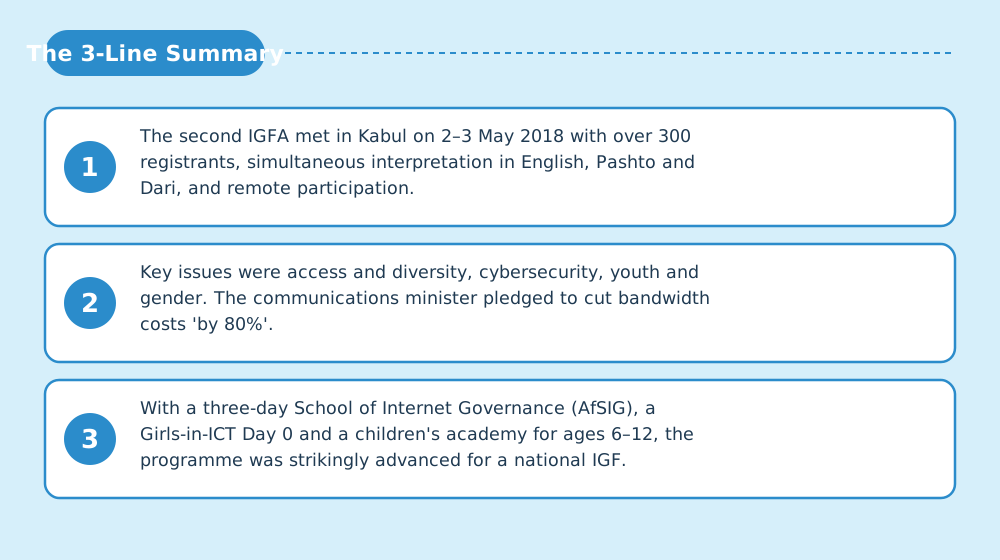
- The second IGFA met in Kabul on 2–3 May 2018 with over 300 registrants, simultaneous interpretation in English, Pashto and Dari, and remote participation.
- Key issues were access and diversity, cybersecurity, youth and gender. The communications minister pledged to cut bandwidth costs 'by 80%'.
- With a three-day School of Internet Governance (AfSIG), a Girls-in-ICT Day 0 and a children's academy for ages 6–12, the programme was strikingly advanced for a national IGF.
Welcome — this is the Japan IGF Support Organization. This in-depth report on IGFA 2018 — the Second Internet Governance Forum Afghanistan draws on official outputs, session records and on-site reporting. In a hurry? The three lines above and the diagrams carry the gist.
Conference at a Glance (from official records)
| Item | Detail |
|---|---|
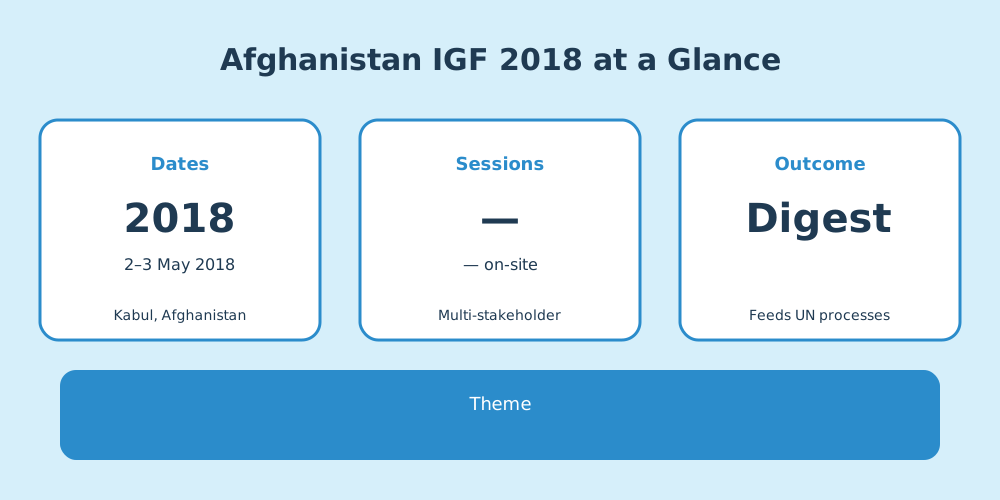
| Official name | IGFA 2018 — the Second Internet Governance Forum Afghanistan |
| Edition | Second annual meeting |
| Dates | 2–3 May 2018 |
| Venue | Kabul, Afghanistan |
| Theme | Regional governance themes |
| Participants | Over 300 registered participants — technical professionals, academia, civil society, business, government officials, students and youth |
| Languages | Simultaneous interpretation in English, Pashto and Dari, with remote participation |
| Host | Organized by the Internet Society Afghanistan (ISOCA), supported by CLDP, IO Global Internet Services, the IGF Support Association, ICANN, the Ministry of Communications and IT (MCIT), TechNation and TechTV |
(See the source list at the end of this article.)
Discussion Digest — from the Session Records
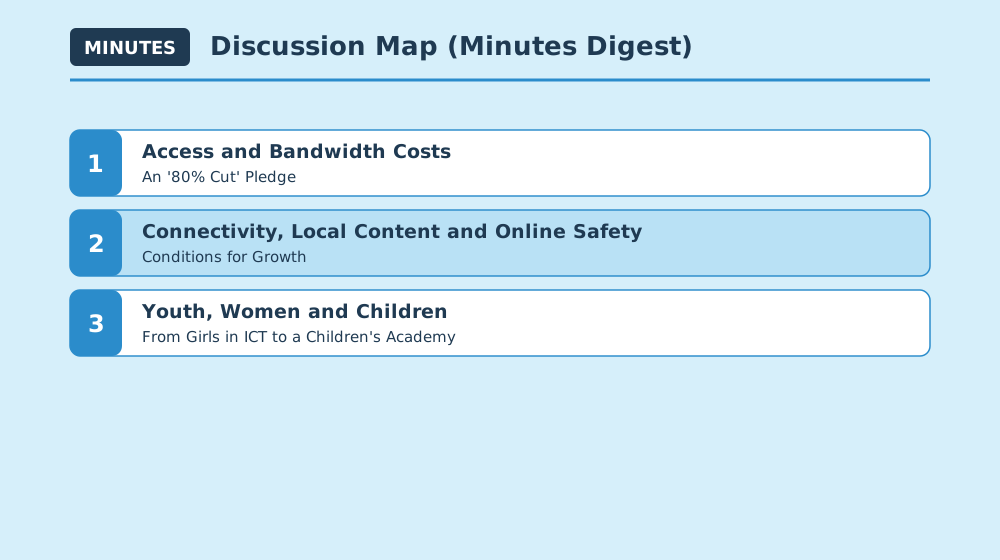
Key exchanges extracted from session records and transcripts.
1. Access and Bandwidth Costs — An '80% Cut' Pledge
Sessions: Opening session (address by the Minister of Communications and IT)
"These initiatives will help create an enabling environment and encourage private investment. We are reducing costs of the bandwidth by 80% in the coming future."
— Shahzad Gul Aryobi, Minister of Communications and IT [1][2]
- The government presented its Open Access Policy and Cyber Crime Law as twin pillars of an investment-friendly environment [1][2]
- Expensive bandwidth was the biggest barrier to Internet adoption in Afghanistan; the 80% cost-cut pledge was the headline of the meeting [1][2]
2. Connectivity, Local Content and Online Safety — Conditions for Growth
Sessions: Main sessions and public forums
"Issues critical to the growth and development of Internet in Afghanistan include: connectivity — availability, affordability of price and quality of services; local content and technologies; collaboration among diverse stakeholders in Internet Governance; online safety, privacy and cyber security."
— Omar Mansoor Ansari, IGFA 2018 Coordinator, Internet Society Afghanistan [1][2]
- The four pillars were access and diversity, cybersecurity, youth and gender, and emerging issues — run as public forums where the community could question and propose improvements [1][2]
- The stated objective was to localize global IGF debates and start an in-country dialogue on issues specific to Afghanistan [1][2]
3. Youth, Women and Children — From Girls in ICT to a Children's Academy
Sessions: Day 0 (celebrating Girls in ICT) and the Children's Academy
- A Day 0 celebrating Girls in ICT, co-organized with TechWomen Afghanistan and TechWomen.Asia, set the stage for the policy debates [2]
- A Children's Academy for ages 6–12 let children engage and ask questions about the Internet — described as unique among the 100+ national and regional IGFs [2]
- A three-day Afghanistan School of Internet Governance (AfSIG 2018), co-organized with the National IT Professionals Association of Afghanistan (NITPAA), fed young talent into the main meeting [2]
Three-Minute Short Talk — Your Questions Answered
Q. What did the meeting decide?
A. Nothing binding — it was a dialogue where government, business and civil society spoke as equals. But the government used the stage to announce its Open Access Policy and an 80% bandwidth cost cut, making it a de facto policy launch.
Q. What stood out most?
A. Beyond the 300+ registrants, the Girls-in-ICT Day 0 and a children's academy for ages 6–12 — deliberately including women and children in a conflict-affected country was rare even globally.
Q. Why should I care?
A. Bandwidth pricing and investment climate are the same levers every developing Internet market debates; IGFA 2018 is a compact case study, complete with trilingual interpretation as an inclusion practice.
What Is Afghanistan IGF? (for first-time readers)
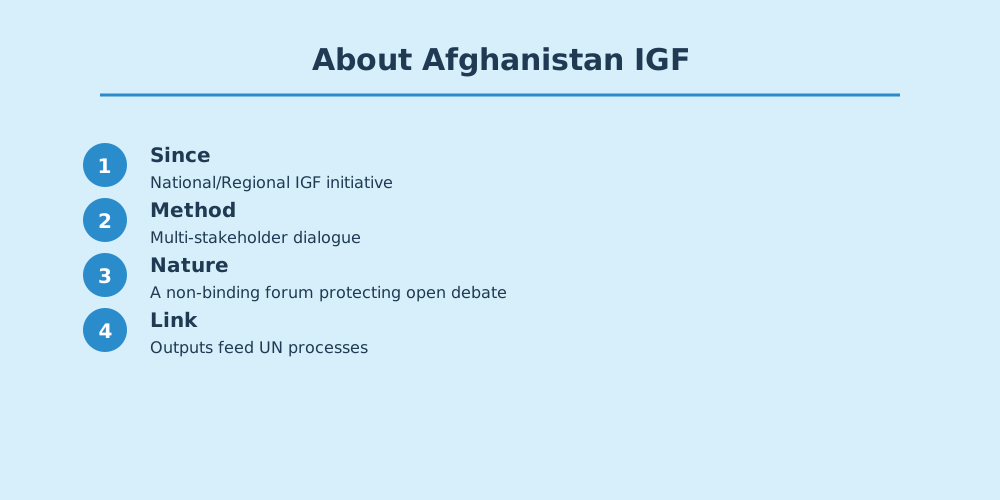
Afghanistan IGF is a National or Regional IGF Initiative (NRI), aligning local internet governance discussion with global IGF principles.
Why It Matters to You
What was discussed here becomes the baseline for national digital policy, platform rules and AI regulation worldwide within a few years. The principles confirmed at the 2018 meeting are the foundation of the "next rules" for the phones, social platforms and AI services you use every day.
Sources & References
- Successful Conclusion of the Second Internet Governance Forum Afghanistan (IGFA) 2018 — Pajhwok Afghan News(メディアリリース掲載) (accessed 2026-07-23)
- Press Release: Successful Conclusion of the Second Internet Governance Forum Afghanistan (IGFA) 2018(全文PDF) — IGFA / ISOCアフガニスタン (accessed 2026-07-23)
- Afghanistan IGF(UN公式NRI登録ページ・系列の設立記録) — UN IGF Secretariat (accessed 2026-07-23)
Quotes are translated or condensed from the records listed above. Bracketed numbers [n] refer to the source list.
Related links
- IGF official (NRI list): https://www.intgovforum.org/en/content/national-and-regional-igf-initiatives
- Japan IGF: https://japanigf.jp/
- Yuki Nakazawa's blog: https://nkzw.jp/category/igf/
更新履歴
第1稿投稿 2026年8月13日 19時40分(記事コンテンツアップ)
— 中澤祐樹

