


The 3-Line Summary
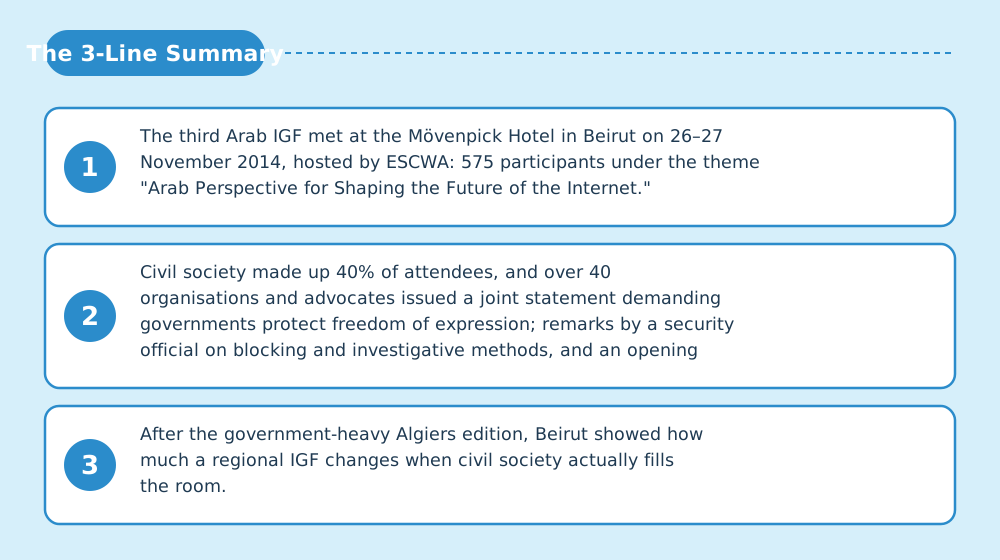
- The third Arab IGF met at the Mövenpick Hotel in Beirut on 26–27 November 2014, hosted by ESCWA: 575 participants under the theme "Arab Perspective for Shaping the Future of the Internet."
- Civil society made up 40% of attendees, and over 40 organisations and advocates issued a joint statement demanding governments protect freedom of expression; remarks by a security official on blocking and investigative methods, and an opening speech on the IANA transition, both stirred debate.
- After the government-heavy Algiers edition, Beirut showed how much a regional IGF changes when civil society actually fills the room.
Welcome — this is the Japan IGF Support Organization. This in-depth report on Arab IGF 2014 in Beirut draws on official outputs, session records and on-site reporting. In a hurry? The three lines above and the diagrams carry the gist.
Conference at a Glance (from official records)
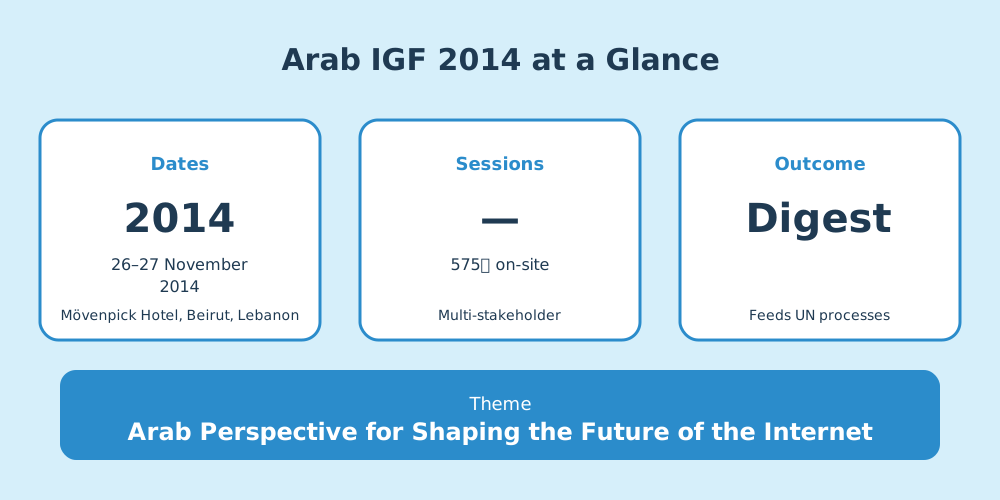
| Item | Detail |
|---|---|
| Dates | 26–27 November 2014 |
| Venue | Mövenpick Hotel, Beirut, Lebanon |
| Theme | Arab Perspective for Shaping the Future of the Internet |
| Participants | 575 participants (40% civil society, 20% government; 72% male, 28% female) |
| Sub-themes | Internet infrastructure and access; Internet global public policies and national policy-making; Openness: rights and responsibilities; Privacy and rebuilding trust |
| Host | Hosted by ESCWA in strategic partnership with Lebanon's Ministry of Telecommunications and Ogero Telecom, under the joint patronage of Minister Boutros Harb and ESCWA Executive Secretary Rima Khalaf |
(See the source list at the end of this article.)
Discussion Digest — from the Session Records
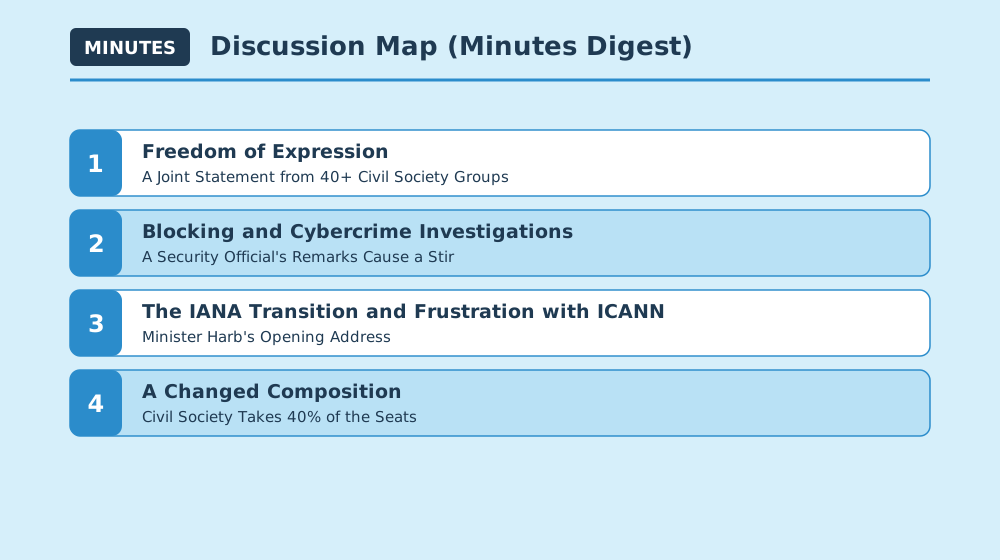
Key exchanges extracted from session records and transcripts.
1. Freedom of Expression — A Joint Statement from 40+ Civil Society Groups
Sessions: "Openness: Rights and Responsibilities" track and the closing session
- More than 40 civil-society organisations, activists, academics and technologists working for an open, accessible and safe Internet drafted and endorsed a joint statement, voicing deep concern at spreading online human-rights violations in the Arab world [3][2]
- The statement asserted that governments must protect freedom of expression, build legal mechanisms holding state bodies and officials to account for violating it, and ensure no one faces judicial or extrajudicial harassment for exercising it [3][2]
- Civil society's shared concerns converged on online human rights, summarised in the statement delivered at the closing session [3][2]
2. Blocking and Cybercrime Investigations — A Security Official's Remarks Cause a Stir
Sessions: Cybersecurity-related sessions
"The more we block blogs or websites, the more they create mass movement"
— Suzan Hajj Hobeiche (Lebanese security services official handling cybercrime) [2]
- Citing Lebanon's #FreeKarim case, Hobeiche conceded that blocking backfires — while also telling the audience that ethical hacking and deceiving citizens were necessary tools for cybercrime investigations, remarks that shocked attendees [2]
- Civil-society panellists including 7iber's Reem Al Masri countered that online human rights and government data transparency should take priority over security-first approaches [2]
3. The IANA Transition and Frustration with ICANN — Minister Harb's Opening Address
Sessions: Opening ceremony (26 November)
- In his opening address, Lebanese Telecommunications Minister Boutros Harb criticised the IANA transition and ICANN's management while endorsing multistakeholder governance models — and announced Lebanon's first national IGF [2]
- Coming shortly after the US Commerce Department announced it would relinquish IANA stewardship, the transition ranked among the region's central concerns [2]
4. A Changed Composition — Civil Society Takes 40% of the Seats
Sessions: The meeting overall
- Of 575 participants, 40% came from civil society and only 20% from governments — a marked shift from the government-heavy Algiers edition a year earlier [1][2]
- Gender balance remained skewed (72% male, 28% female), and thin government attendance was flagged as its own problem for genuine dialogue; Tunisia offered to host the 2015 edition (the fourth meeting was ultimately held in Beirut) [1][2]
Three-Minute Short Talk — Your Questions Answered
Q. What defined this edition?
A. Civil society's comeback. It filled 40% of the seats, and 40-plus groups issued a joint statement demanding governments protect free expression and answer for violations — a clear reaction to the government-dominated Algiers edition.
Q. What was the most contentious moment?
A. A Lebanese security official's admission that 'the more we block blogs or websites, the more they create mass movement' — paired with her claim that ethical hacking and deceiving citizens were necessary for investigations, which shocked the room.
Q. Why should I care?
A. The trade-offs debated here — blocking's effectiveness, investigative powers versus rights — are the same ones every country wrestles with in cybercrime and content-regulation policy.
What Is Arab IGF? (for first-time readers)
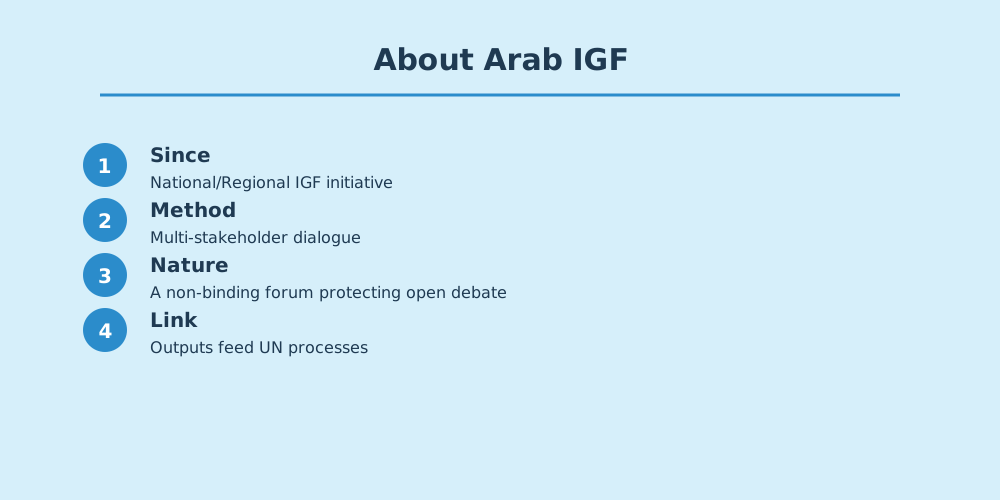
Arab IGF is a National or Regional IGF Initiative (NRI), aligning local internet governance discussion with global IGF principles.
Why It Matters to You
What was discussed here becomes the baseline for national digital policy, platform rules and AI regulation worldwide within a few years. The principles confirmed at the 2014 meeting are the foundation of the "next rules" for the phones, social platforms and AI services you use every day.
Sources & References
- Third Annual Meeting of the Arab Internet Governance Forum — UN ESCWA (accessed 2026-07-11)
- Arab IGF III: What we will remember — Nawaat(チュニジアの独立メディア) (accessed 2026-07-11)
- Civil Society Groups Issue Statement at the Arab IGF — SMEX(ベイルートのデジタル権利団体) (accessed 2026-07-11)
- Arab Internet Governance Forum 2012-2015 (About) — igfarab2015.org (accessed 2026-07-11)
- Arab IGF (event page) — DiploFoundation (accessed 2026-07-11)
Quotes are translated or condensed from the records listed above. Bracketed numbers [n] refer to the source list.
Related links
- IGF official (NRI list): https://www.intgovforum.org/en/content/national-and-regional-igf-initiatives
- Japan IGF: https://japanigf.jp/
- Yuki Nakazawa's blog: https://nkzw.jp/category/igf/
Revision History
Rev. 1 — published 25 November 2014, 09:00 (Article published)
Rev. 2 — updated 11 July 2026, 02:14 (Fully revised into the in-depth edition: added the 3-line summary, minutes digest, short talk, source list and diagrams (all quotes verified against the listed sources))
— 中澤祐樹

