
The 3-Line Summary
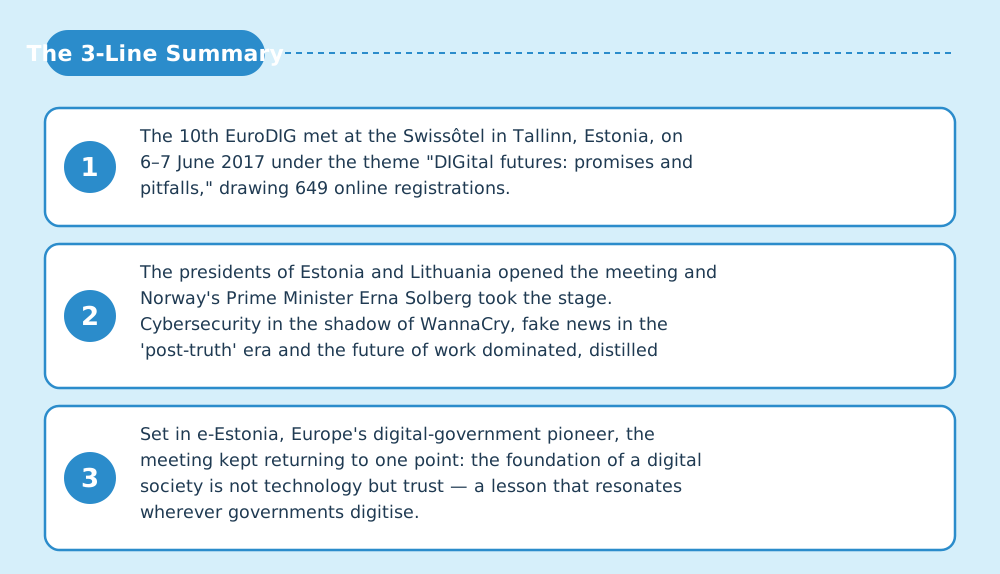
- The 10th EuroDIG met at the Swissôtel in Tallinn, Estonia, on 6–7 June 2017 under the theme "DIGital futures: promises and pitfalls," drawing 649 online registrations.
- The presidents of Estonia and Lithuania opened the meeting and Norway's Prime Minister Erna Solberg took the stage. Cybersecurity in the shadow of WannaCry, fake news in the 'post-truth' era and the future of work dominated, distilled into the Messages from Tallinn.
- Set in e-Estonia, Europe's digital-government pioneer, the meeting kept returning to one point: the foundation of a digital society is not technology but trust — a lesson that resonates wherever governments digitise.
Welcome — this is the Japan IGF Support Organization. This in-depth report on EuroDIG 2017 in Tallinn draws on official outputs, session records and on-site reporting. In a hurry? The three lines above and the diagrams carry the gist.
Conference at a Glance (from official records)
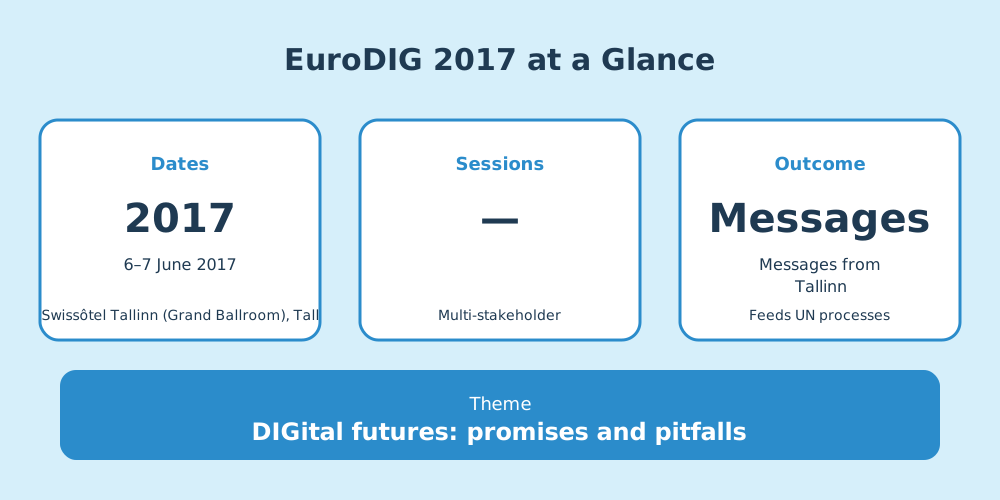
| Item | Detail |
|---|---|
| Edition | 10th EuroDIG (10th anniversary edition) |
| Dates | 6–7 June 2017 |
| Venue | Swissôtel Tallinn (Grand Ballroom), Tallinn, Estonia |
| Theme | DIGital futures: promises and pitfalls |
| Registrations | 649 (649 online registrations (per the official Messages from Tallinn, Facts and figures)) |
| Opening | Opening addresses by President Kersti Kaljulaid of Estonia and President Dalia Grybauskaitė of Lithuania |
| Host | Hosted by the Ministry of Foreign Affairs of the Republic of Estonia in cooperation with the Estonian Internet Foundation |
| Outcome | Messages from Tallinn |
(See the source list at the end of this article.)
Discussion Digest — from the Session Records
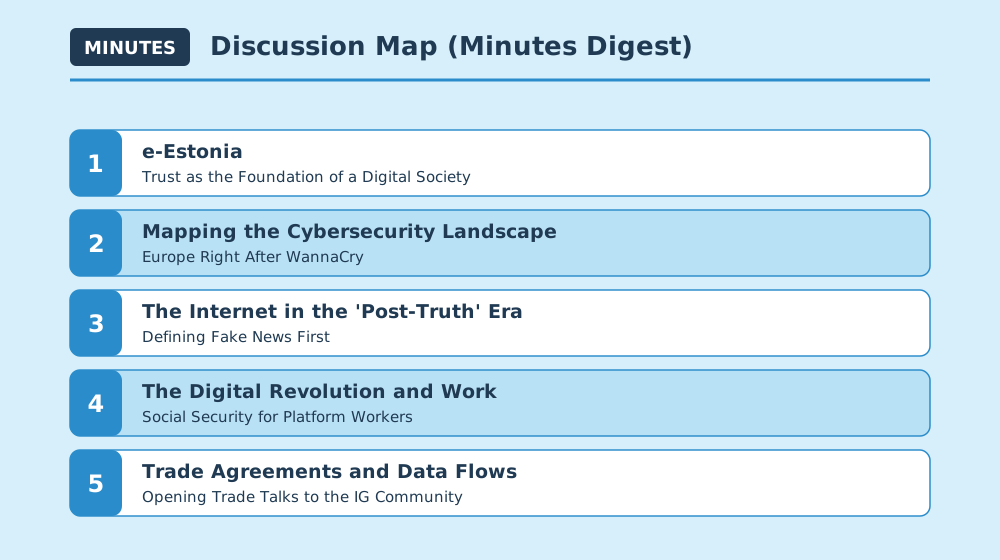
Key exchanges extracted from session records and transcripts.
1. e-Estonia — Trust as the Foundation of a Digital Society
Sessions: Keynotes "Building a digital society: e-Estonia" by Siim Sikkut (6 June, 9:30) and by Norwegian Prime Minister Erna Solberg (6 June, 16:30)
"if we didn't [have trust], there is no way we could rely on digital so much as we do"
— Siim Sikkut (Government CIO of Estonia) [5][4][1]
"The Internet is arguably the most important infrastructure in the world today."
— Erna Solberg (Prime Minister of Norway) [5][4][1]
- Nearly every government service in Estonia is handled online, and anyone in the world can start and run an Estonian company through e-Residency [5][4][1]
- PM Solberg spoke on Nordic-Baltic digital cooperation — including cross-border services and 5G — and revealed she had become an Estonian e-Resident herself [5][4][1]
- Presidents Kersti Kaljulaid (Estonia) and Dalia Grybauskaitė (Lithuania) opened the meeting, underscoring political commitment to the digital state [5][4][1]
2. Mapping the Cybersecurity Landscape — Europe Right After WannaCry
Sessions: Plenary "Alice in wonderland – mapping the cybersecurity landscape in Europe and beyond" (PL 1, 6 June, 11:30)
- Convening weeks after the May 2017 WannaCry ransomware outbreak, the plenary mapped Europe's crowded cybersecurity landscape — its 'wonderland' of institutions and actors [1][2]
- The official message named the Budapest Convention on Cybercrime as the basic document for human rights and security in cyberspace, calling for cooperation among government, industry, the technical community and civil society, plus user education and awareness [1][2]
3. The Internet in the 'Post-Truth' Era — Defining Fake News First
Sessions: Plenary "Internet in the 'post-truth' era?" (PL 2, 6 June, 17:00)
- The official message defined the problem crisply: "Fake news, in fact, is not news, like plastic rice is not rice" — it is intentionally put out to spread confusion, discredit democracy or make money [1][2]
- Government regulation was rejected as a path to suppressing legitimate voices; instead the session urged stronger self- and co-regulation and elevating media literacy education as 'a political survival project for the society' [1][2]
4. The Digital Revolution and Work — Social Security for Platform Workers
Sessions: Plenary "How the digital revolution changes our work life" (PL 3, 7 June, 9:30)
- Panellists agreed on the risks facing platform workers — no health or retirement benefits, blurred work-life boundaries — and pointed towards online platforms acting as employers and providing social security [1]
- With jobs that didn't exist ten years earlier taking centre stage, education systems were judged to be lagging; training, retraining and lifelong learning were declared essential [1]
5. Trade Agreements and Data Flows — Opening Trade Talks to the IG Community
Sessions: Plenary "International trade agreements and Internet governance" (PL 4, 7 June, 16:30)
- Free data flows were framed as vital to economic and social development worldwide; data localisation and flow restrictions are not necessarily the answer [1]
- With digital policy still negotiated in silos, the session called for transparency and openness so the Internet community can feed into trade negotiations before governments enter the decision-making phase [1]
Three-Minute Short Talk — Your Questions Answered
Q. So what did the conference actually decide?
A. EuroDIG doesn't decide — it's Europe's open dialogue on Internet governance. The takeaways were distilled into the Messages from Tallinn and carried to the global IGF in Geneva that December.
Q. What was the highlight?
A. e-Estonia itself. Two sitting presidents opened the meeting, and Norway's PM revealed she had become an Estonian e-Resident. Coming weeks after WannaCry, the cybersecurity debates carried real urgency.
Q. Why should I care?
A. Estonia is the reference model for digital government worldwide, and the meeting's core lesson — that a digital society runs on trust, not technology — applies to every country now digitising its public services.
What Is EuroDIG? (for first-time readers)
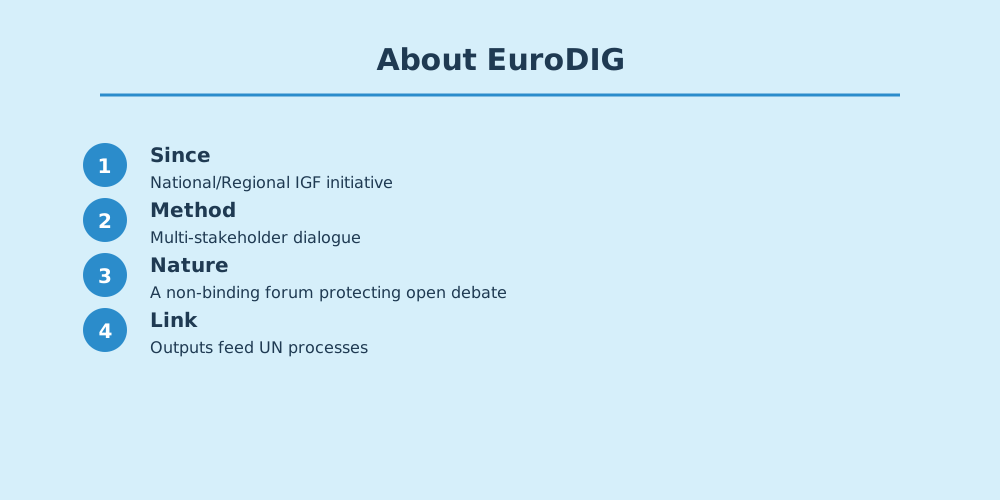
EuroDIG is a National or Regional IGF Initiative (NRI), aligning local internet governance discussion with global IGF principles.
Why It Matters to You
What was discussed here becomes the baseline for national digital policy, platform rules and AI regulation worldwide within a few years. The principles confirmed at the 2017 meeting are the foundation of the "next rules" for the phones, social platforms and AI services you use every day.
Sources & References
- Messages from Tallinn (PDF) — EuroDIG Association (accessed 2026-07-10)
- EuroDIG 2017 — DiploFoundation (accessed 2026-07-10)
- EuroDIG 2017 — EuroDIG Wiki (accessed 2026-07-10)
- Norwegian Prime Minister Erna Solberg – Key 02 2017(書き起こし) — EuroDIG Wiki (accessed 2026-07-10)
- Building a Digital Society: e-Estonia – Key 01 2017(書き起こし) — EuroDIG Wiki (accessed 2026-07-10)
- EuroDIG Archiv(歴代開催一覧) — EuroDIG Wiki (accessed 2026-07-10)
Quotes are translated or condensed from the records listed above. Bracketed numbers [n] refer to the source list.
Related links
- IGF official (NRI list): https://www.intgovforum.org/en/content/national-and-regional-igf-initiatives
- Japan IGF: https://japanigf.jp/
- Yuki Nakazawa's blog: https://nkzw.jp/category/igf/
Revision History
Rev. 1 — published 6 June 2017, 09:00 (Article published)
Rev. 2 — updated 10 July 2026, 23:16 (Fully revised into the in-depth edition: added the 3-line summary, minutes digest, short talk, source list and diagrams (all quotes verified against the listed sources))
— 中澤祐樹