


The 3-Line Summary
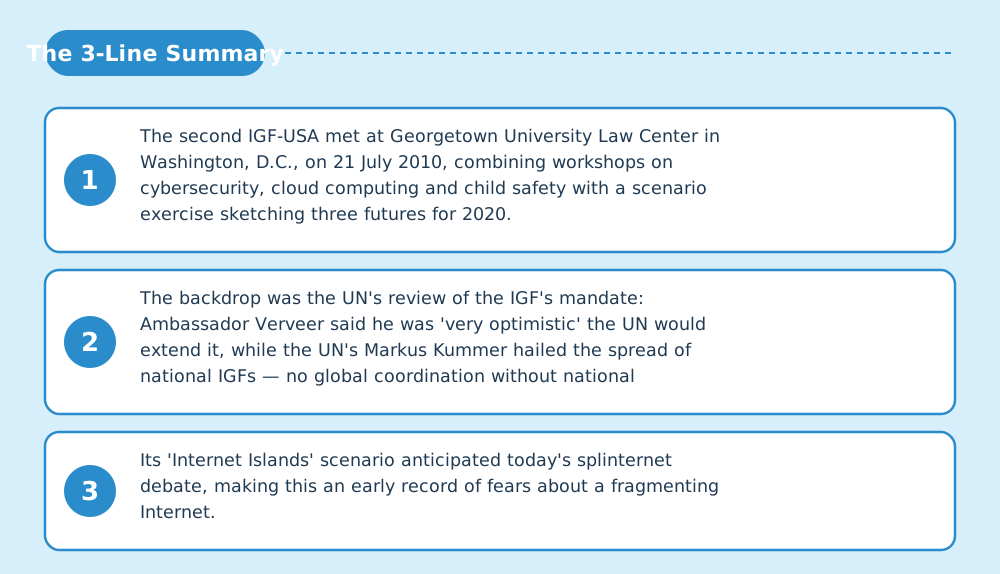
- The second IGF-USA met at Georgetown University Law Center in Washington, D.C., on 21 July 2010, combining workshops on cybersecurity, cloud computing and child safety with a scenario exercise sketching three futures for 2020.
- The backdrop was the UN's review of the IGF's mandate: Ambassador Verveer said he was 'very optimistic' the UN would extend it, while the UN's Markus Kummer hailed the spread of national IGFs — no global coordination without national coordination.
- Its 'Internet Islands' scenario anticipated today's splinternet debate, making this an early record of fears about a fragmenting Internet.
Welcome — this is the Japan IGF Support Organization. This in-depth report on IGF-USA 2010 draws on official outputs, session records and on-site reporting. In a hurry? The three lines above and the diagrams carry the gist.
Conference at a Glance (from official records)
| Item | Detail |
|---|---|
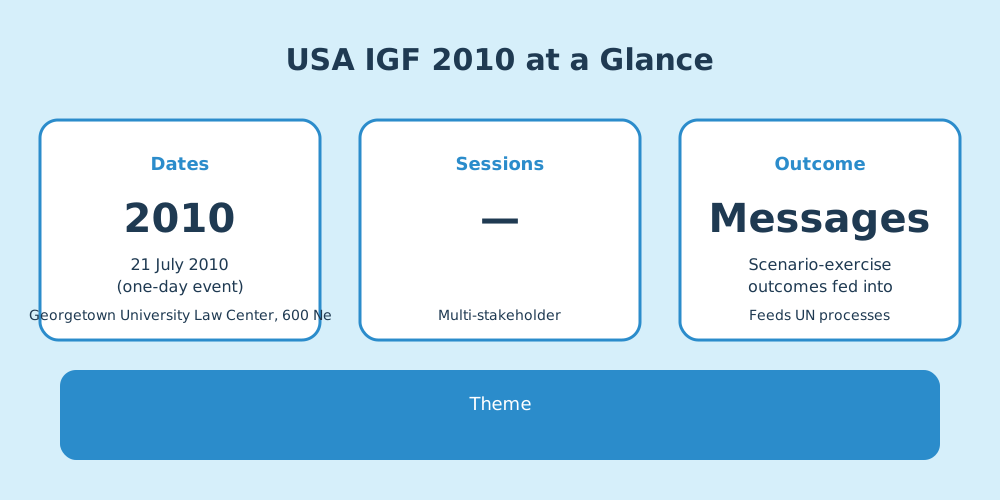
| Official name | IGF-USA 2010 |
| Edition | Second annual IGF-USA |
| Dates | 21 July 2010 (one-day event) |
| Venue | Georgetown University Law Center, 600 New Jersey Ave NW, Washington, D.C. |
| Theme | Regional governance themes |
| Host | IGF-USA multistakeholder steering committee, hosted by Georgetown University Law Center |
| Outcome | Scenario-exercise outcomes fed into the 5th global IGF in Vilnius, Lithuania (September 2010) |
(See the source list at the end of this article.)
Discussion Digest — from the Session Records
Key exchanges extracted from session records and transcripts.
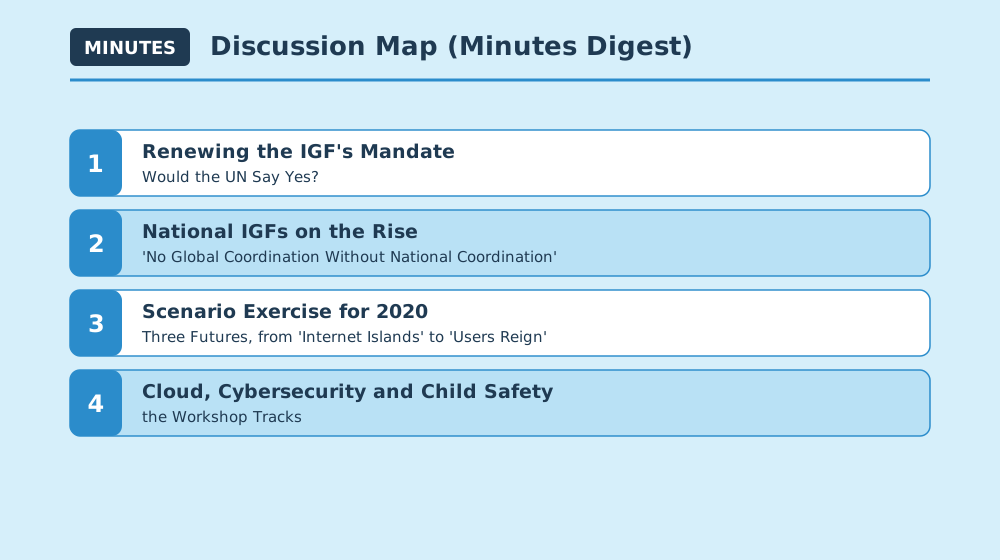
1. Renewing the IGF's Mandate — Would the UN Say Yes?
Sessions: Opening plenary and closing session
"I am very optimistic the UN is going to extend the IGF and hopefully without any changes"
— Ambassador Philip Verveer (U.S. State Department) [2][3]
"The question is will it be a simple 'yes,' or will it be a 'yes' but with certain conditions attached"
— Markus Kummer (Executive Coordinator, UN IGF Secretariat) [2][3]
- The UN was deciding that year whether to renew the five-year-old IGF, and the question ran through the whole day [2][3]
- Kummer countered critics: the IGF 'has been criticized for not producing concrete results… by not having a negotiating framework, it allows for free dialogue.' NTIA's Strickling closed by affirming U.S. support for continuing the IGF in its current form [2][3]
2. National IGFs on the Rise — 'No Global Coordination Without National Coordination'
Sessions: Opening plenary (Markus Kummer)
"Global coordination cannot work if there is no coordination on the national level"
— Markus Kummer (Executive Coordinator, UN IGF Secretariat) [2]
"It's just proof that in many countries people feel the need of discussing the issues in multistakeholder situations"
— Markus Kummer (Executive Coordinator, UN IGF Secretariat) [2]
- Eight regional and 15 national IGF initiatives were already active worldwide, with IGF-USA in its second year among them [2]
- Kummer also warned against 'a black-and-white picture of all government is bad and all the other institutions are good', urging dialogue that includes governments [2]
3. Scenario Exercise for 2020 — Three Futures, from 'Internet Islands' to 'Users Reign'
Sessions: Scenario breakouts: 'Internet Islands', 'Global Government for the Internet' and 'Users Reign'
- Participants debated three 2020 futures: 'Internet Islands' (a net fragmented by state firewalls and trade barriers), 'Global Government' (states in the regulatory driver's seat) and 'Users Reign' (cloud, social networks and youth culture dominant) [1][3]
- The exercise mapped the drivers behind each scenario, and the outcomes were fed into the global IGF in Vilnius that September [1][3]
4. Cloud, Cybersecurity and Child Safety — the Workshop Tracks
Sessions: Workshops on cybersecurity, cloud computing, DNS e-crimes and youth online safety
- The cybersecurity workshop tackled five pillars — national strategy, government-industry collaboration, fighting cybercrime, incident response and building a security culture — with the FBI, Microsoft and CDT at the table [1][4]
- The cloud workshop weighed data privacy, security and national-sovereignty concerns, while the youth-safety forum, with student respondents on stage, discussed protecting children in an 'always switched on' world [1][4]
Three-Minute Short Talk — Your Questions Answered
Q. What was the biggest issue that year?
A. The IGF's own survival. Its five-year UN mandate was up for renewal, and the question of a simple or conditional 'yes' dominated the day (the mandate was ultimately extended).
Q. What were the scenario exercises for?
A. They deliberately sketched extreme 2020 futures — fragmentation, government control, user dominance — to identify what should be done today to avoid or achieve them.
Q. Worth reading now?
A. Yes. The 'Internet Islands' scenario anticipated the splinternet debate by more than a decade, making it a fascinating benchmark of prediction versus reality.
What Is USA IGF? (for first-time readers)
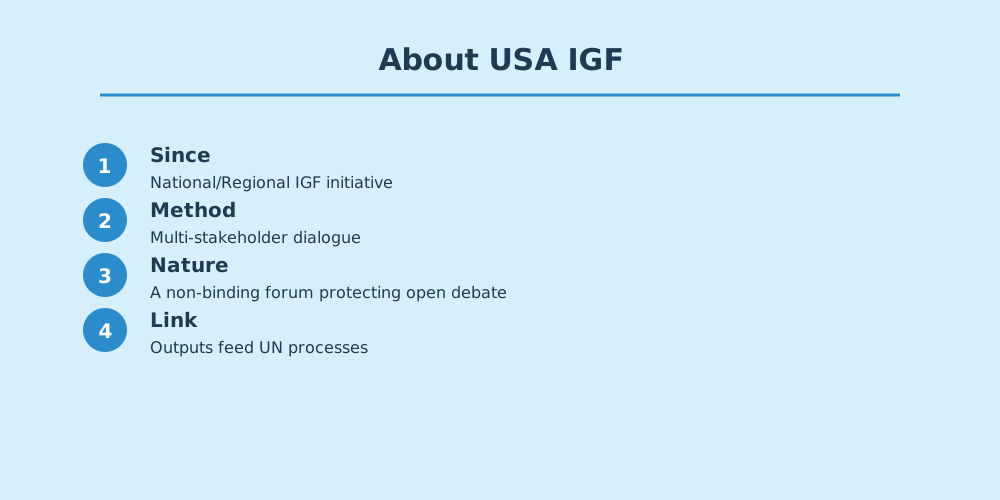
USA IGF is a National or Regional IGF Initiative (NRI), aligning local internet governance discussion with global IGF principles.
Why It Matters to You
What was discussed here becomes the baseline for national digital policy, platform rules and AI regulation worldwide within a few years. The principles confirmed at the 2010 meeting are the foundation of the "next rules" for the phones, social platforms and AI services you use every day.
Sources & References
- IGF-USA 2010(公式アーカイブページ) — IGF-USA (accessed 2026-07-11)
- Internet Governance Forum – USA, 2010: Opening Plenary Session — Elon University Imagining the Internet (accessed 2026-07-11)
- Internet Governance Forum – USA, 2010(セッション別記録アーカイブ) — Elon University Imagining the Internet (accessed 2026-07-11)
- Elon team leads coverage of IGF-USA in Washington — Today at Elon (accessed 2026-07-11)
Quotes are translated or condensed from the records listed above. Bracketed numbers [n] refer to the source list.
Related links
- IGF official (NRI list): https://www.intgovforum.org/en/content/national-and-regional-igf-initiatives
- Japan IGF: https://japanigf.jp/
- Yuki Nakazawa's blog: https://nkzw.jp/category/igf/
Revision History
Rev. 1 — published 18 October 2010, 13:00 (Article published)
Rev. 2 — updated 16 July 2026, 20:09 (Fully revised into the in-depth edition: added the 3-line summary, minutes digest, short talk, source list and diagrams (all quotes verified against the listed sources))
— 中澤祐樹

