


The 3-Line Summary
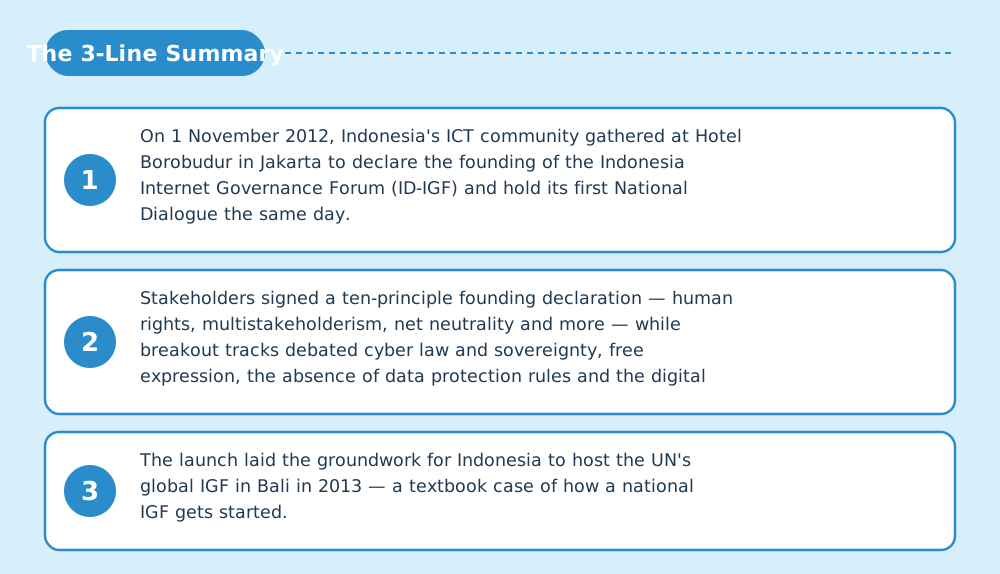
- On 1 November 2012, Indonesia's ICT community gathered at Hotel Borobudur in Jakarta to declare the founding of the Indonesia Internet Governance Forum (ID-IGF) and hold its first National Dialogue the same day.
- Stakeholders signed a ten-principle founding declaration — human rights, multistakeholderism, net neutrality and more — while breakout tracks debated cyber law and sovereignty, free expression, the absence of data protection rules and the digital divide.
- The launch laid the groundwork for Indonesia to host the UN's global IGF in Bali in 2013 — a textbook case of how a national IGF gets started.
Welcome — this is the Japan IGF Support Organization. This in-depth report on ID-IGF National Dialogue 2012 (Indonesia IGF) draws on official outputs, session records and on-site reporting. In a hurry? The three lines above and the diagrams carry the gist.
Conference at a Glance (from official records)
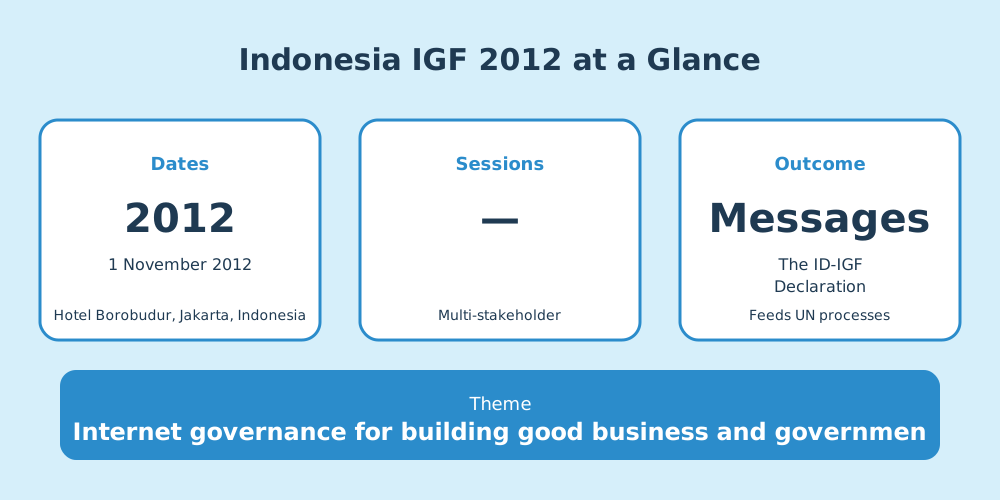
| Item | Detail |
|---|---|
| Official name | ID-IGF National Dialogue 2012 (Indonesia IGF) |
| Edition | Founding declaration and 1st National Dialogue |
| Dates | 1 November 2012 |
| Venue | Hotel Borobudur, Jakarta, Indonesia |
| Theme | Internet governance for building good business and government systems in Indonesia |
| Host | Indonesia's ICT community — government (MCIT, Detiknas), industry (APJII, PANDI) and civil society (ICT Watch) among other stakeholders |
| Outcome | The ID-IGF Declaration (ten founding principles) |
(See the source list at the end of this article.)
Discussion Digest — from the Session Records
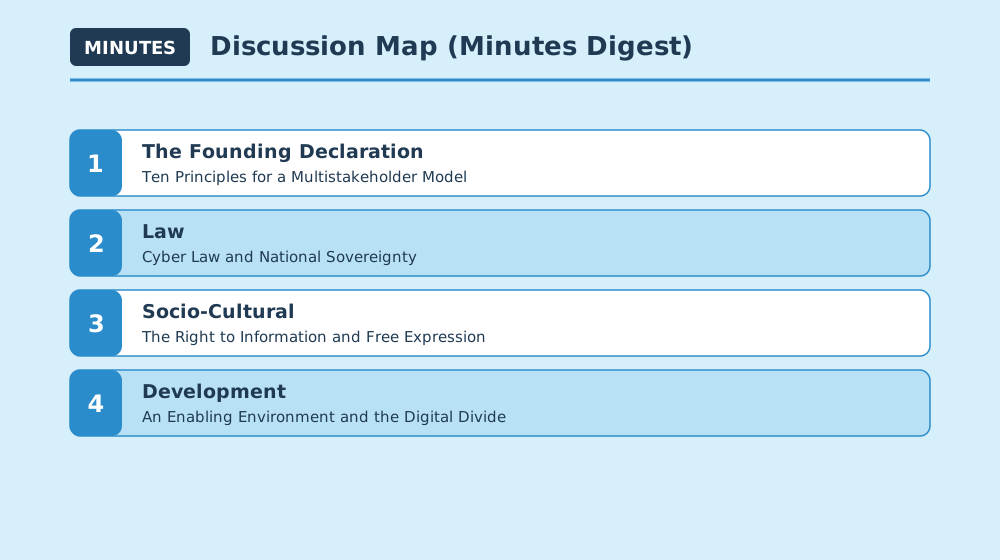
Key exchanges extracted from session records and transcripts.
1. The Founding Declaration — Ten Principles for a Multistakeholder Model
Sessions: ID-IGF Declaration ceremony (1 November 2012, Jakarta)
- Government (MCIT, Detiknas), industry (APJII, PANDI) and civil society (ICT Watch) jointly declared that Indonesia's internet governance would proceed on a multistakeholder basis [2][5]
- Ten principles were codified, from human rights, democracy and rule of law under the 1945 Constitution to state responsibility, decentralised management, open architecture, net neutrality and cultural-linguistic diversity [2][5]
- The declaration closes: 'With a spirit of cooperation, we all commit to implementing the contents of this declaration' (translated from the Indonesian original) [2][5]
2. Law — Cyber Law and National Sovereignty
Sessions: Law track (moderator: Iwan Kustiawan, Indonesia Defense University)
- Speakers including Edmon Makarim (University of Indonesia) discussed legal frameworks for internet policy, copyright protection and trust mechanisms against cybercrime [3]
- National-defence threats from cyberspace were raised alongside sovereignty questions, seeding Indonesia's later cybersecurity law debates [3]
3. Socio-Cultural — The Right to Information and Free Expression
Sessions: Socio-cultural track (moderator: Shita Laksmi, Hivos)
- Building on Law No. 12 of 2005 ratifying the ICCPR, participants affirmed protections for online freedom of expression [3]
- Content blocking and filtering practices, and the absence of personal-data and privacy protection mechanisms, were flagged as core concerns [3]
4. Development — An Enabling Environment and the Digital Divide
Sessions: Development track
- Infrastructure gaps, the digital divide and the cost barriers to rural internet access topped the agenda [3]
- Participants recommended minimising government control and strengthening community participation through collaborative oversight rather than restrictive regulation [3]
Three-Minute Short Talk — Your Questions Answered
Q. Why was ID-IGF created?
A. To give Indonesia a multistakeholder venue where government, business, civil society and the technical community discuss internet governance as equals. The 1 November 2012 declaration set out ten founding principles.
Q. What was actually decided?
A. Nothing binding — but stakeholders co-signed a ten-principle declaration covering human rights, net neutrality and cultural diversity, and breakout tracks mapped Indonesia's internet challenges in law, society and development.
Q. Why does it matter?
A. This is the body that enabled Indonesia to host the UN's global IGF in Bali the following year — and a reference case for how any country can bootstrap a national IGF.
What Is Indonesia IGF? (for first-time readers)
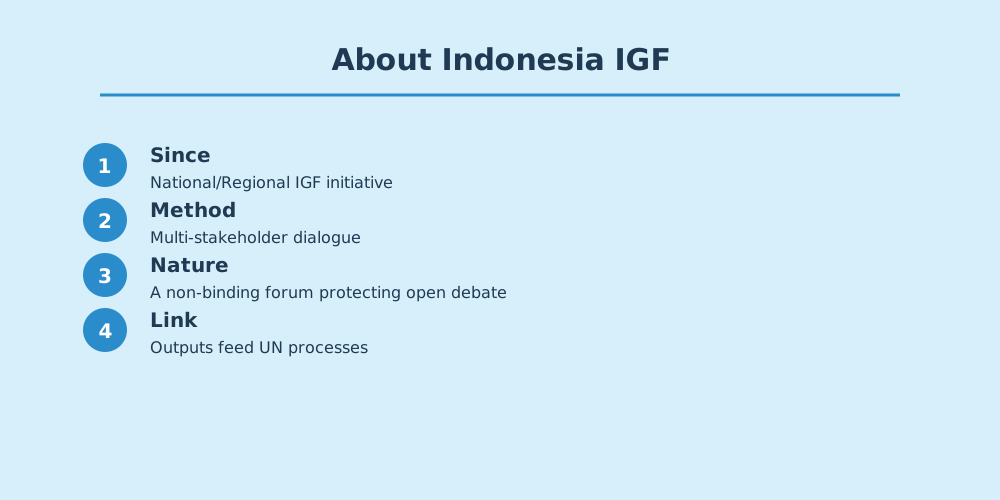
Indonesia IGF is a National or Regional IGF Initiative (NRI), aligning local internet governance discussion with global IGF principles.
Why It Matters to You
What was discussed here becomes the baseline for national digital policy, platform rules and AI regulation worldwide within a few years. The principles confirmed at the 2012 meeting are the foundation of the "next rules" for the phones, social platforms and AI services you use every day.
Sources & References
- 2012 ID-IGF Dialogue(公式開催アーカイブ) — igf.id (accessed 2026-07-11)
- ID-IGF Declaration(発足宣言・10原則) — igf.id (accessed 2026-07-11)
- Ringkasan Dialog Nasional ID-IGF 2012(公式議事要約・インドネシア語) — ID-IGF / SlideShare (accessed 2026-07-11)
- Tentang Kami(ID-IGFについて) — igf.id (accessed 2026-07-11)
- Indonesia IGF — country report — APC (accessed 2026-07-11)
Quotes are translated or condensed from the records listed above. Bracketed numbers [n] refer to the source list.
Related links
- IGF official (NRI list): https://www.intgovforum.org/en/content/national-and-regional-igf-initiatives
- Japan IGF: https://japanigf.jp/
- Yuki Nakazawa's blog: https://nkzw.jp/category/igf/
更新履歴
第1稿投稿 2026年7月13日 12時57分(記事コンテンツアップ)
— 中澤祐樹

