


The 3-Line Summary
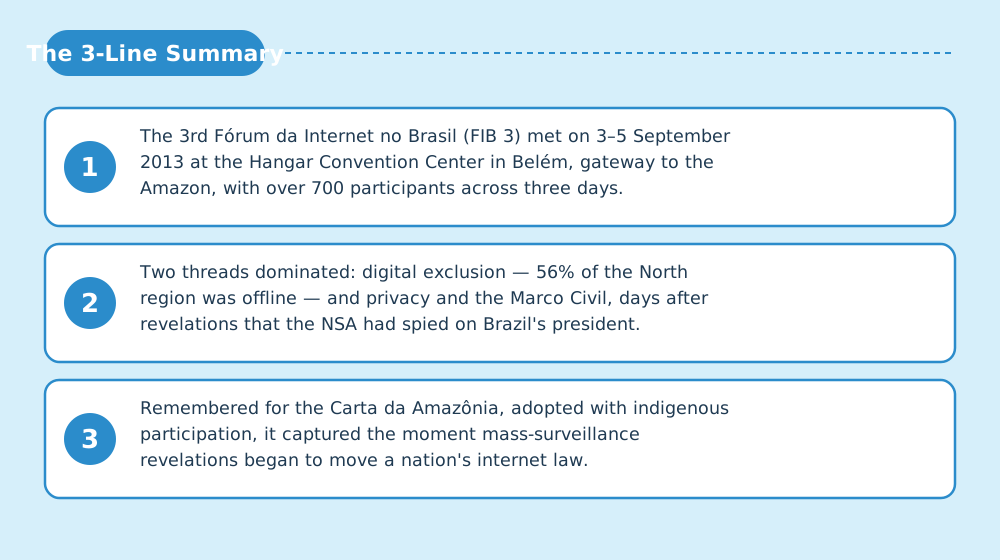
- The 3rd Fórum da Internet no Brasil (FIB 3) met on 3–5 September 2013 at the Hangar Convention Center in Belém, gateway to the Amazon, with over 700 participants across three days.
- Two threads dominated: digital exclusion — 56% of the North region was offline — and privacy and the Marco Civil, days after revelations that the NSA had spied on Brazil's president.
- Remembered for the Carta da Amazônia, adopted with indigenous participation, it captured the moment mass-surveillance revelations began to move a nation's internet law.
Welcome — this is the Japan IGF Support Organization. This in-depth report on 3rd Brazilian Internet Forum (III Fórum da Internet no Brasil) draws on official outputs, session records and on-site reporting. In a hurry? The three lines above and the diagrams carry the gist.
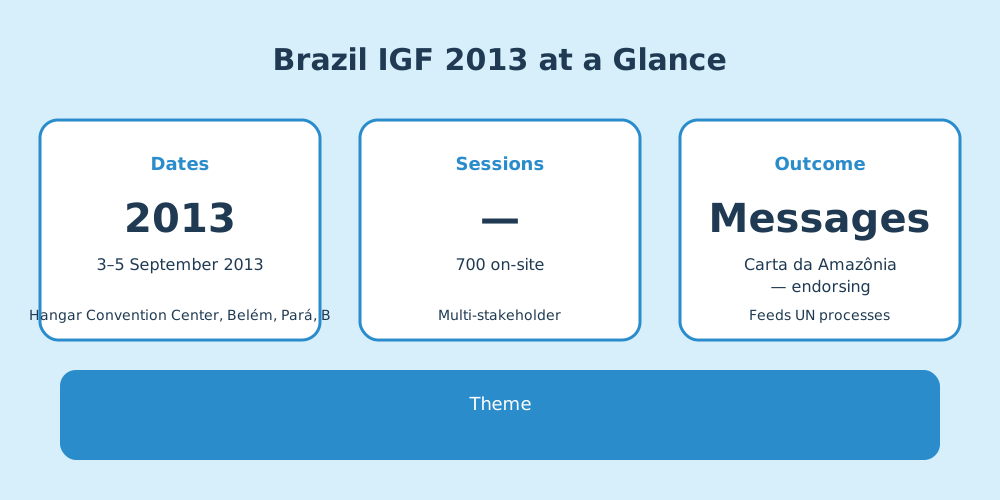
Conference at a Glance (from official records)
| Item | Detail |
|---|---|
| Official name | 3rd Brazilian Internet Forum (III Fórum da Internet no Brasil) |
| Dates | 3–5 September 2013 |
| Venue | Hangar Convention Center, Belém, Pará, Brazil |
| Theme | Regional governance themes |
| Participants | 700 |
| Tracks | 5 |
| Host | Brazilian Internet Steering Committee (CGI.br) |
| Outcome | Carta da Amazônia — endorsing Brazil's internet-governance model and the Marco Civil |
(See the source list at the end of this article.)
Discussion Digest — from the Session Records
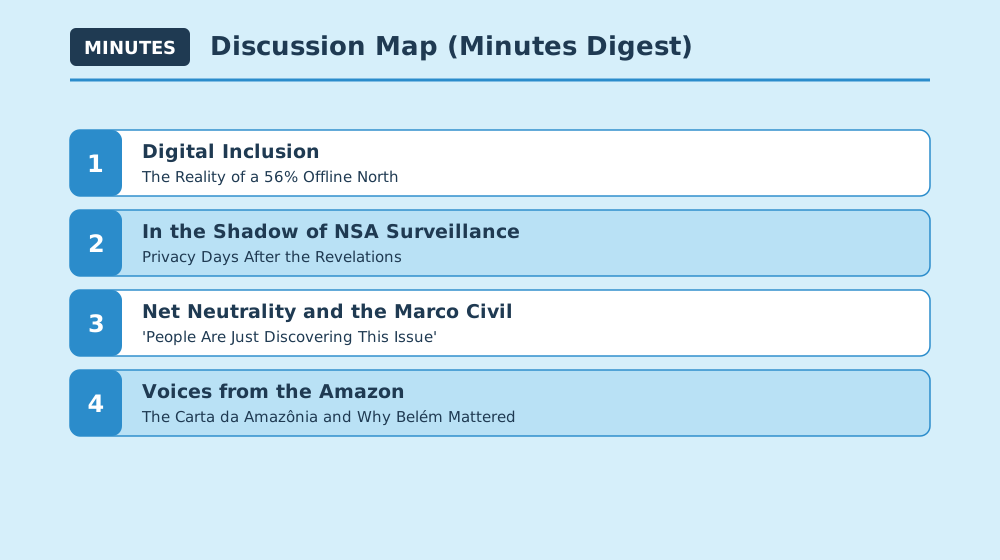
Key exchanges extracted from session records and transcripts.
1. Digital Inclusion — The Reality of a 56% Offline North
Sessions: Track on universality, accessibility and diversity, among others
"We feel honoured by this participation"
— Lafaiete Pankararu (indigenous community leader from Pernambuco) [2]
- CETIC.br data showed 56% of the North region offline, far above the 45% national average — the Amazon's connectivity gap in hard numbers [2]
- Indigenous groups joined the forum's first Northern edition, demanding broadband for rural areas and indigenous schools [2]
- Closing coverage summed up digital inclusion as the forum's single biggest demand [2]
2. In the Shadow of NSA Surveillance — Privacy Days After the Revelations
Sessions: Track on privacy, network non-liability and freedom of expression
- Snowden-based reports of NSA spying on Brazil ran from June 2013, and the story that President Rousseff herself was tapped broke on 1 September — the forum convened mid-scandal [3]
- Debate focused on the personal data concentrated in big platforms and its exposure to intelligence agencies, sharpening the privacy track [3]
- The alarm accelerated the Marco Civil: the President designated the bill for urgent consideration that same month, it passed in April 2014, and Rousseff denounced NSA spying at the UN General Assembly on 24 September [3]
3. Net Neutrality and the Marco Civil — 'People Are Just Discovering This Issue'
Sessions: Net neutrality track
"People are just now coming into contact with this issue"
— Veridiana Alimonti (CGI.br board member, forum coordinator) [2]
- Net neutrality was the most contested point of the Marco Civil then before the Chamber of Deputies, and a dedicated track opened the issue to ordinary participants [2]
- Alimonti pressed the case for passing the Marco Civil and enshrining neutrality in law [2]
4. Voices from the Amazon — The Carta da Amazônia and Why Belém Mattered
Sessions: Self-organised sessions, WSIS+10 seminar and closing plenary
- Local activists drafted the Carta da Amazônia, endorsing Brazil's multistakeholder governance model and the Marco Civil [1][2]
- Tadao Takahashi, a pioneer of the Brazilian internet, gave a retrospective talk recalling the early days of evangelising to empty rooms [1][2]
- A WSIS+10 seminar on day two linked regional concerns to the global internet-governance debate, in keeping with the forum's pre-IGF role [1][2]
Three-Minute Short Talk — Your Questions Answered
Q. Why hold it in Belém, in the Amazon?
A. To take the debate to Brazil's least-connected region: 56% of the North was offline versus a 45% national average. Indigenous communities took part and helped produce the Carta da Amazônia.
Q. What was the tensest topic?
A. NSA mass surveillance. The forum opened days after reports that President Rousseff herself had been tapped, making the privacy and Marco Civil debates suddenly very real.
Q. What did this edition change?
A. The surveillance alarm helped push the stalled Marco Civil into urgent consideration that same month — the bill became law in April 2014. This forum sat right at that turning point.
What Is Brazil IGF? (for first-time readers)
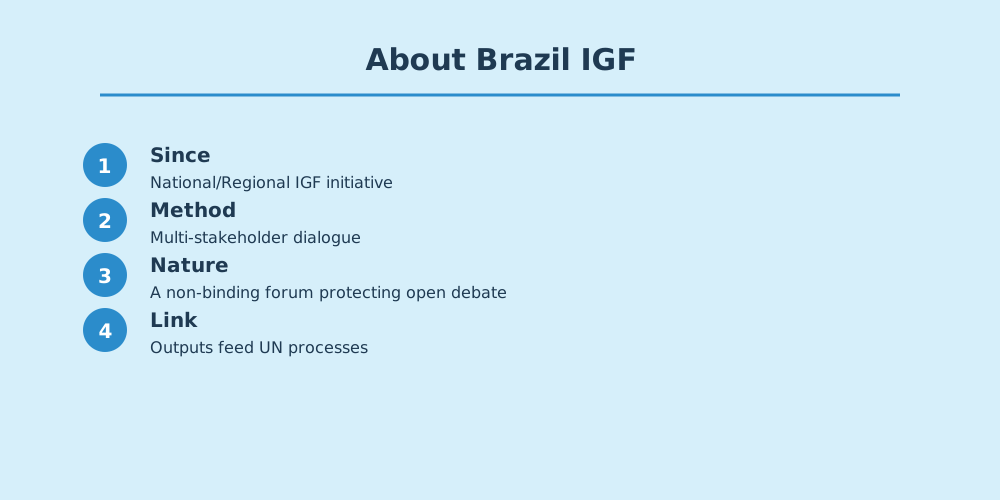
Brazil IGF is a National or Regional IGF Initiative (NRI), aligning local internet governance discussion with global IGF principles.
Why It Matters to You
What was discussed here becomes the baseline for national digital policy, platform rules and AI regulation worldwide within a few years. The principles confirmed at the 2013 meeting are the foundation of the "next rules" for the phones, social platforms and AI services you use every day.
Sources & References
- III Fórum da Internet no Brasil(公式サイト) — CGI.br(FIB公式サイト) (accessed 2026-07-11)
- Termina o III Fórum da Internet no Brasil; inclusão digital é a maior demanda — Globo (accessed 2026-07-11)
- Finding a Formula for Brazil: Representation and Legitimacy in Internet Governance — Internet Governance Project(M. Mueller / B. Wagner) (accessed 2026-07-11)
- III Fórum da Internet no Brasil Pré IGF Brasileiro 2013 — Relatório Completo Trilha 1 — CGI.br(FIB公式報告書) (accessed 2026-07-11)
- Edições — Fórum da Internet no Brasil — CGI.br(FIB公式サイト) (accessed 2026-07-11)
Quotes are translated or condensed from the records listed above. Bracketed numbers [n] refer to the source list.
Related links
- IGF official (NRI list): https://www.intgovforum.org/en/content/national-and-regional-igf-initiatives
- Japan IGF: https://japanigf.jp/
- Yuki Nakazawa's blog: https://nkzw.jp/category/igf/
Revision History
Rev. 1 — published 4 August 2013, 09:00 (Article published)
Rev. 2 — updated 16 July 2026, 20:09 (Fully revised into the in-depth edition: added the 3-line summary, minutes digest, short talk, source list and diagrams (all quotes verified against the listed sources))
— 中澤祐樹

