


The 3-Line Summary
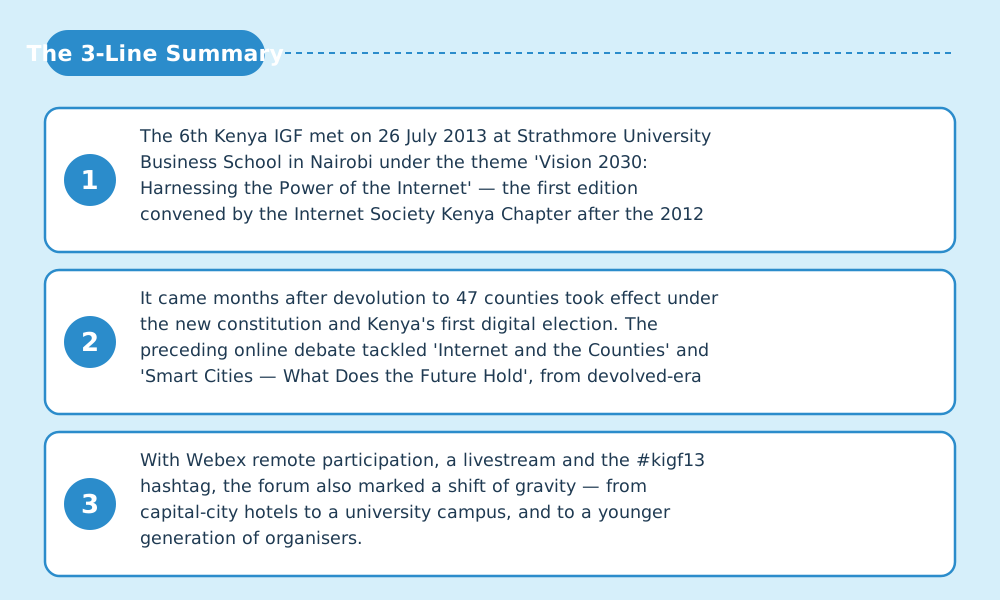
- The 6th Kenya IGF met on 26 July 2013 at Strathmore University Business School in Nairobi under the theme 'Vision 2030: Harnessing the Power of the Internet' — the first edition convened by the Internet Society Kenya Chapter after the 2012 handover.
- It came months after devolution to 47 counties took effect under the new constitution and Kenya's first digital election. The preceding online debate tackled 'Internet and the Counties' and 'Smart Cities — What Does the Future Hold', from devolved-era connectivity gaps to the Konza Techno City project.
- With Webex remote participation, a livestream and the #kigf13 hashtag, the forum also marked a shift of gravity — from capital-city hotels to a university campus, and to a younger generation of organisers.
Welcome — this is the Japan IGF Support Organization. This in-depth report on Kenya Internet Governance Forum 2013 (6th Kenya IGF) draws on official outputs, session records and on-site reporting. In a hurry? The three lines above and the diagrams carry the gist.
Conference at a Glance (from official records)
| Item | Detail |
|---|---|
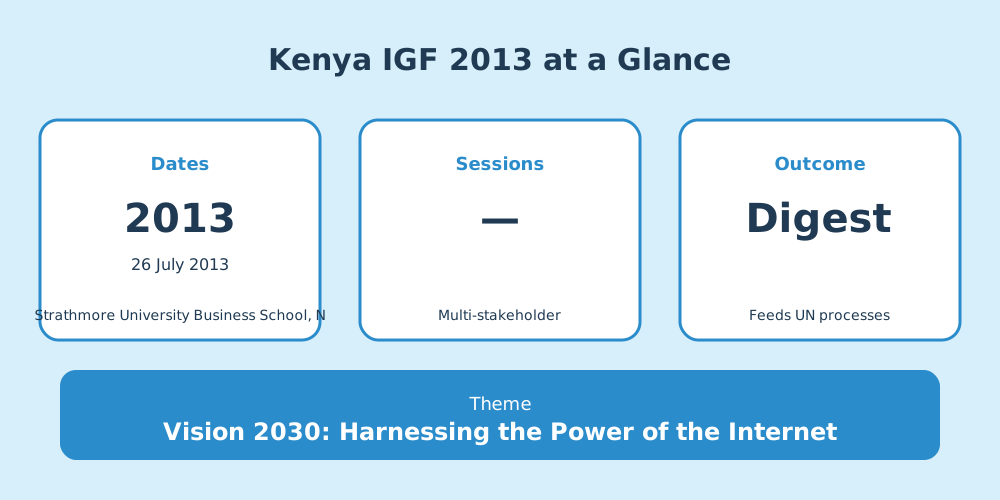
| Official name | Kenya Internet Governance Forum 2013 (6th Kenya IGF) |
| Dates | 26 July 2013 |
| Venue | Strathmore University Business School, Nairobi, Kenya |
| Theme | Vision 2030: Harnessing the Power of the Internet |
| Host | Internet Society Kenya Chapter, with the support of its partners |
(See the source list at the end of this article.)
Discussion Digest — from the Session Records
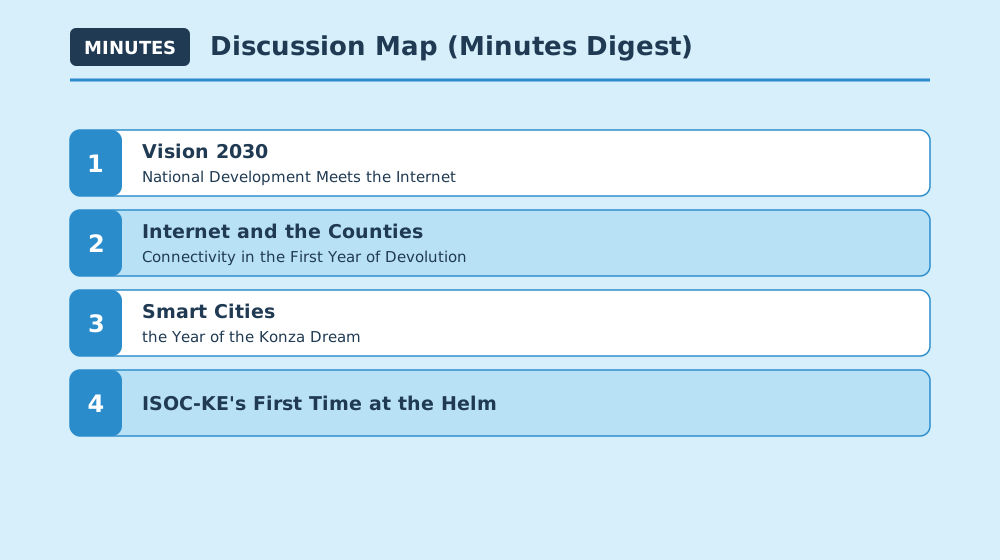
Key exchanges extracted from session records and transcripts.
1. Vision 2030 — National Development Meets the Internet
Sessions: Main forum (8:00-17:00, Strathmore University Business School)
- The official theme, 'Vision 2030: Harnessing the Power of the Internet', tied internet governance directly to Kenya's national plan to reach middle-income status by 2030 [1]
- The announcement defined the forum as bringing together 'stakeholders from the public, private sector, technical community and academia to discuss issues critical to the governance and management of Internet resources locally' [1]
- Registration ran first-come-first-served via the dedicated kenyaigf.or.ke site — a step up in institutionalisation with its own web presence and published draft programme [1]
2. Internet and the Counties — Connectivity in the First Year of Devolution
Sessions: Online debate Day 1: 'Internet and the Counties' (July 2013)
- With the 47-county system newly operational after the March 2013 election, the online debate opened with 'Internet and the Counties' [3]
- County ICT infrastructure, rural connectivity gaps and county-level e-services framed a problem set that would carry into the 2014 theme 'Connecting Counties' [3]
- The debate ran across the KICTANet, ISOC-KE and Skunkworks lists, pulling the technical community into the discussion [3]
3. Smart Cities — the Year of the Konza Dream
Sessions: Online debate Day 2: 'Smart Cities — What Does the Future Hold'
- Day 2 asked 'Smart Cities — What Does the Future Hold', in the year ground was broken at Konza Techno City, Kenya's 'Silicon Savannah' flagship [3]
- Debaters weighed sensor-laden, data-driven urban visions against the realities of power supply and basic connectivity [3]
- It showed a national IGF working not just as a regulatory forum but as a citizens' audit of the state's technology vision [3]
4. ISOC-KE's First Time at the Helm
Sessions: Forum operations (#kigf13, Webex and livestream)
- Following the 2012 handover, the Internet Society Kenya Chapter convened the forum for the first time, with a young team running announcements, registration, Webex remote access, the livestream and the #kigf13 hashtag [1][2]
- The venue moved from hotels to a university campus, deepening academia's involvement [1][2]
- Organisers like Barrack Otieno remained at the KIGF's core into the 2020s, giving the transition lasting effect [1][2]
Three-Minute Short Talk — Your Questions Answered
Q. What is 'Vision 2030'?
A. Kenya's long-term national development plan to reach middle-income status by 2030. The 2013 forum put internet governance squarely in its service: how can the internet power that plan?
Q. What was distinctive that year?
A. Counties. Devolution to 47 counties had just begun under the new constitution, so county-level connectivity gaps and e-services got their first serious airing — alongside the Konza 'Silicon Savannah' smart-city dream.
Q. Why should I care?
A. Tying digital policy to national development plans, and wrestling with decentralisation versus connectivity gaps, is a pattern found from Kenya to Japan's own digital garden-city programme. This was an early, well-documented case.
What Is Kenya IGF? (for first-time readers)
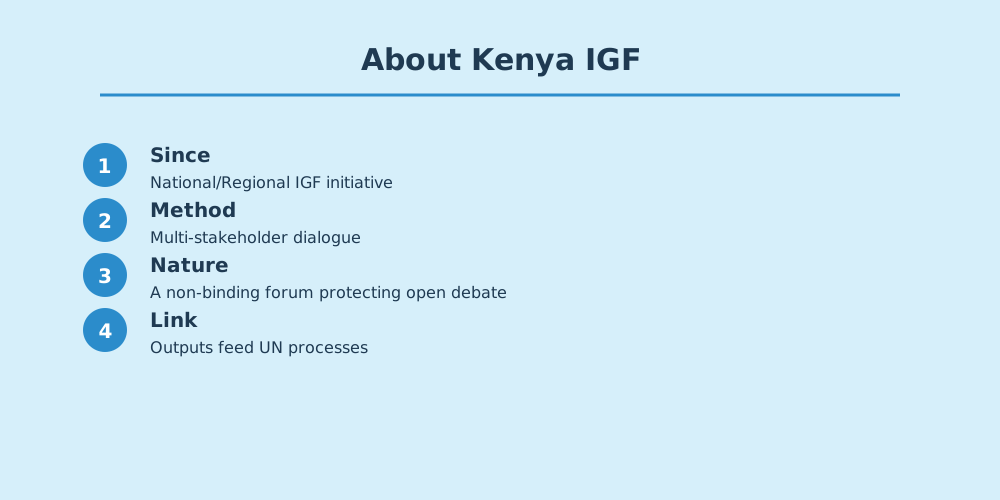
Kenya IGF is a National or Regional IGF Initiative (NRI), aligning local internet governance discussion with global IGF principles.
Why It Matters to You
What was discussed here becomes the baseline for national digital policy, platform rules and AI regulation worldwide within a few years. The principles confirmed at the 2013 meeting are the foundation of the "next rules" for the phones, social platforms and AI services you use every day.
Sources & References
- Announcing the Kenya Internet Governance Forum 2013(公式告知・2013年7月18日付、テーマと会場を明記) — KICTANetメーリングリスト・アーカイブ(一次資料) (accessed 2026-07-11)
- Kenya IGF 2013 Underway(当日の開始告知。日時・会場・配信・ハッシュタグを記録) — KICTANetメーリングリスト・アーカイブ(一次資料) (accessed 2026-07-11)
- KICTANetメーリングリスト2013年7月アーカイブ(件名索引。オンライン討議Day1「Internet and the Counties」・Day2「Smart Cities」を確認) — KICTANetメーリングリスト・アーカイブ(一次資料) (accessed 2026-07-11)
- Kenya country report: Internet governance from the ground up(Grace Githaiga / Victor Kapiyo, 2017) — APC (accessed 2026-07-11)
Quotes are translated or condensed from the records listed above. Bracketed numbers [n] refer to the source list.
Related links
- IGF official (NRI list): https://www.intgovforum.org/en/content/national-and-regional-igf-initiatives
- Japan IGF: https://japanigf.jp/
- Yuki Nakazawa's blog: https://nkzw.jp/category/igf/
Revision History
Rev. 1 — published 9 September 2013, 10:00 (Article published)
Rev. 2 — updated 17 July 2026, 12:32 (Fully revised into the in-depth edition: added the 3-line summary, minutes digest, short talk, source list and diagrams (all quotes verified against the listed sources))
— 中澤祐樹

