


The 3-Line Summary
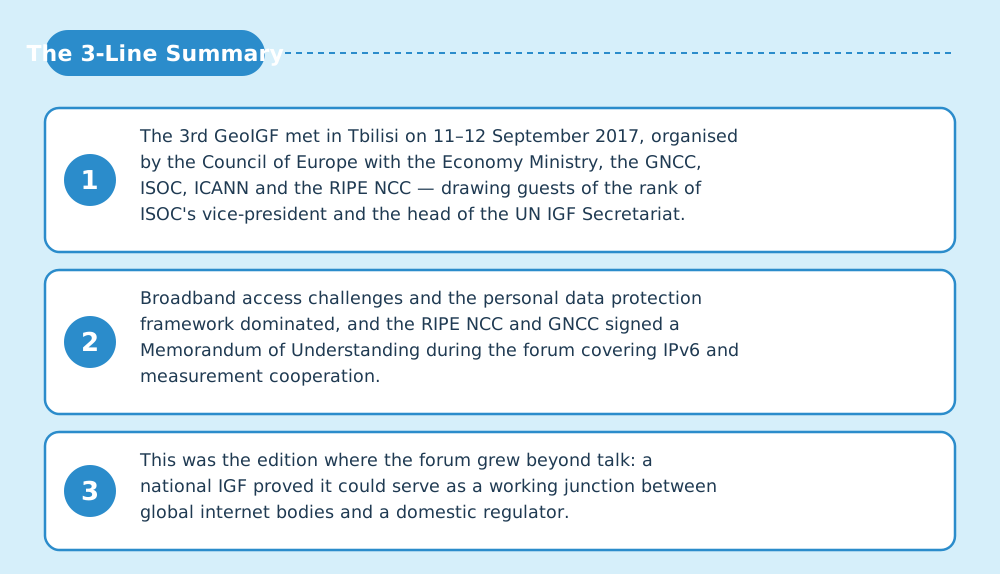
- The 3rd GeoIGF met in Tbilisi on 11–12 September 2017, organised by the Council of Europe with the Economy Ministry, the GNCC, ISOC, ICANN and the RIPE NCC — drawing guests of the rank of ISOC's vice-president and the head of the UN IGF Secretariat.
- Broadband access challenges and the personal data protection framework dominated, and the RIPE NCC and GNCC signed a Memorandum of Understanding during the forum covering IPv6 and measurement cooperation.
- This was the edition where the forum grew beyond talk: a national IGF proved it could serve as a working junction between global internet bodies and a domestic regulator.
Welcome — this is the Japan IGF Support Organization. This in-depth report on GeoIGF 2017 (3rd Georgian Internet Governance Forum) draws on official outputs, session records and on-site reporting. In a hurry? The three lines above and the diagrams carry the gist.
Conference at a Glance (from official records)
| Item | Detail |
|---|---|
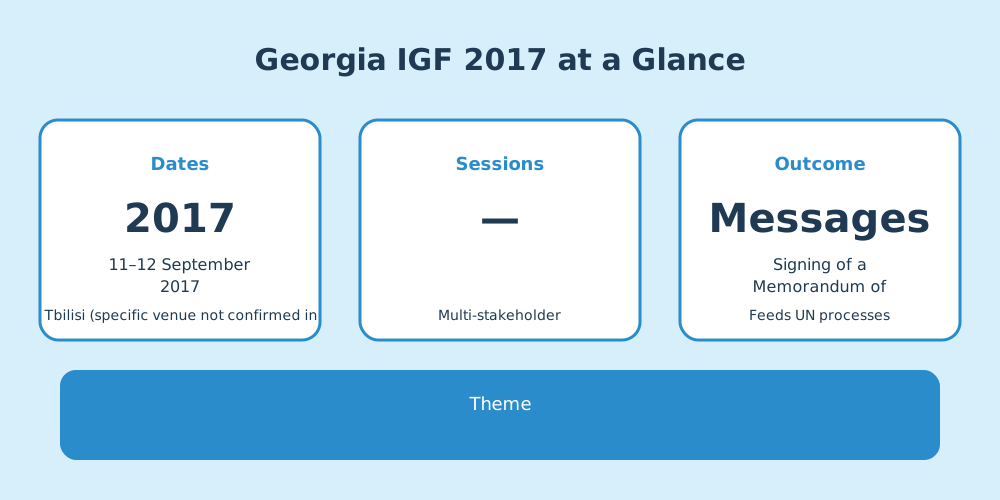
| Official name | GeoIGF 2017 (3rd Georgian Internet Governance Forum) |
| Dates | 11–12 September 2017 |
| Venue | Tbilisi (specific venue not confirmed in available sources) |
| Theme | Regional governance themes |
| Host | Organised by the Council of Europe with the Ministry of Economy and Sustainable Development, GNCC, ISOC, ICANN, RIPE NCC, the Small and Medium Telecom Operators Association, academia and media partners |
| Outcome | Signing of a Memorandum of Understanding between the RIPE NCC and the GNCC during the forum |
(See the source list at the end of this article.)
Discussion Digest — from the Session Records
Key exchanges extracted from session records and transcripts.
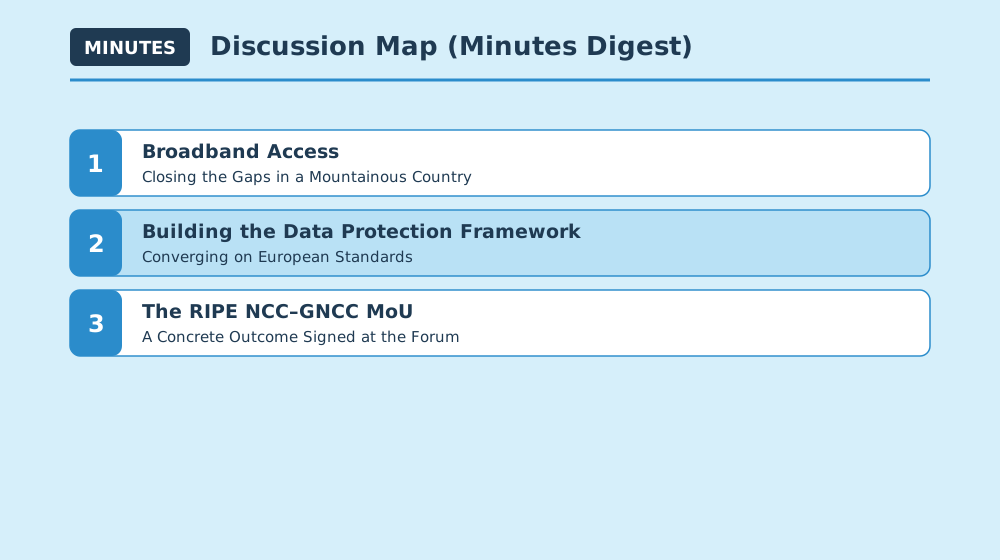
1. Broadband Access — Closing the Gaps in a Mountainous Country
Sessions: Multiple sessions
- Georgia's broadband access challenges were widely discussed by experts and participants (Council of Europe report) [1][4]
- Openers included Deputy Economy Minister George Cherkezishvili alongside ISOC vice-president Raúl Echeberría, EuroDIG secretary-general Sandra Hoferichter, RIPE NCC managing director Axel Pawlik, ICANN's Aleksandra Kulikova and the UN IGF Secretariat's Chengetai Masango, placing the access question in a global frame [1][4]
2. Building the Data Protection Framework — Converging on European Standards
Sessions: Multiple sessions
- Regulation specialised for personal data protection was a headline topic, debated with the EU's data-protection overhaul (GDPR, entering into force the following year) in view (Council of Europe report) [1]
- For a Georgia converging on European structures, data protection was unavoidable homework on both trade and rights grounds — regulator GNCC sat down with academia and the media to work through it [1]
3. The RIPE NCC–GNCC MoU — A Concrete Outcome Signed at the Forum
Sessions: MoU signing (12 September)
- On 12 September, during the forum, the RIPE NCC and the GNCC signed an MoU built on IPv6 development and training, academic cooperation through RACI, and RIPE Atlas measurement data for Georgia (RIPE NCC announcement) [2][1]
- The RIPE NCC noted it had been 'supporting the annual Georgian Internet Governance Forum' — the national IGF becoming a stage where global technical bodies and a domestic regulator strike working agreements [2][1]
Three-Minute Short Talk — Your Questions Answered
Q. What did this meeting decide?
A. IGF-style forums rarely decide anything, but this one did produce a signature: the RIPE NCC and Georgia's communications regulator signed an MoU on IPv6, training and measurement cooperation on the spot.
Q. What was the most contentious topic?
A. The broadband divide. Mountainous Georgia has stark urban–rural connectivity gaps, and how to close them was debated at length by experts and participants.
Q. Why should I care?
A. The data-protection debate took place on the eve of the GDPR, the same wave that reshaped privacy law worldwide — and rural connectivity gaps are a shared problem far beyond Georgia.
What Is Georgia IGF? (for first-time readers)
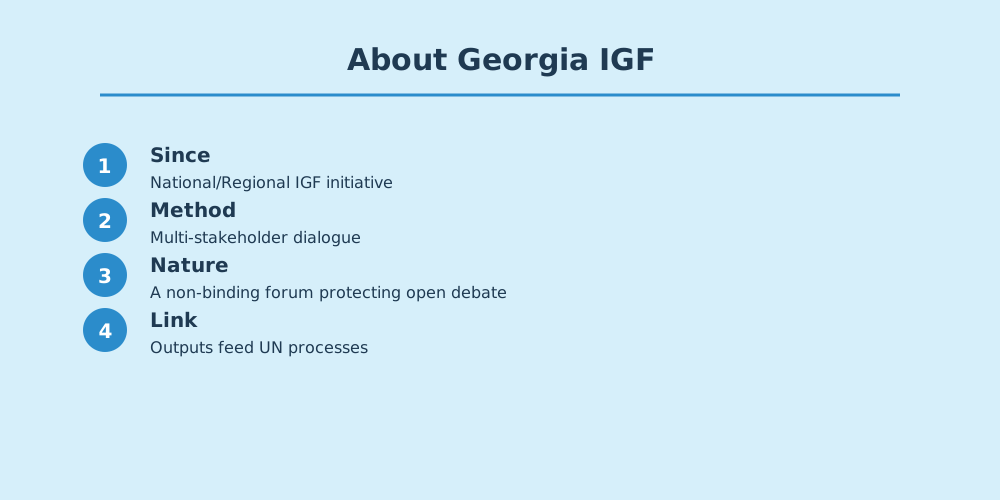
Georgia IGF is a National or Regional IGF Initiative (NRI), aligning local internet governance discussion with global IGF principles.
Why It Matters to You
What was discussed here becomes the baseline for national digital policy, platform rules and AI regulation worldwide within a few years. The principles confirmed at the 2017 meeting are the foundation of the "next rules" for the phones, social platforms and AI services you use every day.
Sources & References
- National internet Governance Forum 2017 in Georgia — 欧州評議会(Council of Europe, Freedom of Expression) (accessed 2026-07-11)
- RIPE NCC and Georgian National Communications Commission Sign Memorandum of Understanding — RIPE NCC (accessed 2026-07-11)
- მესამე ეროვნული ინტერნეტ მმართველობის ფორუმი(第3回国別インターネットガバナンスフォーラム・ジョージア語) — 欧州評議会ジョージア事務所(Council of Europe Office in Georgia) (accessed 2026-07-11)
- Georgia IGF(NRI登録ページ) — UN IGF Secretariat (accessed 2026-07-11)
Quotes are translated or condensed from the records listed above. Bracketed numbers [n] refer to the source list.
Related links
- IGF official (NRI list): https://www.intgovforum.org/en/content/national-and-regional-igf-initiatives
- Japan IGF: https://japanigf.jp/
- Yuki Nakazawa's blog: https://nkzw.jp/category/igf/
Revision History
Rev. 1 — published 25 June 2017, 12:00 (Article published)
Rev. 2 — updated 17 July 2026, 12:32 (Fully revised into the in-depth edition: added the 3-line summary, minutes digest, short talk, source list and diagrams (all quotes verified against the listed sources))
— 中澤祐樹

