


The 3-Line Summary
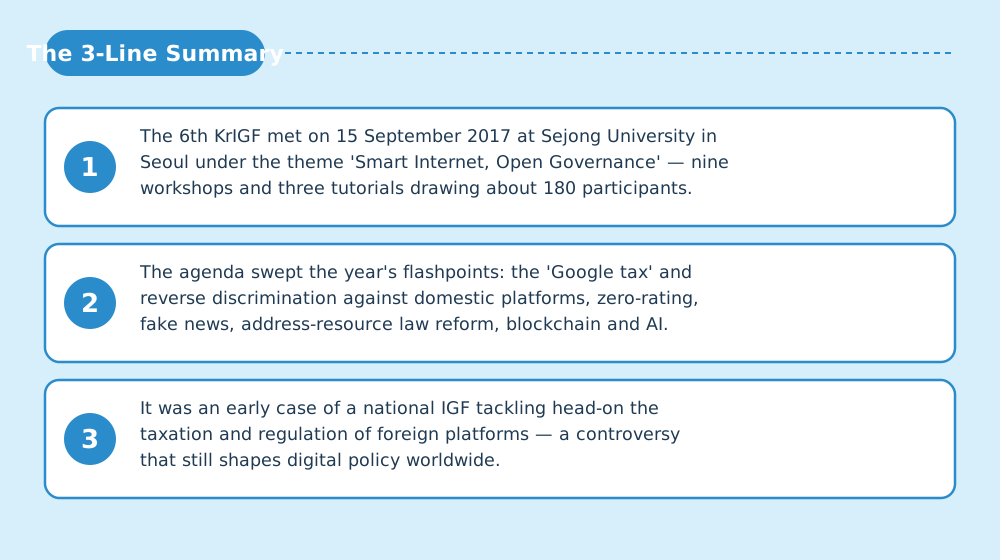
- The 6th KrIGF met on 15 September 2017 at Sejong University in Seoul under the theme 'Smart Internet, Open Governance' — nine workshops and three tutorials drawing about 180 participants.
- The agenda swept the year's flashpoints: the 'Google tax' and reverse discrimination against domestic platforms, zero-rating, fake news, address-resource law reform, blockchain and AI.
- It was an early case of a national IGF tackling head-on the taxation and regulation of foreign platforms — a controversy that still shapes digital policy worldwide.
Welcome — this is the Japan IGF Support Organization. This in-depth report on 6th Korea Internet Governance Forum (KrIGF 2017) draws on official outputs, session records and on-site reporting. In a hurry? The three lines above and the diagrams carry the gist.
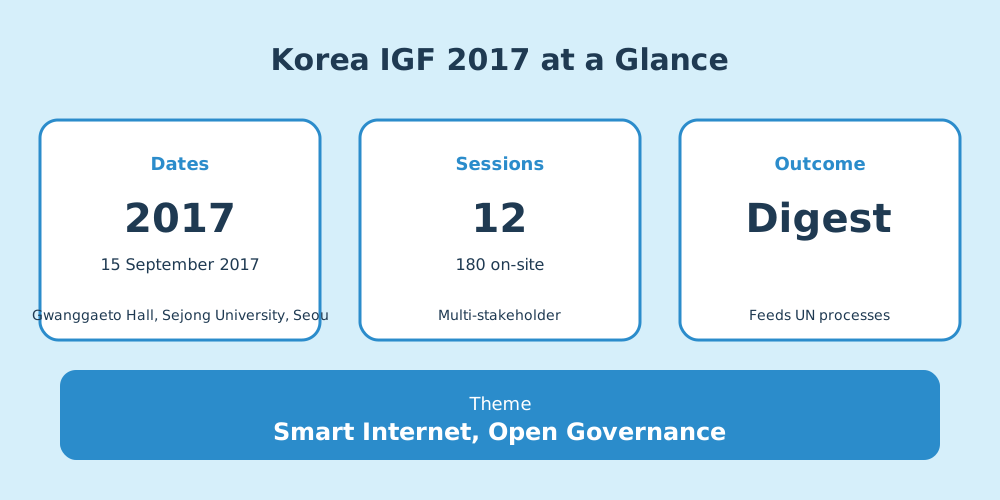
Conference at a Glance (from official records)
| Item | Detail |
|---|---|
| Official name | 6th Korea Internet Governance Forum (KrIGF 2017) |
| Dates | 15 September 2017 |
| Venue | Gwanggaeto Hall, Sejong University, Seoul |
| Theme | Smart Internet, Open Governance |
| Participants | 180 |
| Sessions | 12 |
| Tracks | Four tracks: Internet Economy, Safe Internet, Governance, Tutorials |
| Host | Hosted by the Korea Internet Governance Alliance (KIGA), co-organised by 18 bodies including KISA and Naver |
(See the source list at the end of this article.)
Discussion Digest — from the Session Records
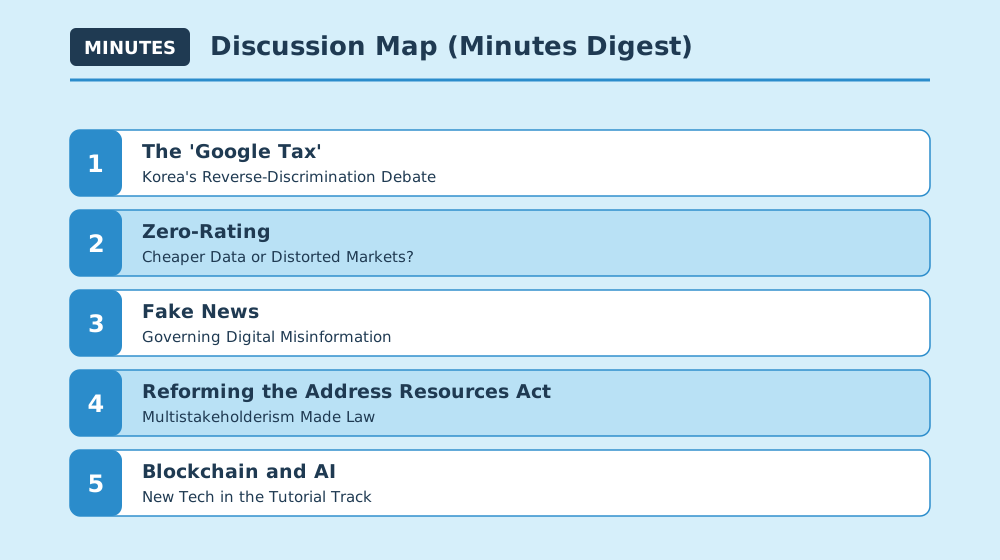
Key exchanges extracted from session records and transcripts.
1. The 'Google Tax' — Korea's Reverse-Discrimination Debate
Sessions: Workshop 1 'Reverse discrimination in the digital economy — the world after the Google tax' (10:45–12:15)
- Fueled by complaints that domestic firms bear taxes and rules foreign platforms escape, Workshop 1 examined the world after the so-called Google tax [2][3]
- GISWatch records that the programme committee deliberately staged emerging topics — Google tax, fake news, blockchain — to draw a wider audience in 2017 [2][3]
2. Zero-Rating — Cheaper Data or Distorted Markets?
Sessions: Workshop 4 'Zero-rating as a remedy for telecom costs — a market-competition view' (13:30–15:00)
- Zero-rating, floated as a way to cut household telecom bills, was tested against market competition and net-neutrality principles [2]
- Panellists weighed whether exempting selected services from data charges favours deep-pocketed incumbents and locks out newcomers [2]
3. Fake News — Governing Digital Misinformation
Sessions: Workshop 8 'Governance responses to digital misinformation' (15:15–16:45, proposed by Open Net)
- With misinformation a national preoccupation after the presidential impeachment and the May 2017 election, Open Net convened a workshop on governance responses to fake news [2][3]
- The tension ran between countering falsehoods and protecting free expression, and how to apportion roles among platforms, media and users [2][3]
4. Reforming the Address Resources Act — Multistakeholderism Made Law
Sessions: Workshop 3 'Implementing multistakeholder governance for address-policy reform' and Workshop 9 'Open policy for internet address resources' (proposed by KIGA)
- Two workshops advanced the reform of internet address policy, including replacing the government-appointed deliberation committee with an autonomous, bottom-up elected body [2][3]
- KIGA had set up a working group for the bill, with designs that would even re-separate KRNIC from KISA, as GISWatch details [2][3]
5. Blockchain and AI — New Tech in the Tutorial Track
Sessions: Tutorial 1 'Understanding and applying blockchain' (Min Kyung-sik, KISA); Tutorial 2 'AI: past, present, future' (Jeong Soo-heon, Kakao); Tutorial 3 'IG overview: IGF, ICANN, SIG'
- A standing tutorial track taught the basics: blockchain with KISA's Min Kyung-sik and AI's past, present and future with Kakao's Jeong Soo-heon [2]
- The IG overview tutorial featured ICANN's Kelvin Wong and others walking newcomers through the IGF, ICANN and schools on internet governance [2]
Three-Minute Short Talk — Your Questions Answered
Q. What did this meeting decide?
A. Nothing binding, but it put the year's hottest disputes — the Google tax, fake news, address-law reform — in one room with government, business and civil society, feeding directly into real legislative work.
Q. What was the most contentious topic?
A. Reverse discrimination: the charge that domestic firms carry taxes and regulations that giant foreign platforms escape.
Q. Why should I care?
A. Digital taxation and misinformation policy later became global battlegrounds — Korea's national IGF was debating them openly in 2017.
What Is Korea IGF? (for first-time readers)
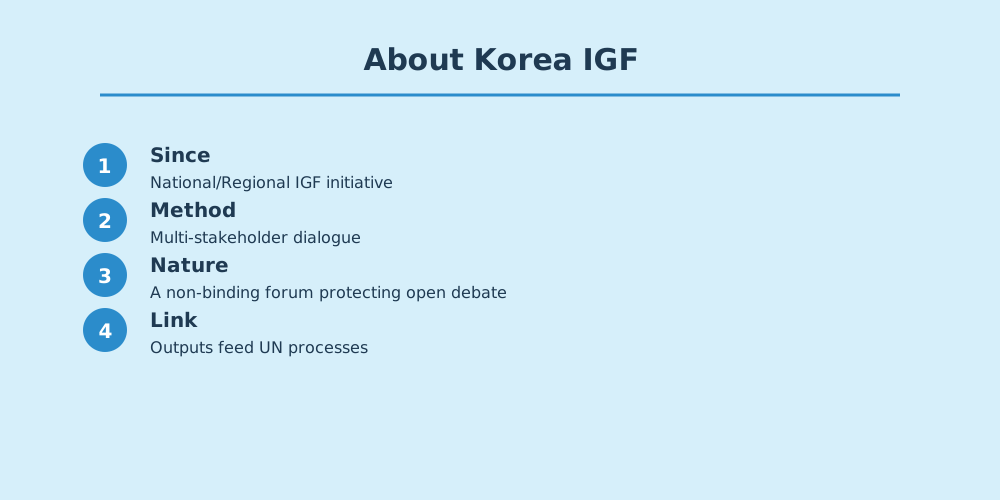
Korea IGF is a National or Regional IGF Initiative (NRI), aligning local internet governance discussion with global IGF principles.
Why It Matters to You
What was discussed here becomes the baseline for national digital policy, platform rules and AI regulation worldwide within a few years. The principles confirmed at the 2017 meeting are the foundation of the "next rules" for the phones, social platforms and AI services you use every day.
Sources & References
- 2017 KrIGF 개요(第6回フォーラム概要) — KrIGF公式サイト(Kr-IGF 한국 인터넷거버넌스포럼) (accessed 2026-07-11)
- 2017 프로그램(第6回フォーラム プログラム) — KrIGF公式サイト(Kr-IGF 한국 인터넷거버넌스포럼) (accessed 2026-07-11)
- Korea, Republic of — Internet governance country report — Global Information Society Watch(APC) (accessed 2026-07-11)
- 한국 인터넷거버넌스포럼 (KrIGF) 소개・개최 이력(開催履歴表) — KRNIC 한국인터넷정보센터(KISA運営) (accessed 2026-07-11)
- 2025년 제14회 한국 인터넷거버넌스포럼 세미나 정보(歴代テーマ一覧を含む) — 韓国国会図書館(국회도서관) (accessed 2026-07-11)
Quotes are translated or condensed from the records listed above. Bracketed numbers [n] refer to the source list.
Related links
- IGF official (NRI list): https://www.intgovforum.org/en/content/national-and-regional-igf-initiatives
- Japan IGF: https://japanigf.jp/
- Yuki Nakazawa's blog: https://nkzw.jp/category/igf/
Revision History
Rev. 1 — published 11 July 2017, 15:00 (Article published)
Rev. 2 — updated 16 July 2026, 20:09 (Fully revised into the in-depth edition: added the 3-line summary, minutes digest, short talk, source list and diagrams (all quotes verified against the listed sources))
— 中澤祐樹

