


The 3-Line Summary
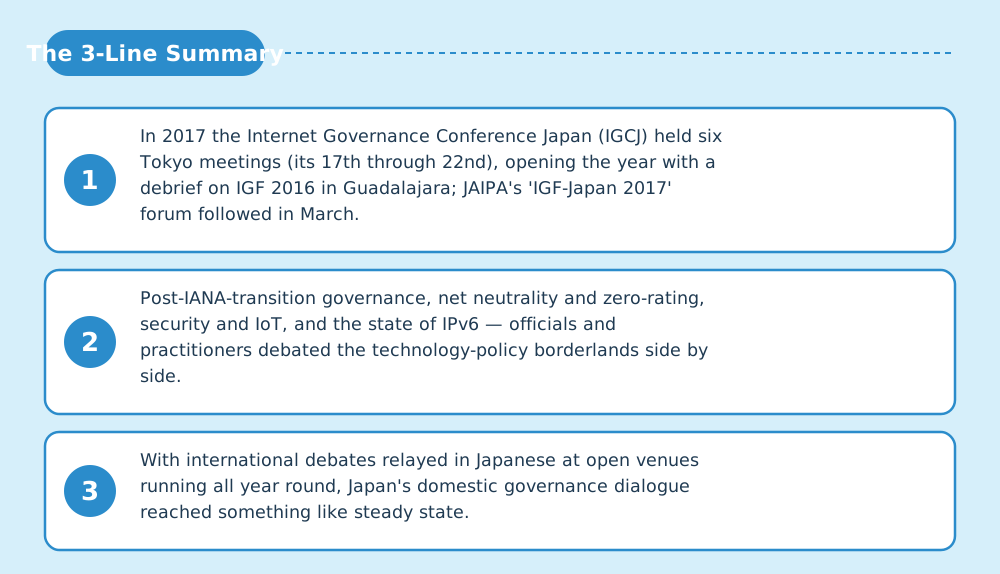
- In 2017 the Internet Governance Conference Japan (IGCJ) held six Tokyo meetings (its 17th through 22nd), opening the year with a debrief on IGF 2016 in Guadalajara; JAIPA's 'IGF-Japan 2017' forum followed in March.
- Post-IANA-transition governance, net neutrality and zero-rating, security and IoT, and the state of IPv6 — officials and practitioners debated the technology-policy borderlands side by side.
- With international debates relayed in Japanese at open venues running all year round, Japan's domestic governance dialogue reached something like steady state.
Welcome — this is the Japan IGF Support Organization. This in-depth report on Internet Governance Conference Japan (IGCJ) — 2017 Meetings draws on official outputs, session records and on-site reporting. In a hurry? The three lines above and the diagrams carry the gist.
Conference at a Glance (from official records)
| Item | Detail |
|---|---|
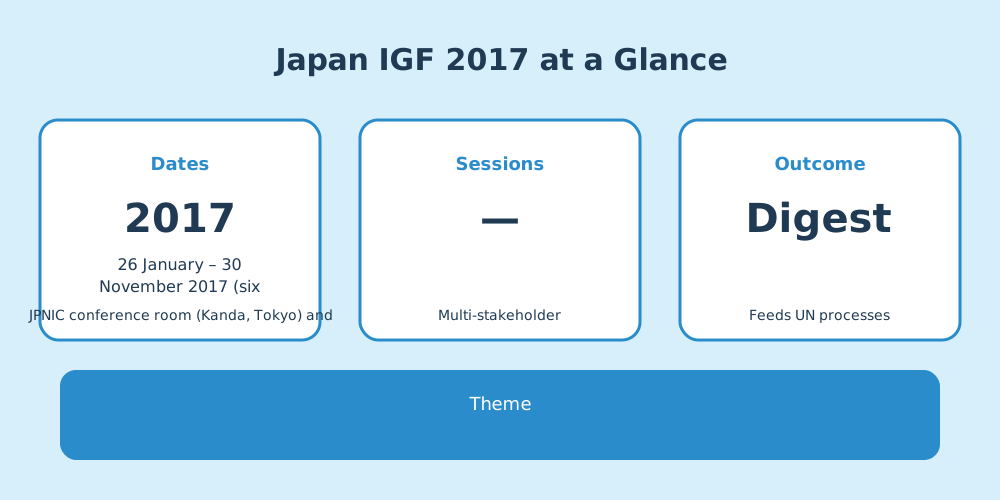
| Official name | Internet Governance Conference Japan (IGCJ) — 2017 Meetings |
| Dates | 26 January – 30 November 2017 (six meetings) |
| Venue | JPNIC conference room (Kanda, Tokyo) and Hulic Conference (during Internet Week 2017) |
| Theme | Regional governance themes |
| Host | Internet Governance Conference Japan (IGCJ; secretariat: JPNIC) |
(See the source list at the end of this article.)
Discussion Digest — from the Session Records
Key exchanges extracted from session records and transcripts.
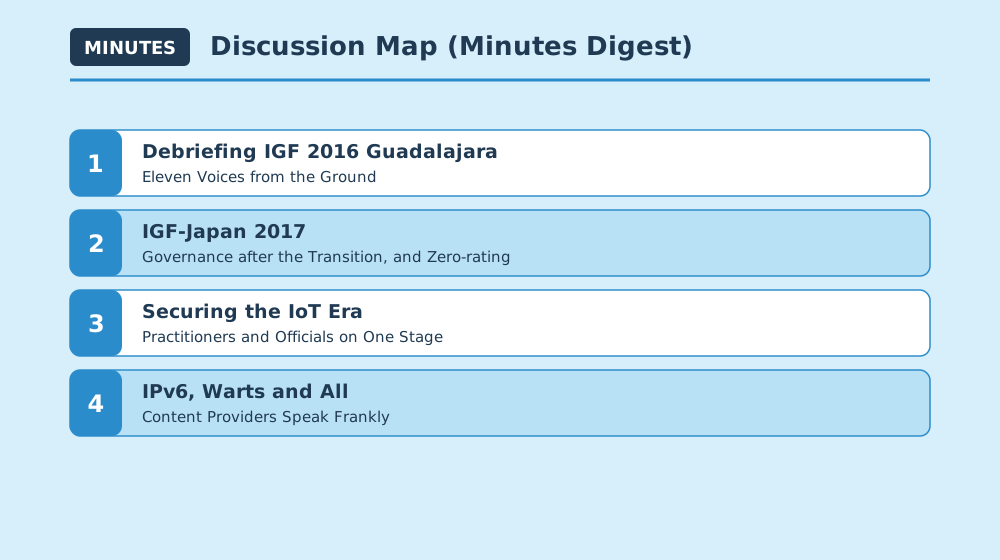
1. Debriefing IGF 2016 Guadalajara — Eleven Voices from the Ground
Sessions: IGF 2016 debrief (26 Jan, 16:00–17:45, JPNIC conference room, held back-to-back with the 17th IGCJ meeting)
- Eleven participants — including MIC's Makoto Takamura, JPNIC's Izumi Okutani and JAIPA's Toshiaki Tateishi — reported on IGF 2016, held in Guadalajara in December 2016, from government, technical-community and business perspectives [2][4]
- The debrief relayed in Japanese the debates of a meeting that drew some 2,000 participants from 123 countries; the 17th IGCJ meeting that followed took stock of the year and discussed IGCJ's future [2][4]
2. IGF-Japan 2017 — Governance after the Transition, and Zero-rating
Sessions: IGF-Japan 2017 (7 March, Toshi Center Hotel Room 606; hosted by JAIPA, supported by MIC)
- As the first domestic forum after ICANN left US-government oversight, it took stock of IGF 2016 and the implications of the IANA transition [4][5]
- Net neutrality — above all the pros and cons of 'zero-rating', which exempts specific services from data charges — was a headline topic [4][5]
- Youth IGF programmes ahead of APrIGF Bangkok (July 2017) also came up, putting next-generation capacity building on the domestic agenda [4][5]
3. Securing the IoT Era — Practitioners and Officials on One Stage
Sessions: 22nd meeting, Part 1: 'The security and IoT landscape' (30 Nov, during Internet Week 2017)
- Practitioners from across the security ecosystem — Yahoo Japan's Kenta Mochizuki, Microsoft Japan's Ken Katayama, APNIC's Pablo Hinojosa, NICT's Masaki Kubo, JPCERT/CC's Shingo Abe, MIC's Atsushi Goto and NTT Communications' Satoshi Noritake — debated side by side [3]
- Against the backdrop of exploding IoT device numbers, the session examined security governance from operators' incident response, international cooperation and government policy angles [3]
4. IPv6, Warts and All — Content Providers Speak Frankly
Sessions: 22nd meeting, Part 2: 'IPv6 today from the perspective of content and data-centre operators and government'
- Content and data-centre operators including J-Stream and DMM.com Labo spoke frankly about the realities and hurdles of IPv6 adoption (moderated by JPNIC's Masayuki Okada) [3]
- A hands-on session true to the resource-management community, digging into why migration stalls — without the usual pieties [3]
Three-Minute Short Talk — Your Questions Answered
Q. What were the highlights of Japan's 2017 governance debate?
A. The IGF 2016 debrief in January and IGF-Japan 2017 in March. The centre of gravity shifted to running the internet in the world 'after' the IANA transition completed the previous year.
Q. What's the problem with zero-rating?
A. It makes traffic for specific apps free of charge. Convenient — but should carriers get to pick which services to favour? That question cuts to the heart of net neutrality.
Q. Why should I care?
A. Neutral pricing on your phone plan, the safety of IoT gadgets at home, the quality of your video streams (IPv6) — 2017's agenda was everyday life. And every venue was open for anyone to join.
What Is Japan IGF? (for first-time readers)
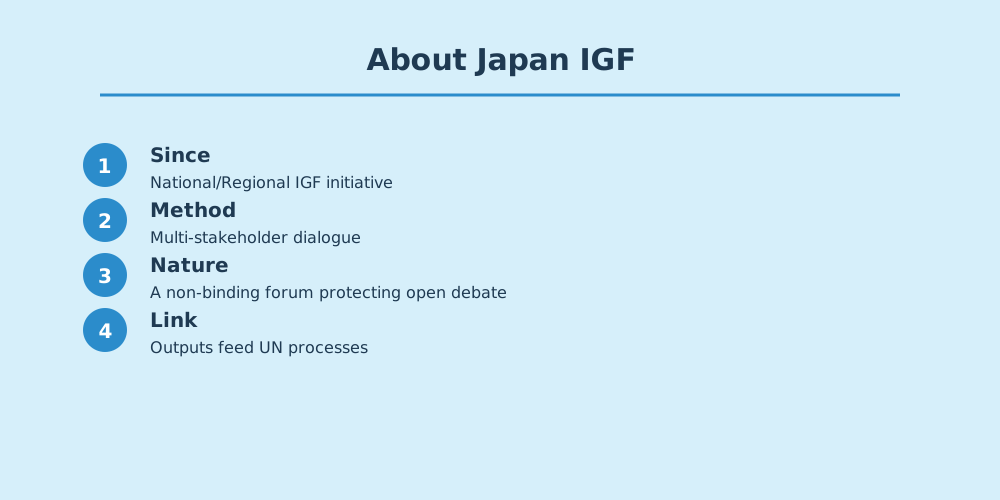
Japan IGF is a National or Regional IGF Initiative (NRI), aligning local internet governance discussion with global IGF principles.
Why It Matters to You
What was discussed here becomes the baseline for national digital policy, platform rules and AI regulation worldwide within a few years. The principles confirmed at the 2017 meeting are the foundation of the "next rules" for the phones, social platforms and AI services you use every day.
Sources & References
- 日本インターネットガバナンス会議(IGCJ)ミーティング一覧 — 日本インターネットガバナンス会議(IGCJ) (accessed 2026-07-11)
- IGF 2016に関する報告会・第17回日本インターネットガバナンス会議(2017年1月26日)プログラム・資料 — 日本インターネットガバナンス会議(IGCJ) (accessed 2026-07-11)
- 第22回日本インターネットガバナンス会議(2017年11月30日、Internet Week 2017内)プログラム・資料 — 日本インターネットガバナンス会議(IGCJ) (accessed 2026-07-11)
- IGF-Japan 2017 開催のご案内 — 一般社団法人日本インターネットプロバイダー協会(JAIPA) (accessed 2026-07-11)
- IGF-Japanアーカイブ — 一般社団法人日本インターネットプロバイダー協会(JAIPA) (accessed 2026-07-11)
- 日本インターネットガバナンス会議(IGCJ)とは — 日本インターネットガバナンス会議(IGCJ) (accessed 2026-07-11)
Quotes are translated or condensed from the records listed above. Bracketed numbers [n] refer to the source list.
Related links
- IGF official (NRI list): https://www.intgovforum.org/en/content/national-and-regional-igf-initiatives
- Japan IGF: https://japanigf.jp/
- Yuki Nakazawa's blog: https://nkzw.jp/category/igf/
Revision History
Rev. 1 — published 22 November 2017, 14:00 (Article published)
Rev. 2 — updated 16 July 2026, 20:09 (Fully revised into the in-depth edition: added the 3-line summary, minutes digest, short talk, source list and diagrams (all quotes verified against the listed sources))
— 中澤祐樹