


The 3-Line Summary
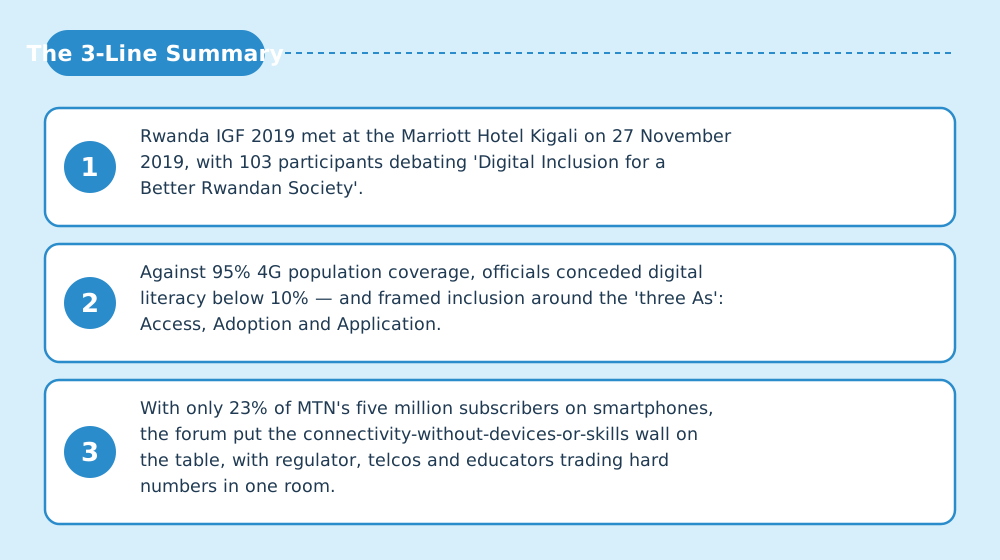
- Rwanda IGF 2019 met at the Marriott Hotel Kigali on 27 November 2019, with 103 participants debating 'Digital Inclusion for a Better Rwandan Society'.
- Against 95% 4G population coverage, officials conceded digital literacy below 10% — and framed inclusion around the 'three As': Access, Adoption and Application.
- With only 23% of MTN's five million subscribers on smartphones, the forum put the connectivity-without-devices-or-skills wall on the table, with regulator, telcos and educators trading hard numbers in one room.
Welcome — this is the Japan IGF Support Organization. This in-depth report on Rwanda Internet Governance Forum 2019 draws on official outputs, session records and on-site reporting. In a hurry? The three lines above and the diagrams carry the gist.
Conference at a Glance (from official records)
| Item | Detail |
|---|---|
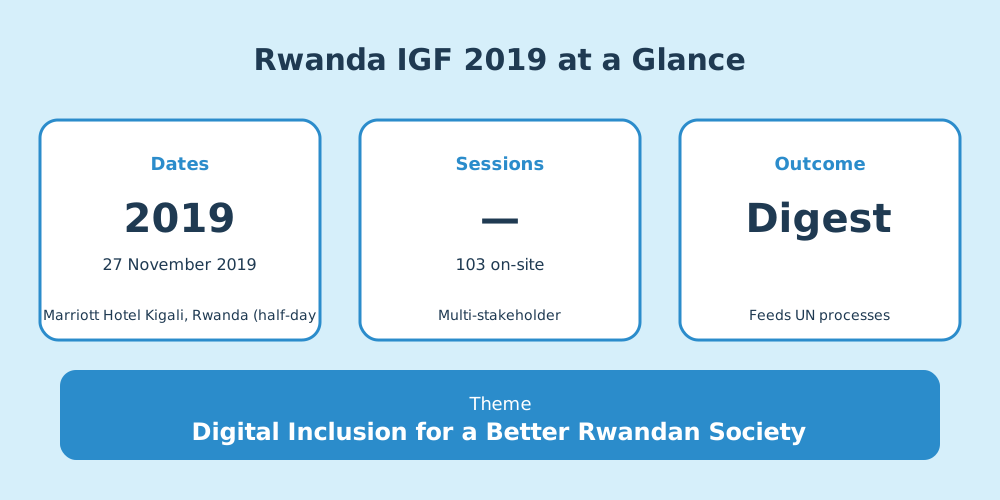
| Official name | Rwanda Internet Governance Forum 2019 |
| Dates | 27 November 2019 |
| Venue | Marriott Hotel Kigali, Rwanda (half-day event) |
| Theme | Digital Inclusion for a Better Rwandan Society |
| Participants | 103 |
| Host | Hosted by RICTA with MINICT, RURA, GIZ, IGFSA, the ICT Chamber, the University of Rwanda, the ISOC Rwanda Chapter, BSC and SPARC |
(See the source list at the end of this article.)
Discussion Digest — from the Session Records
Key exchanges extracted from session records and transcripts.
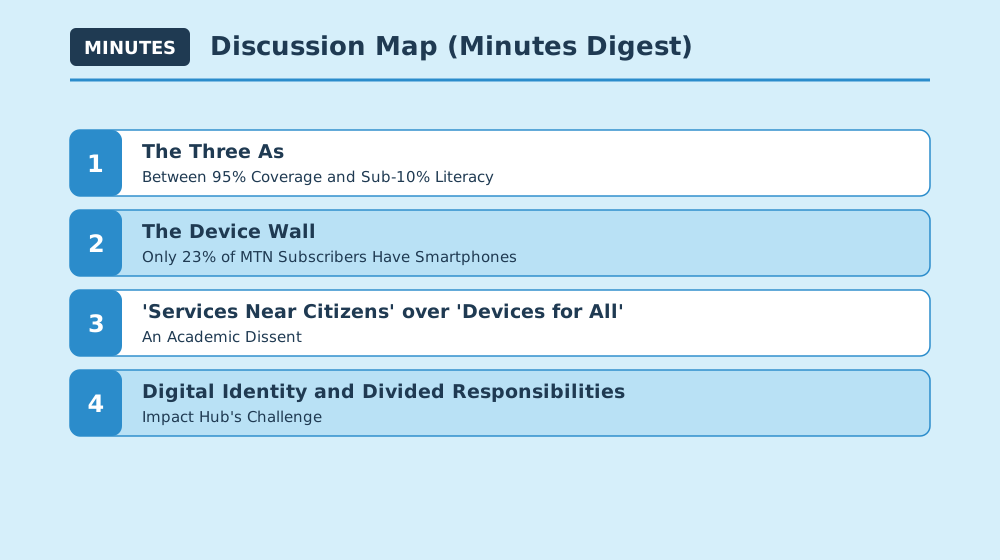
1. The Three As — Between 95% Coverage and Sub-10% Literacy
Sessions: Keynote by PS Claudette Irere and presentation by Government CIO Josephine Nyiranzeyimana (RISA)
- Inclusion was framed as three As — Access (availability, affordability), Adoption (relevance, literacy, consumer safety) and Application (economy, workforce, civic life) — against achievements like a 7,000 km fibre backbone and 95% 4G population coverage [1]
- Yet government figures put citizens' digital literacy below 10%, and PS Irere urged a citizen-centred audit of every policy and law [1]
- An international comparison placed Rwanda's 8 Mbps monthly cost 94% below Lubumbashi but 66% above Mumbai, with electricity coverage, cost and motivation flagged as gaps [1]
2. The Device Wall — Only 23% of MTN Subscribers Have Smartphones
Sessions: First panel on digital access, adoption and application, moderated by ICT Chamber CEO Alex Ntale
- MTN Rwanda's Didas Ndoli revealed only 23% of its five million subscribers had smartphones, pointing to manufacturer partnerships for affordable devices — with locally assembled Maraphone and Positivo BGH treated as inclusion tools [1]
- BSC's CEO recalled that a few years earlier the whole government consumed 10 Mbps, urging investment to match surging demand, while Liquid Telecom described fibre-to-the-home work to cut connectivity costs [1]
- In education: 64% of primary schools had laptops, 55% smart-classroom coverage in secondary schools, and over 23,000 teachers trained in ICT essentials, with a REB-KOICA plan for 60 teacher-training centres of excellence [1]
3. 'Services Near Citizens' over 'Devices for All' — An Academic Dissent
Sessions: Second panel with JICA's Atsushi Yamanaka, the ICT Chamber, AC Group and Professor Tim Brown
- JICA's Yamanaka recalled Rwanda ten years earlier — no fibre, only expensive VSAT — tracing how public infrastructure investment brought prices down and users online [1]
- Professor Tim Brown argued that handing everyone devices would fail under literacy constraints; better to place services close to citizens and use research to find the real question — the panel's shared conclusion was training and awareness for change management [1]
- The ICT Chamber reported digitalising 53 tourism companies through its transformation classes; AC Group described moving bus fares to cards and a mobile app [1]
4. Digital Identity and Divided Responsibilities — Impact Hub's Challenge
Sessions: Presentation by Jon Stever, co-founder of Impact Hub, on a people's perspective of Rwanda's digital future
- A show of hands confirmed nearly the whole room used the Internet daily for email, navigation and news — grounding inclusion in lived experience [1]
- On protecting digital identity, a five-way division of labour was proposed: government regulates, companies harden security, NGOs teach safe use, citizens learn self-protection, academia researches new safeguards [1]
Three-Minute Short Talk — Your Questions Answered
Q. What did the meeting decide?
A. It was stocktaking rather than decisions — but RISA closed with a concrete pledge to assess the state of digital inclusion and set measurable indicators toward a knowledge economy, which became a yardstick for later policy.
Q. What was most contentious?
A. Whether handing out devices advances inclusion. Telcos talked affordable smartphones; academia countered that low literacy would leave devices underused, and that services should be designed close to citizens instead.
Q. Why should I care?
A. A JICA expert sat on the second panel, tracing Rwanda's decade from VSAT to fibre. The 95%-coverage-versus-sub-10%-literacy gap mirrors digital-adoption challenges in ageing societies like Japan's.
What Is Rwanda IGF? (for first-time readers)
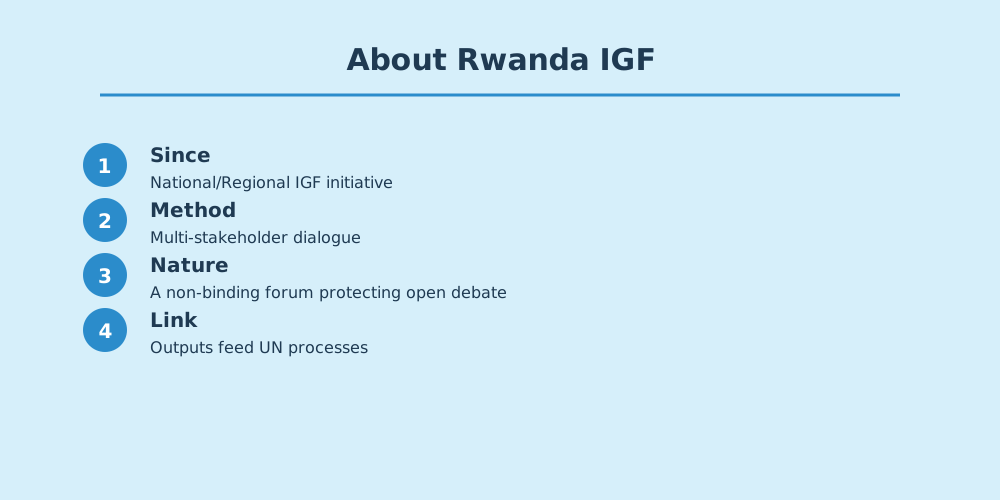
Rwanda IGF is a National or Regional IGF Initiative (NRI), aligning local internet governance discussion with global IGF principles.
Why It Matters to You
What was discussed here becomes the baseline for national digital policy, platform rules and AI regulation worldwide within a few years. The principles confirmed at the 2019 meeting are the foundation of the "next rules" for the phones, social platforms and AI services you use every day.
Sources & References
- Rwanda Internet Governance Forum 2019 Report(公式報告書: 2019-11-27・Marriott Hotel・103名・テーマ・基調講演/3プレゼン/2パネルの記録) — RICTA / Rwanda IGF(国連IGF filedepot経由) (accessed 2026-07-23)
- Rwanda IGF(NRI公式記録: established in 2014・RICTA事務局・年次報告書一覧・コーディネーター Grace Ingabire Mwikarago) — 国連IGF事務局 (accessed 2026-07-23)
- About RwIGF(公式沿革) — Rwanda IGF(rwigf.rw) (accessed 2026-07-23)
Quotes are translated or condensed from the records listed above. Bracketed numbers [n] refer to the source list.
Related links
- IGF official (NRI list): https://www.intgovforum.org/en/content/national-and-regional-igf-initiatives
- Japan IGF: https://japanigf.jp/
- Yuki Nakazawa's blog: https://nkzw.jp/category/igf/
更新履歴
第1稿投稿 2026年8月7日 10時12分(記事コンテンツアップ)
— 中澤祐樹

