


The 3-Line Summary
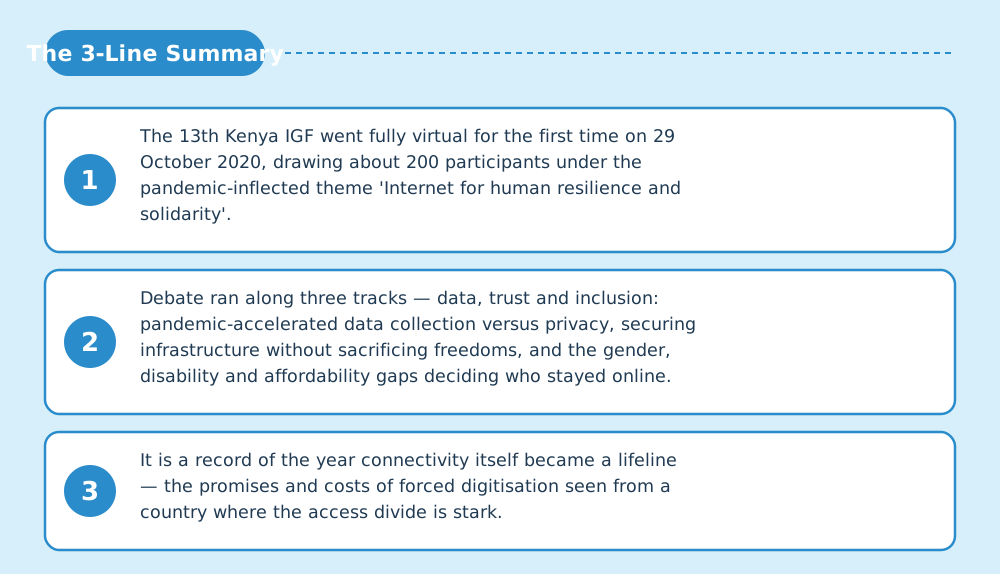
- The 13th Kenya IGF went fully virtual for the first time on 29 October 2020, drawing about 200 participants under the pandemic-inflected theme 'Internet for human resilience and solidarity'.
- Debate ran along three tracks — data, trust and inclusion: pandemic-accelerated data collection versus privacy, securing infrastructure without sacrificing freedoms, and the gender, disability and affordability gaps deciding who stayed online.
- It is a record of the year connectivity itself became a lifeline — the promises and costs of forced digitisation seen from a country where the access divide is stark.
Welcome — this is the Japan IGF Support Organization. This in-depth report on Kenya IGF 2020 (13th Kenya Internet Governance Forum) draws on official outputs, session records and on-site reporting. In a hurry? The three lines above and the diagrams carry the gist.
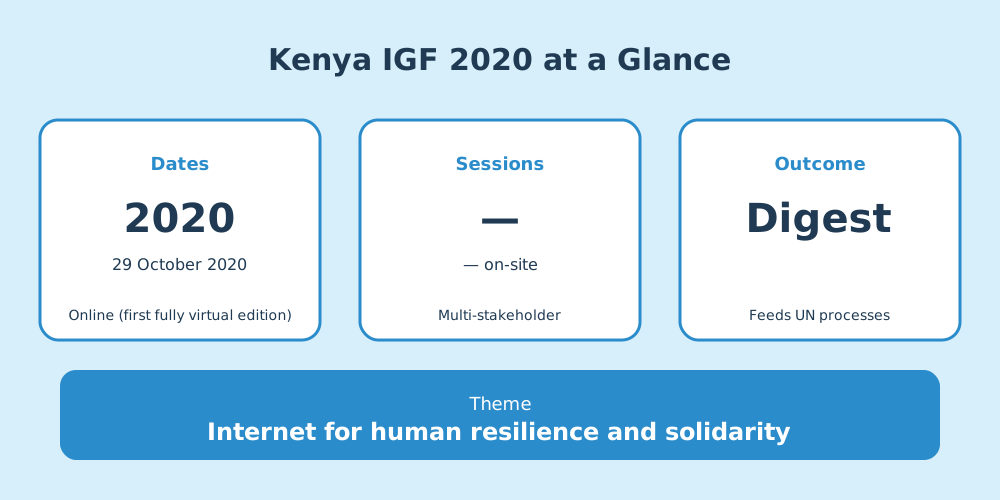
Conference at a Glance (from official records)
| Item | Detail |
|---|---|
| Official name | Kenya IGF 2020 (13th Kenya Internet Governance Forum) |
| Edition | 13th edition |
| Dates | 29 October 2020 |
| Venue | Online (first fully virtual edition) |
| Theme | Internet for human resilience and solidarity |
| Participants | 約200人(政府・民間・市民社会・技術・学術コミュニティ) |
| Format | Fully virtual |
| Host | Convened by KICTANet with Safaricom, Facebook, APC, the Kenya Human Rights Commission, the Communications Authority, CIO and KeNIC |
(See the source list at the end of this article.)
Discussion Digest — from the Session Records
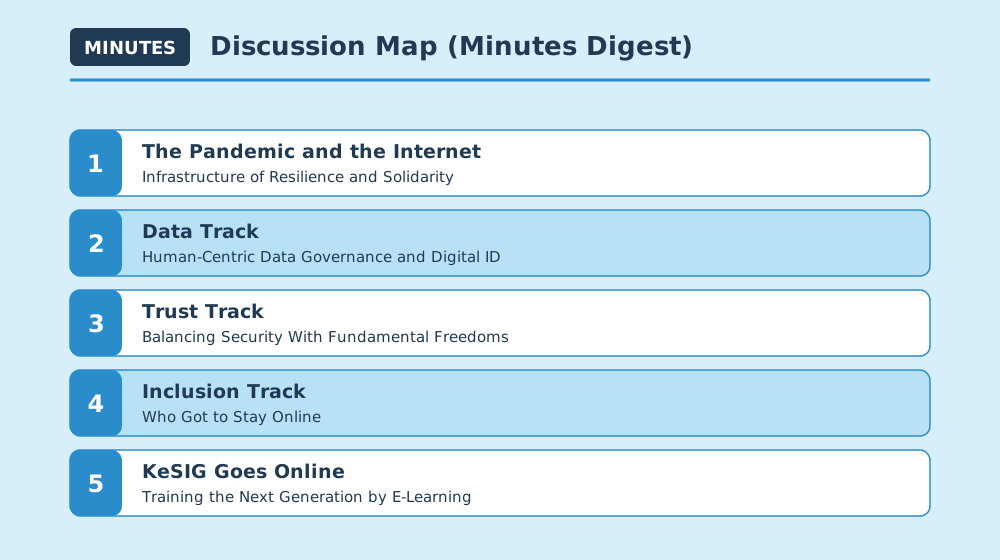
Key exchanges extracted from session records and transcripts.
1. The Pandemic and the Internet — Infrastructure of Resilience and Solidarity
Sessions: Main forum (29 October, online)
- With work, education and public services forced online, the theme itself asserted the internet's role in empowerment, free expression and economic survival [1][2]
- The theme was chosen to reflect the internet's pandemic role, and outcomes fed into the first-ever virtual global IGF that November [1][2]
2. Data Track — Human-Centric Data Governance and Digital ID
Sessions: Data track
- Framed around 'ensuring the data revolution benefits inclusive development while protecting rights', the track examined human-centric data governance frameworks and digital-identity rights [1]
- Pandemic contact-tracing and health-data collection had reignited the privacy debate under Kenya's newly enacted Data Protection Act [1]
3. Trust Track — Balancing Security With Fundamental Freedoms
Sessions: Trust track
- The track weighed the security and resilience of digital infrastructure against fundamental rights and freedoms in the face of emerging threats [1]
- The rush to remote work and learning had widened the attack surface, sharpening the case for a trustworthy internet [1]
4. Inclusion Track — Who Got to Stay Online
Sessions: Inclusion track
- The track focused on connecting underserved communities and dismantling barriers of gender, disability, digital literacy and affordability [1][2]
- Under lockdown, connectivity determined access to schooling and income — inclusion was debated as a livelihood issue, not an abstraction [1][2]
5. KeSIG Goes Online — Training the Next Generation by E-Learning
Sessions: 5th Kenya School of Internet Governance (26–28 October)
- The 5th KeSIG combined KICTANet's own e-learning platform with video calls, covering fundamentals, topical issues like online protest and content creation, and direct exchanges with policymakers over three days [3][4]
- Regulators, legislative drafters and private-sector advocates engaged the fellows, whose graduation fed into the main forum [3][4]
Three-Minute Short Talk — Your Questions Answered
Q. What was this meeting about?
A. In the middle of the pandemic, how the internet sustains lives and solidarity — organised around three tracks: data, trust, and making sure no one is left offline.
Q. Did the virtual format work?
A. Yes — the first fully virtual edition in 13 years still drew about 200 participants, and the KeSIG training school ran on KICTANet's own e-learning platform.
Q. Why should I care?
A. Children locked out of remote schooling, contact-tracing versus privacy — the same dilemmas every country faced in 2020, examined where the connectivity gap bites hardest.
What Is Kenya IGF? (for first-time readers)
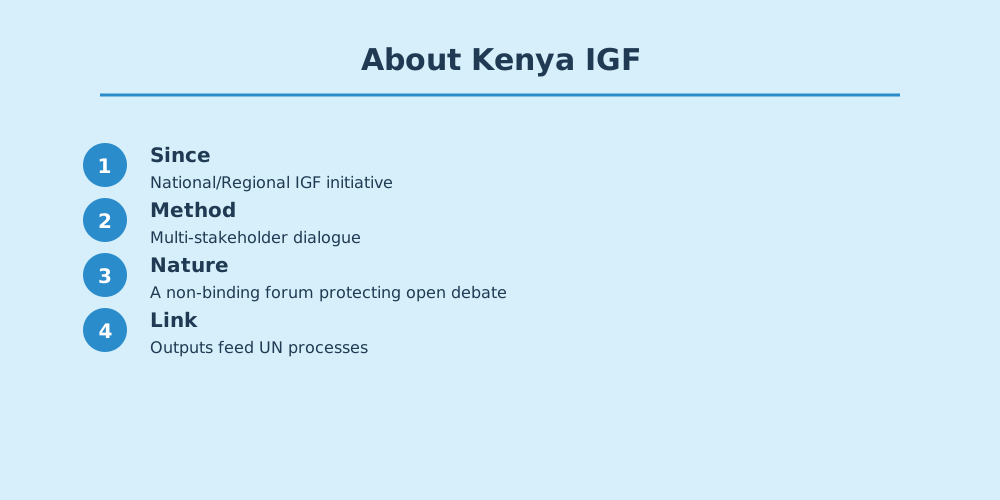
Kenya IGF is a National or Regional IGF Initiative (NRI), aligning local internet governance discussion with global IGF principles.
Why It Matters to You
What was discussed here becomes the baseline for national digital policy, platform rules and AI regulation worldwide within a few years. The principles confirmed at the 2020 meeting are the foundation of the "next rules" for the phones, social platforms and AI services you use every day.
Sources & References
- Highlights from Kenya IGF Week 2020 — Association for Progressive Communications (accessed 2026-07-11)
- APC Shaping Internet Governance Processes At KeIGF — CIO Africa (accessed 2026-07-11)
- KeSIG Program 2020 — kigf.or.ke (accessed 2026-07-11)
- Kenya School of Internet Governance 2020 fellows — KICTANet (accessed 2026-07-11)
Quotes are translated or condensed from the records listed above. Bracketed numbers [n] refer to the source list.
Related links
- IGF official (NRI list): https://www.intgovforum.org/en/content/national-and-regional-igf-initiatives
- Japan IGF: https://japanigf.jp/
- Yuki Nakazawa's blog: https://nkzw.jp/category/igf/
Revision History
Rev. 1 — published 16 September 2020, 09:00 (Article published)
Rev. 2 — updated 17 July 2026, 12:32 (Fully revised into the in-depth edition: added the 3-line summary, minutes digest, short talk, source list and diagrams (all quotes verified against the listed sources))
— 中澤祐樹

