


The 3-Line Summary
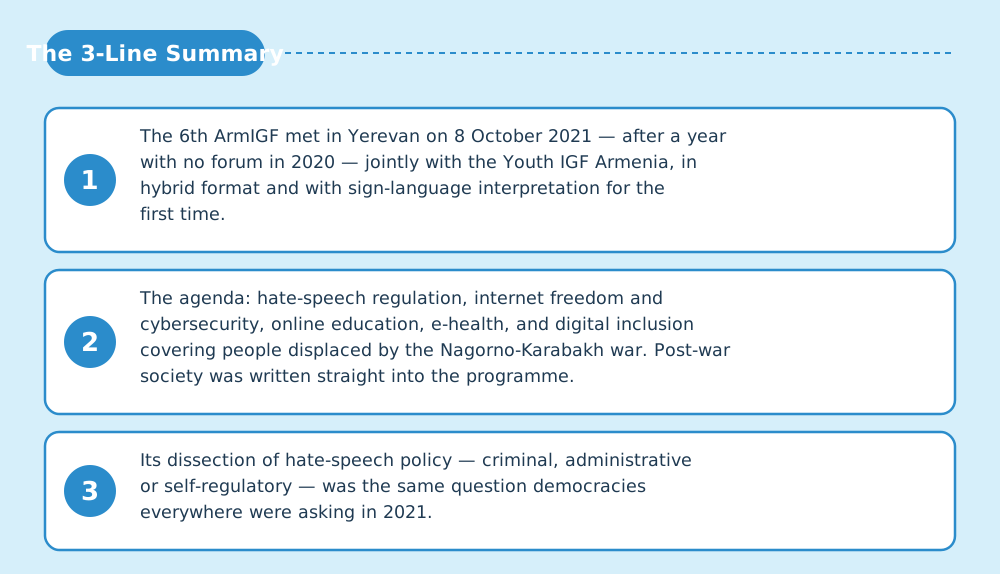
- The 6th ArmIGF met in Yerevan on 8 October 2021 — after a year with no forum in 2020 — jointly with the Youth IGF Armenia, in hybrid format and with sign-language interpretation for the first time.
- The agenda: hate-speech regulation, internet freedom and cybersecurity, online education, e-health, and digital inclusion covering people displaced by the Nagorno-Karabakh war. Post-war society was written straight into the programme.
- Its dissection of hate-speech policy — criminal, administrative or self-regulatory — was the same question democracies everywhere were asking in 2021.
Welcome — this is the Japan IGF Support Organization. This in-depth report on 6th Armenian Internet Governance Forum (ArmIGF 2021) draws on official outputs, session records and on-site reporting. In a hurry? The three lines above and the diagrams carry the gist.
Conference at a Glance (from official records)
| Item | Detail |
|---|---|
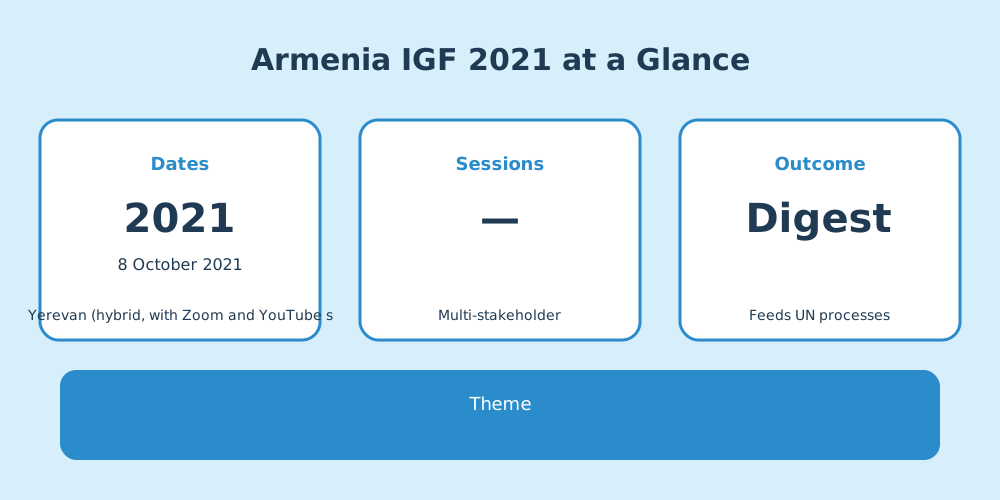
| Official name | 6th Armenian Internet Governance Forum (ArmIGF 2021) |
| Dates | 8 October 2021 |
| Venue | Yerevan (hybrid, with Zoom and YouTube streaming) |
| Theme | Regional governance themes |
| Host | Organised by the IGC, the Internet Society NGO and the ISOC Armenia Chapter with the support of the Ministry of High-Tech Industry, jointly with the Youth IGF Armenia |
(See the source list at the end of this article.)
Discussion Digest — from the Session Records
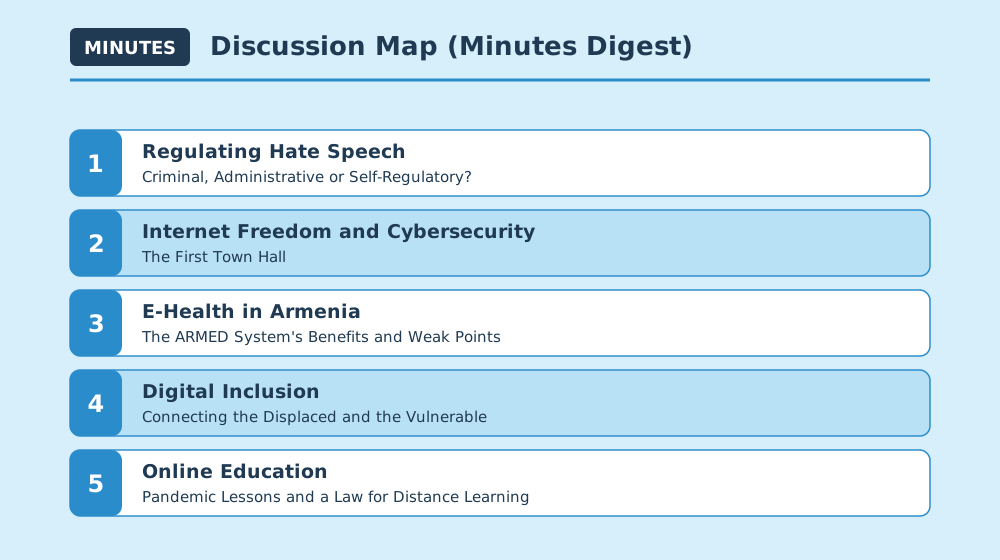
Key exchanges extracted from session records and transcripts.
1. Regulating Hate Speech — Criminal, Administrative or Self-Regulatory?
Sessions: Panel 'Hate Speech' (moderated by TV and Radio Committee chair Tigran Hakobyan, with MP Anush Beghloian, the Human Rights Defender's office, a UNDP expert and Mediamax's chief editor)
- Alongside a new law against insults, panellists argued criminalising hate speech is less effective than administrative regulation, given Armenia's well-developed administrative procedures [3]
- A proposal to delegate hate-speech control to registrars and telecom operators drew the sharpest fire: their staff are not and need not be hate-speech experts, and the platforms where hate speech thrives sit outside their authority anyway [3]
- A cautious camp preferred education and awareness over strict legislation, watching how leading countries settle the issue first — the report deliberately records the disagreement [3]
2. Internet Freedom and Cybersecurity — The First Town Hall
Sessions: Town-hall session 'Internet Freedom, Cybersecurity' (10:00–10:45, Samvel Martirosyan of the ArmSec Foundation and Davit Karapetyan of OWASP Yerevan)
- Martirosyan warned that Armenian online free speech had slipped by Freedom House standards — and that nobody was asking who decides access restrictions, under what legal norms [3]
- The year's large data leaks, including sensitive data, were cited alongside the absence of a state cybersecurity policy [3]
- OWASP Yerevan's presentation framed open-source security education as the literacy fix [3]
3. E-Health in Armenia — The ARMED System's Benefits and Weak Points
Sessions: Panel 'E-Health in Armenia' (16:30–17:30, moderated by Prof. Georgi Chaltikyan of Deggendorf Institute of Technology, with the National Institute of Health, the Data Protection Agency and Illuria Security)
- Armenia's unified e-health system ARMED was credited with fewer medical errors, time and cost savings and better care for border communities — but criticised for single-operator design, with decentralised management judged safer [3]
- Fake vaccination QR codes and health-data leaks were flagged, and panellists reaffirmed the legal requirement to keep health data on Armenian territory [3]
- Pandemic-driven telehealth demand made this a concrete e-government case study in balancing convenience against security [3]
4. Digital Inclusion — Connecting the Displaced and the Vulnerable
Sessions: Session 'Digital Inclusion' (16:00–16:30, the House of Hope Foundation and the ISOC Armenia Chapter)
- The House of Hope Foundation presented its programmes for people displaced from Nagorno-Karabakh (Artsakh), isolated elderly people and border-area families — plus its new Armenian-script-domain website [3][1]
- The ISOC Armenia Chapter reported internet courses for the blind, computers and digital-literacy training for retired athletes and displaced soldiers, and an ISOC-funded programme teaching vulnerable groups small-business skills online [3][1]
- Together with the debut of sign-language interpretation, the session embodied the edition's through-line: repairing a post-war society through connectivity [3][1]
5. Online Education — Pandemic Lessons and a Law for Distance Learning
Sessions: Panel 'Online Education: Advantages and Pitfalls' (14:00–15:30, with Dasaran.am's founder, the National Centre of Educational Technologies and the Russian-Armenian University)
- The panel audited pandemic-era online education: flexible time management on the plus side; teachers' lack of methodology, social isolation and capacity gaps as the biggest problems [3]
- With world-class universities now certifying online students, local lectures face global competition — and legislation to formalise distance education was reported to be in progress [3]
Three-Minute Short Talk — Your Questions Answered
Q. What did this meeting decide?
A. Nothing binding — but after a year's gap, it put post-war issues on the record: hate speech, displaced people, data leaks, all debated by government, civil society and youth in one day.
Q. What was the most contentious point?
A. Handing hate-speech policing to registrars and telecom operators. It was beaten back: their staff are not hate-speech experts, and the social platforms where it spreads are beyond their reach anyway.
Q. Why should I care?
A. Criminal penalty, administrative rule or self-regulation — the hate-speech triage debated here is exactly the choice every democracy made around 2021, from insult laws to platform liability reform.
What Is Armenia IGF? (for first-time readers)
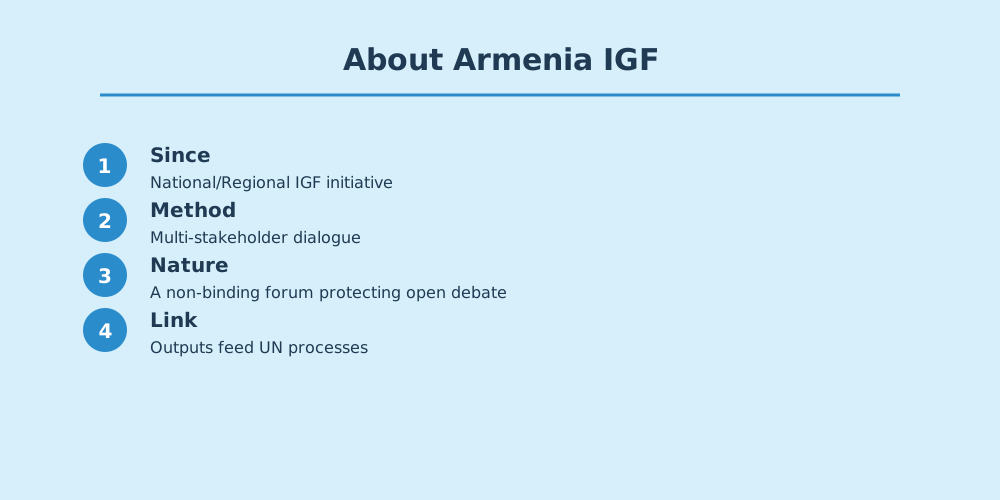
Armenia IGF is a National or Regional IGF Initiative (NRI), aligning local internet governance discussion with global IGF principles.
Why It Matters to You
What was discussed here becomes the baseline for national digital policy, platform rules and AI regulation worldwide within a few years. The principles confirmed at the 2021 meeting are the foundation of the "next rules" for the phones, social platforms and AI services you use every day.
Sources & References
- ArmIGF 2021(公式アーカイブ) — ArmIGF公式サイト (accessed 2026-07-11)
- ArmIGF 2021(公式英語ページ) — ArmIGF公式サイト (accessed 2026-07-11)
- ArmIGF 2021 Meeting Report(公式報告書・英語) — ArmIGF公式サイト (accessed 2026-07-11)
- Armenian Internet Governance Forum (ArmIGF)(系列概要) — Internet Society NGO(ISOC Armenia、.am/.հայレジストリ) (accessed 2026-07-11)
Quotes are translated or condensed from the records listed above. Bracketed numbers [n] refer to the source list.
Related links
- IGF official (NRI list): https://www.intgovforum.org/en/content/national-and-regional-igf-initiatives
- Japan IGF: https://japanigf.jp/
- Yuki Nakazawa's blog: https://nkzw.jp/category/igf/
Revision History
Rev. 1 — published 8 June 2021, 10:00 (Article published)
Rev. 2 — updated 17 July 2026, 12:32 (Fully revised into the in-depth edition: added the 3-line summary, minutes digest, short talk, source list and diagrams (all quotes verified against the listed sources))
— 中澤祐樹

