


The 3-Line Summary
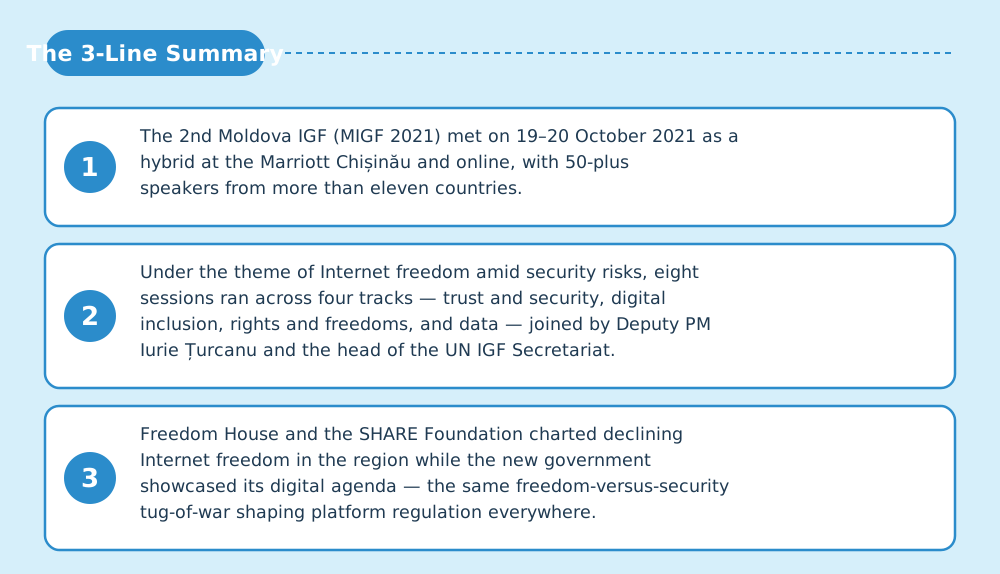
- The 2nd Moldova IGF (MIGF 2021) met on 19–20 October 2021 as a hybrid at the Marriott Chișinău and online, with 50-plus speakers from more than eleven countries.
- Under the theme of Internet freedom amid security risks, eight sessions ran across four tracks — trust and security, digital inclusion, rights and freedoms, and data — joined by Deputy PM Iurie Țurcanu and the head of the UN IGF Secretariat.
- Freedom House and the SHARE Foundation charted declining Internet freedom in the region while the new government showcased its digital agenda — the same freedom-versus-security tug-of-war shaping platform regulation everywhere.
Welcome — this is the Japan IGF Support Organization. This in-depth report on Moldova IGF 2021 (MIGF 2021) — 2nd Moldova Internet Governance Forum draws on official outputs, session records and on-site reporting. In a hurry? The three lines above and the diagrams carry the gist.
Conference at a Glance (from official records)
| Item | Detail |
|---|---|
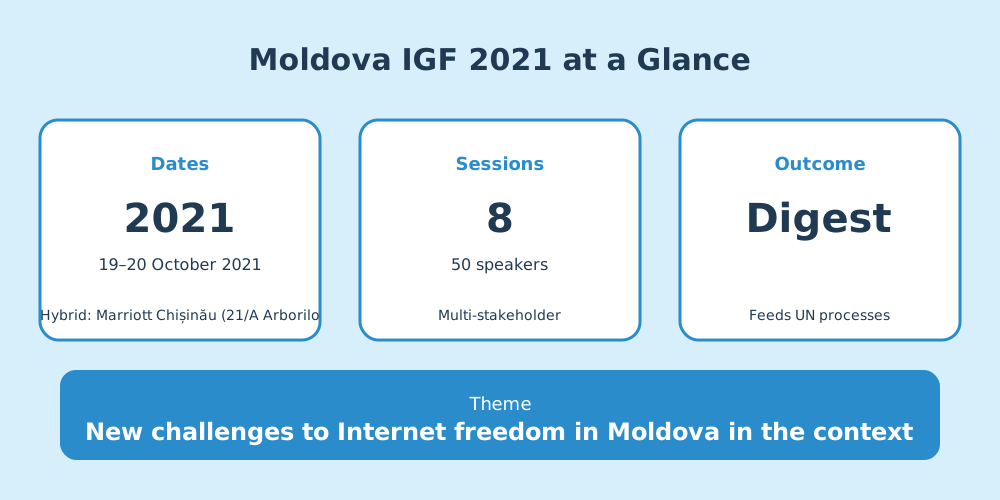
| Official name | Moldova IGF 2021 (MIGF 2021) — 2nd Moldova Internet Governance Forum |
| Dates | 19–20 October 2021 |
| Venue | Hybrid: Marriott Chișinău (21/A Arborilor St), Chișinău, plus online participation |
| Theme | New challenges to Internet freedom in Moldova in the context of current security risks |
| Sessions | 8 |
| Speakers | 50 |
| Languages | Romanian, Russian and English |
| Host | Association 'Comunitatea Internet' (National Coordinator: Alexei Marciuc) |
(See the source list at the end of this article.)
Discussion Digest — from the Session Records
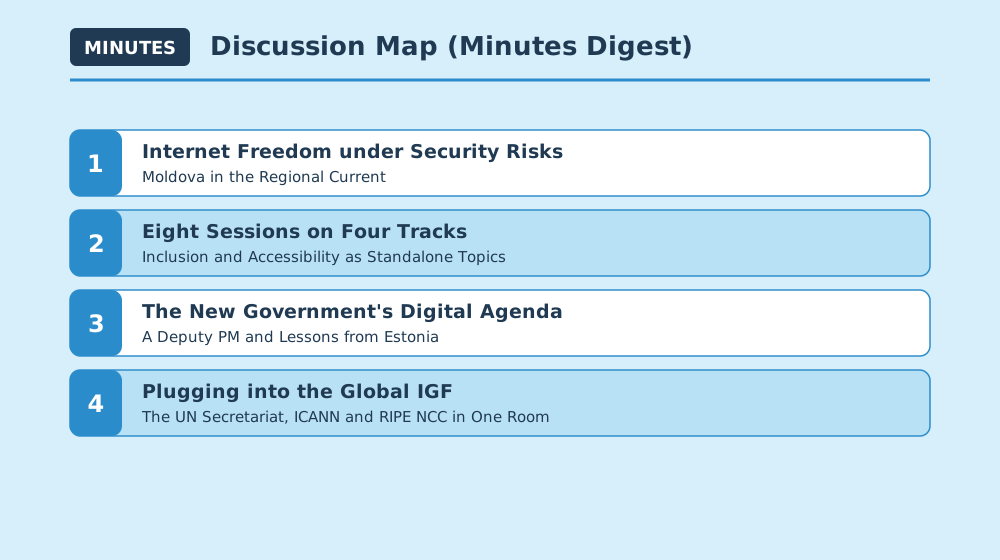
Key exchanges extracted from session records and transcripts.
1. Internet Freedom under Security Risks — Moldova in the Regional Current
Sessions: Session on Internet freedom in Central and Eastern Europe (19 October) and joint special events with Freedom House and the SecDev Foundation
- The theme was 'New challenges to Internet freedom in Moldova in the context of current security risks', with Freedom House's Grant Baker, the SHARE Foundation's Mila Bajić and SEEDIG chair Olga Kyryliuk mapping the regional landscape [1][2]
- A session on a digital-safety culture for civil-society organisations treated the resilience of rights groups as a shared regional concern [1][2]
2. Eight Sessions on Four Tracks — Inclusion and Accessibility as Standalone Topics
Sessions: Across the two-day programme (19–20 October)
- Discussions ran on four tracks — trust and security, digital inclusion and bridging the divide, digital rights and freedoms, and digital data — across eight plenary sessions in two days [2][1]
- Concrete inclusion topics, from digital accessibility for people with disabilities to e-learning as a road to online universities, each received a standalone session [2][1]
3. The New Government's Digital Agenda — A Deputy PM and Lessons from Estonia
Sessions: Sessions on ICT regulation in times of digital transformation and on data sovereignty and trusted online identity (20 October), among others
- Deputy Prime Minister for Digitalisation Iurie Țurcanu took the stage alongside e-Government Agency director Olga Tumuruc and Invest Moldova chief Stelian Manic to discuss ICT regulation amid digital transformation, data sovereignty and trusted online identity [2][1]
- Estonian open-government expert Hille Hinsberg brought the experience of Europe's e-government pioneer into the room [2][1]
4. Plugging into the Global IGF — The UN Secretariat, ICANN and RIPE NCC in One Room
Sessions: Opening session and throughout (19–20 October)
- By only its second edition the forum drew the heads of the global machinery: UN IGF Secretariat chief Chengetai Masango, ISOC's David Frautschy, ICANN's Mikhail Anisimov and RIPE NCC's Chris Buckridge [2][1]
- CAIGF chair Tattu Mambetalieva also joined, signalling horizontal ties among national and regional IGF initiatives [2][1]
Three-Minute Short Talk — Your Questions Answered
Q. What was the theme?
A. Internet freedom amid security risks. In a region where freedom online is under pressure, international NGOs like Freedom House and the Moldovan government debated at the same table how to protect it.
Q. Who showed up?
A. The Deputy PM for digitalisation, the head of the UN IGF Secretariat, senior figures from ICANN, ISOC and RIPE NCC, and 50-plus experts from more than eleven countries — a full global line-up for only a second edition.
Q. Why should I care?
A. The freedom-versus-security balance is the same equation behind disinformation and platform-regulation debates everywhere, and watching a small state absorb Estonia's e-government playbook is a useful reference for any digitising administration.
What Is Moldova IGF? (for first-time readers)
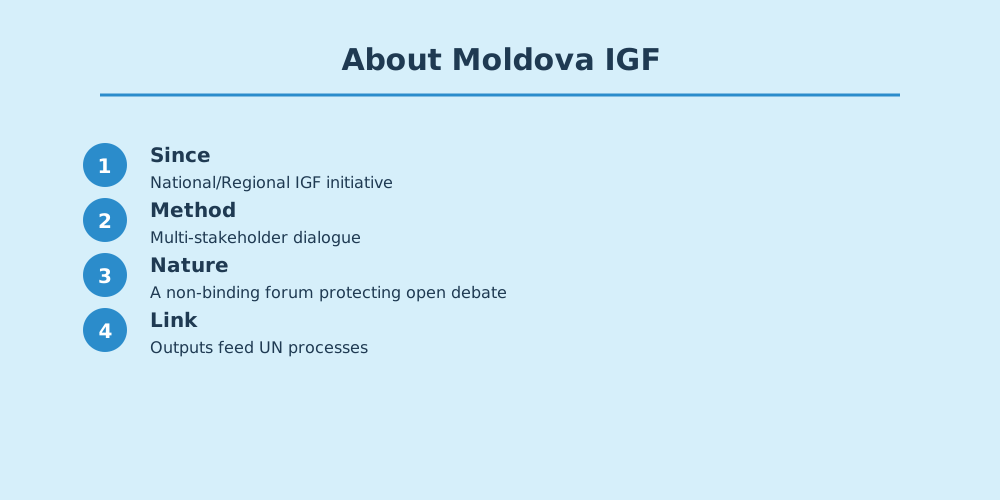
Moldova IGF is a National or Regional IGF Initiative (NRI), aligning local internet governance discussion with global IGF principles.
Why It Matters to You
What was discussed here becomes the baseline for national digital policy, platform rules and AI regulation worldwide within a few years. The principles confirmed at the 2021 meeting are the foundation of the "next rules" for the phones, social platforms and AI services you use every day.
Sources & References
- Moldova Internet Governance Forum 2021(第2回公式サイト) — Comunitatea Internet協会(MIGF事務局) (accessed 2026-07-11)
- MIGF 2021: Moldova's Digital Future in the COVID-19 Era — Moldova.org(モルドバ、英語) (accessed 2026-07-11)
- Moldova IGF — NRI record — UN IGF Secretariat (accessed 2026-07-11)
- Moldova Internet Governance Forum 2020(第1回公式サイト・系列の背景確認) — Comunitatea Internet協会(MIGF事務局) (accessed 2026-07-11)
Quotes are translated or condensed from the records listed above. Bracketed numbers [n] refer to the source list.
Related links
- IGF official (NRI list): https://www.intgovforum.org/en/content/national-and-regional-igf-initiatives
- Japan IGF: https://japanigf.jp/
- Yuki Nakazawa's blog: https://nkzw.jp/category/igf/
Revision History
Rev. 1 — published 27 June 2021, 14:00 (Article published)
Rev. 2 — updated 17 July 2026, 12:32 (Fully revised into the in-depth edition: added the 3-line summary, minutes digest, short talk, source list and diagrams (all quotes verified against the listed sources))
— 中澤祐樹

