


The 3-Line Summary
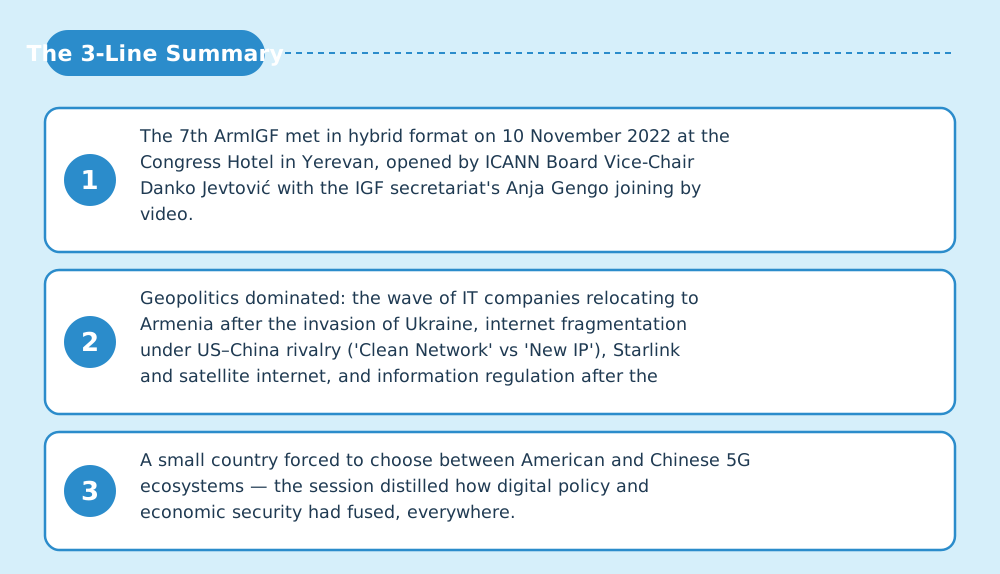
- The 7th ArmIGF met in hybrid format on 10 November 2022 at the Congress Hotel in Yerevan, opened by ICANN Board Vice-Chair Danko Jevtović with the IGF secretariat's Anja Gengo joining by video.
- Geopolitics dominated: the wave of IT companies relocating to Armenia after the invasion of Ukraine, internet fragmentation under US–China rivalry ('Clean Network' vs 'New IP'), Starlink and satellite internet, and information regulation after the 44-day war.
- A small country forced to choose between American and Chinese 5G ecosystems — the session distilled how digital policy and economic security had fused, everywhere.
Welcome — this is the Japan IGF Support Organization. This in-depth report on 7th Armenian Internet Governance Forum (ArmIGF 2022) draws on official outputs, session records and on-site reporting. In a hurry? The three lines above and the diagrams carry the gist.
Conference at a Glance (from official records)
| Item | Detail |
|---|---|
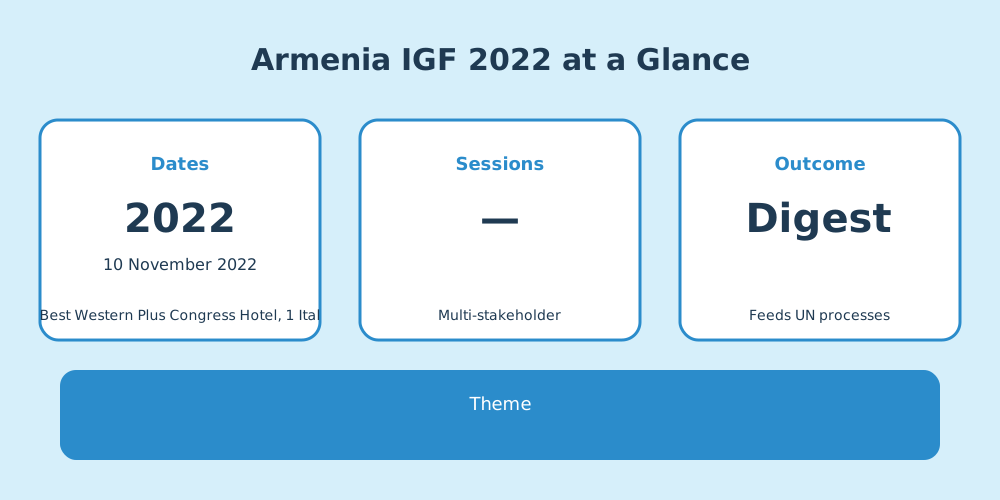
| Official name | 7th Armenian Internet Governance Forum (ArmIGF 2022) |
| Dates | 10 November 2022 |
| Venue | Best Western Plus Congress Hotel, 1 Italia Street, Yerevan (hybrid) |
| Theme | Regional governance themes |
| Opening | Opened by Deputy Minister Avet Poghosyan, ICANN Board Vice-Chair Danko Jevtović and the IGF secretariat's Anja Gengo (video message) |
| Host | The Ministry of High-Tech Industry, the Internet Governance Council (IGC), the Internet Society NGO and the ISOC Armenia Chapter, in cooperation with RIPE NCC and ARMIX |
(See the source list at the end of this article.)
Discussion Digest — from the Session Records
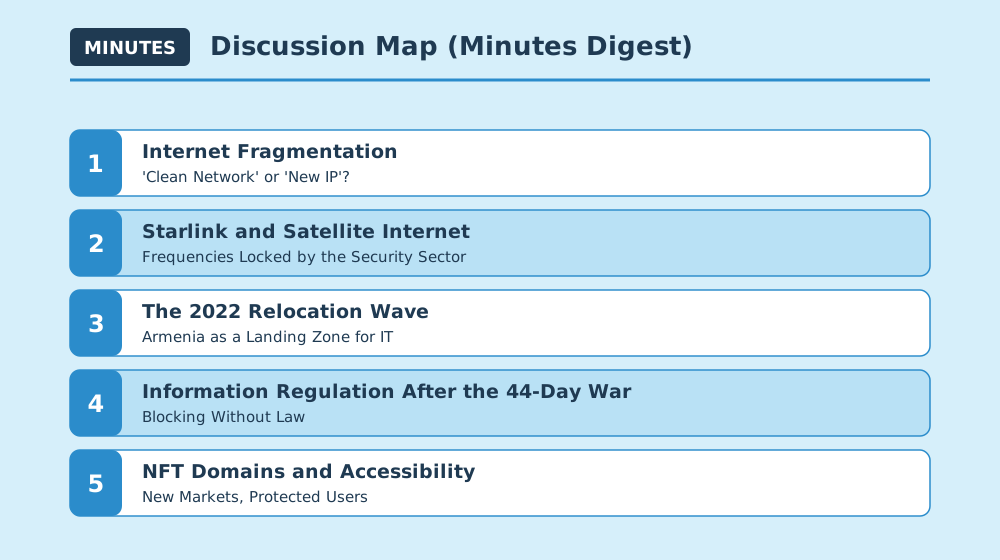
Key exchanges extracted from session records and transcripts.
1. Internet Fragmentation — 'Clean Network' or 'New IP'?
Sessions: Panel 'Fragmentation of the Internet: "Clean Network" or "New IP"?' (moderated by Grigori Saghyan, with RIPE NCC's Vahan Hovsepyan and MTS Armenia CIO Thomas Mazejian)
- Saghyan cited the FCC's blacklist of Chinese vendors and a US embassy questionnaire to ISOC about ZTE/Huawei equipment, warning Armenia could be forced into an American-or-Chinese choice when 5G arrives [2]
- Hovsepyan noted the China-proposed New IP effort already had multiple committed countries, and argued no standard should be adopted without consulting the technical community on risks and costs [2]
- The operator on stage was blunt: equipment is chosen on specs and price, not country of origin — 'New IP', 'Clean Network' and 'fragmentation' are political, not technological, words [2]
2. Starlink and Satellite Internet — Frequencies Locked by the Security Sector
Sessions: Panel 'Internet infrastructure in Armenia and Starlink services' (moderated by Vahan Hovsepyan, with ISOC's Dan York online, the ministry and the regulator)
"Unfortunately, over those two years nothing was done and the state did not allow access to the frequency. So, in order to test it and determine whether we will be able to utilize it in rural areas, ISOC Armenia has ordered a Starlink item of equipment (official report)"
— Igor Mkrtumyan (Board Chair, Internet Society NGO) [2]
- Dan York, leading ISOC's LEO project, laid out how Starlink-class constellations could shrink the digital divide — while concentrating access in a few companies and adding security and privacy risks [2]
- The ministry explained that satellite internet requires freeing government frequency channels also used by the defence ministry and the NSS, targeting completion by end of the following year [2]
- The regulator sketched 5G reaching Yerevan in about two years and two more major cities in three [2]
3. The 2022 Relocation Wave — Armenia as a Landing Zone for IT
Sessions: Panel 'Transfer of foreign IT companies to the Republic of Armenia' (moderated by UATE's Hayk Chobanyan, with Deputy Minister Davit Sahakyan, the economy ministry, the Diaspora Commissioner's office and DevSoft)
- In 2022 far more IT companies and specialists relocated to Armenia than expected; Deputy Minister Sahakyan described a 50% tax reimbursement for relocated firms employing ten or more, and placement in high-quality infrastructure zones [2]
- Residency applications hit a record; a 'one-window' platform for registration, tax and support-programme information was announced [2]
- Business voices framed retaining the newcomers as a strategic national objective — turning an inflow of talent and capital into lasting growth [2]
4. Information Regulation After the 44-Day War — Blocking Without Law
Sessions: Panel 'Regulation of information on the Internet' (moderated by Liana Doydoyan of the Freedom of Information NGO, with the broadcast regulator, the police high-tech crime unit and ISOC)
- Martirosyan criticised the opacity of temporary TikTok restrictions applied by some operators and lifted without explanation, in a country with virtually no law authorising website blocking outside emergencies [2]
- To fill the legal void, ISOC Armenia set up a rapid-reaction team — registry, police and civil society — to monitor sites under .am/.հայ, with calls to add government representatives [2]
- The police acknowledged the difficulty of obtaining data from ISPs and registrars and of keeping the line between information freedom and disinformation control, with the 44-day war's infodemic as backdrop [2]
5. NFT Domains and Accessibility — New Markets, Protected Users
Sessions: Panels 'NFT domains: competition or cooperation?' and 'Internet accessibility, support for vulnerable groups, children online safety'
- Blockchain-based NFT domains — rival or complement to the DNS — were debated by the Armenian Blockchain Association and crypto-industry practitioners, while the ISOC chair noted the .am zone still holds just over 40,000 registrations [2]
- The accessibility panel brought together the blind association, a media-literacy expert and a rural informatics teacher on child safety and support for vulnerable users; ISOC Armenia reported ~100 computers donated to rural libraries, with 2,000 still needed [2]
Three-Minute Short Talk — Your Questions Answered
Q. What did this meeting decide?
A. Nothing binding — but it audited Armenia's 2022 in one day: the IT relocation wave, the US-or-China 5G dilemma, and the frequency wall blocking Starlink.
Q. What was the most contentious point?
A. Satellite internet. The ISOC chair publicly criticised two years of inaction on freeing security-sector frequencies — and revealed ISOC had simply ordered its own Starlink kit to test rural coverage.
Q. Why should I care?
A. Whether network equipment is chosen by markets or by security policy is now every country's question, and the frequency fight over satellite broadband is playing out in every national regulator.
What Is Armenia IGF? (for first-time readers)
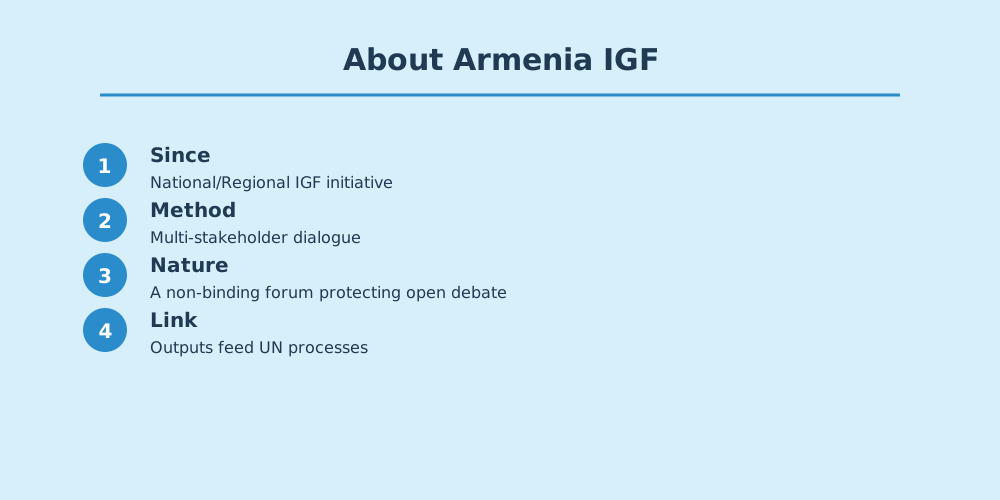
Armenia IGF is a National or Regional IGF Initiative (NRI), aligning local internet governance discussion with global IGF principles.
Why It Matters to You
What was discussed here becomes the baseline for national digital policy, platform rules and AI regulation worldwide within a few years. The principles confirmed at the 2022 meeting are the foundation of the "next rules" for the phones, social platforms and AI services you use every day.
Sources & References
- Armenian Internet governance forum 2022(公式サイト・プログラムと登壇者) — ArmIGF公式サイト (accessed 2026-07-11)
- ArmIGF 2022 Meeting Report(公式報告書・英語) — ISOC Armenia Chapter(chronicleアーカイブ) (accessed 2026-07-11)
- The 7th Armenian Internet Governance Forum (ArmIGF-2022) will be held(開催告知) — ISOC Armenia Chapter (accessed 2026-07-11)
- Armenian Internet Governance Forum (ArmIGF)(系列概要) — Internet Society NGO(ISOC Armenia、.am/.հայレジストリ) (accessed 2026-07-11)
Quotes are translated or condensed from the records listed above. Bracketed numbers [n] refer to the source list.
Related links
- IGF official (NRI list): https://www.intgovforum.org/en/content/national-and-regional-igf-initiatives
- Japan IGF: https://japanigf.jp/
- Yuki Nakazawa's blog: https://nkzw.jp/category/igf/
Revision History
Rev. 1 — published 11 June 2022, 12:00 (Article published)
Rev. 2 — updated 17 July 2026, 12:32 (Fully revised into the in-depth edition: added the 3-line summary, minutes digest, short talk, source list and diagrams (all quotes verified against the listed sources))
— 中澤祐樹

