

The 3-Line Summary
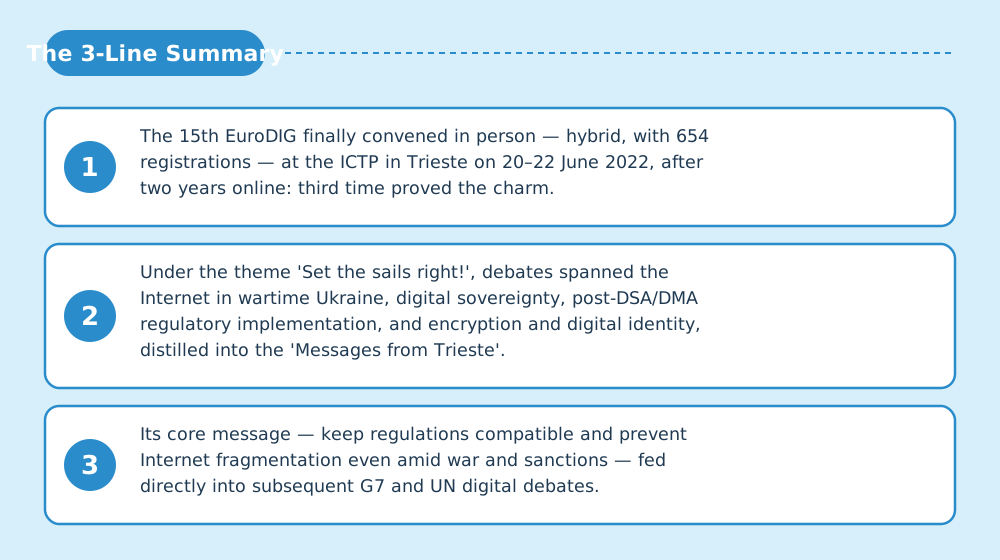
- The 15th EuroDIG finally convened in person — hybrid, with 654 registrations — at the ICTP in Trieste on 20–22 June 2022, after two years online: third time proved the charm.
- Under the theme 'Set the sails right!', debates spanned the Internet in wartime Ukraine, digital sovereignty, post-DSA/DMA regulatory implementation, and encryption and digital identity, distilled into the 'Messages from Trieste'.
- Its core message — keep regulations compatible and prevent Internet fragmentation even amid war and sanctions — fed directly into subsequent G7 and UN digital debates.
Welcome — this is the Japan IGF Support Organization. This in-depth report on EuroDIG 2022 in Trieste draws on official outputs, session records and on-site reporting. In a hurry? The three lines above and the diagrams carry the gist.
📍 After going virtual in both 2020 and 2021, the Trieste meeting finally took place on site — third time was the charm. Matches the catalogue
Conference at a Glance (from official records)
| Item | Detail |
|---|---|
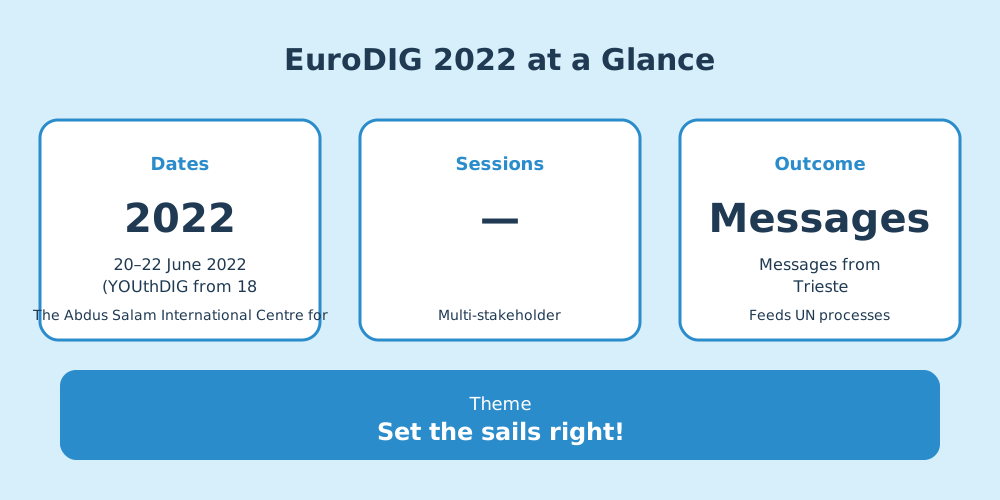
| Edition | 15th annual meeting |
| Dates | 20–22 June 2022 (YOUthDIG from 18 June) |
| Venue | The Abdus Salam International Centre for Theoretical Physics (ICTP), Trieste, Italy |
| Theme | Set the sails right! |
| Registrations | 654 |
| Format | Hybrid (on-site and online) |
| Host | The Abdus Salam International Centre for Theoretical Physics (ICTP), in cooperation with SISSA and the University of Trieste |
| Outcome | Messages from Trieste |
(See the source list at the end of this article.)
Discussion Digest — from the Session Records
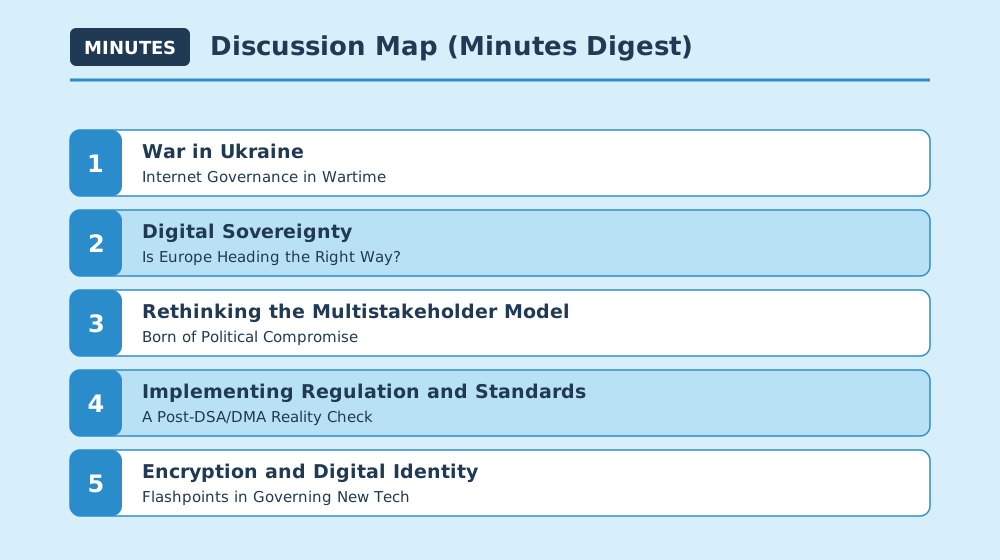
Key exchanges extracted from session records and transcripts.
1. War in Ukraine — Internet Governance in Wartime
Sessions: Main sessions and YOUthDIG segments
"Act now, support Ukraine, and support Internet governance!"
— Kateryna Bovsunovska (YOUthDIG participant, Ukraine) [4][5]
- Participants confronted how to keep Internet services running for Ukrainians since the invasion, and the roles every stakeholder group must play [4][5]
- The Messages from Trieste stated that preventing Internet fragmentation requires globally compatible regulations, even under sanctions pressure [4][5]
2. Digital Sovereignty — Is Europe Heading the Right Way?
Sessions: Focus Area 1 'Digital sovereignty – is Europe going in the right direction to keep the Internet safe and open?'
- Francesca Bria (Italian National Innovation Fund) framed Europe's path as a middle road between Silicon Valley's big-tech model and China's state-centric model [4][5]
- Messages noted regulation has 'brought more clarity to the economic market, thus fostering the growth of businesses and small and medium-sized enterprises', while insisting digital sovereignty must enhance connectivity and keep individual rights central rather than isolate Europe [4][5]
- Careful human rights impact assessments for new technologies were urged [4][5]
3. Rethinking the Multistakeholder Model — Born of Political Compromise
Sessions: Main sessions and workshops on the governance model
- Wolfgang Kleinwächter noted the multistakeholder approach arose as a political compromise between nation states and relies on powerful actors willingly sharing influence [4][5]
- Richard Hill provocatively argued the IETF is not truly multistakeholder, being open to individuals rather than stakeholder-group representatives [4][5]
- The Messages recorded that multistakeholder approaches favour resilience despite geopolitical strain — and that youth remain underrepresented [4][5]
4. Implementing Regulation and Standards — A Post-DSA/DMA Reality Check
Sessions: Focus Area 2 'Reality check – do we implement effective regulations and set the right standards?'
- 'Dialogue and understanding of the need for standards are crucial' (Messages from Trieste) — the debate shifted from writing rules to making them work [5][3]
- The green and digital transitions differ, and common methodologies to measure environmental impact are needed [5][3]
- Cybercrime treaties, participants noted, require flexibility for different national legal systems [5][3]
5. Encryption and Digital Identity — Flashpoints in Governing New Tech
Sessions: Focus Area 3 'Coming next – outlook on new technologies' and related workshops
- The technical community's warning that the EU's proposed CSAM regulation is incompatible with end-to-end encryption became a major flashpoint [4][5]
- Switzerland's referendum rejecting a government digital-ID scheme (about 65% opposed) was contrasted with the EU digital wallet; digital identity, the meeting concluded, must prioritise human rights and global interoperability [4][5]
- The Messages also called for open standards and protocols for space-based communications [4][5]
Three-Minute Short Talk — Your Questions Answered
Q. So what did the conference actually decide?
A. EuroDIG doesn't 'decide' — it's Europe's regional IGF for open dialogue. The outcome document, the Messages from Trieste, went on to the global IGF. The headline: even in wartime, Europe's Internet community committed to preventing fragmentation.
Q. What was the most contentious topic?
A. Two clashes: how sanctions over Ukraine square with keeping the Internet whole, and the EU's child-protection (CSAM) proposal versus end-to-end encryption — a fight between two things everyone wants to protect.
Q. Why should I care?
A. Keeping regulations compatible to avoid a splintered Internet is now a global agenda item, and Switzerland's rejected digital-ID scheme holds lessons for every country building one.
What Is EuroDIG? (for first-time readers)
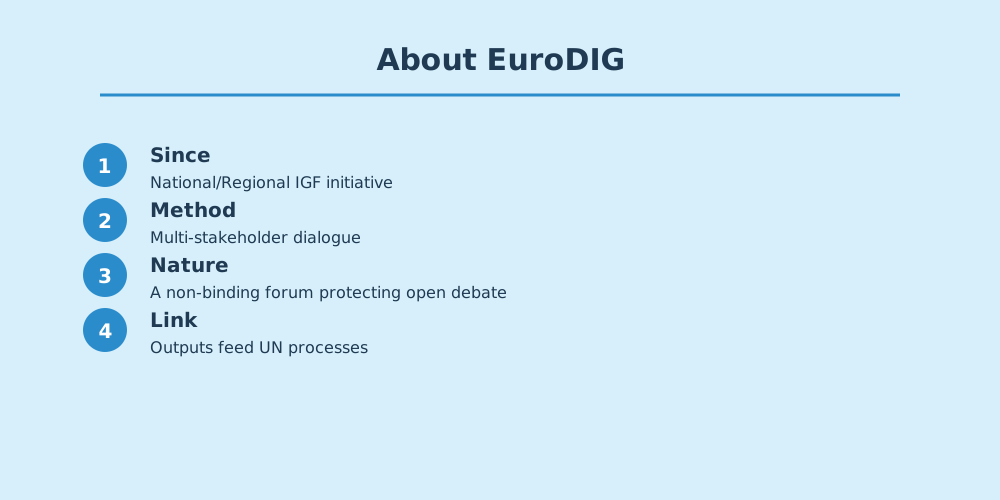
EuroDIG is a National or Regional IGF Initiative (NRI), aligning local internet governance discussion with global IGF principles.
Why It Matters to You
What was discussed here becomes the baseline for national digital policy, platform rules and AI regulation worldwide within a few years. The principles confirmed at the 2022 meeting are the foundation of the "next rules" for the phones, social platforms and AI services you use every day.
Sources & References
- EuroDIG 2022 — eurodig.org (accessed 2026-07-10)
- Consolidated programme 2022 — EuroDIG事務局 (accessed 2026-07-10)
- EuroDIG 2022 — DiploFoundation (accessed 2026-07-10)
- EuroDIG 2022 Live Blog — RIPE NCC (accessed 2026-07-10)
- Messages from Trieste — eurodig.org (accessed 2026-07-10)
- European Dialogue on Internet Governance — en (accessed 2026-07-10)
Quotes are translated or condensed from the records listed above. Bracketed numbers [n] refer to the source list.
Related links
- IGF official (NRI list): https://www.intgovforum.org/en/content/national-and-regional-igf-initiatives
- Japan IGF: https://japanigf.jp/
- Yuki Nakazawa's blog: https://nkzw.jp/category/igf/
Revision History
Rev. 1 — published 20 June 2022, 09:00 (Article published)
Rev. 2 — updated 10 July 2026, 23:16 (Fully revised into the in-depth edition: added the 3-line summary, minutes digest, short talk, source list and diagrams (all quotes verified against the listed sources))
— 中澤祐樹