


The 3-Line Summary
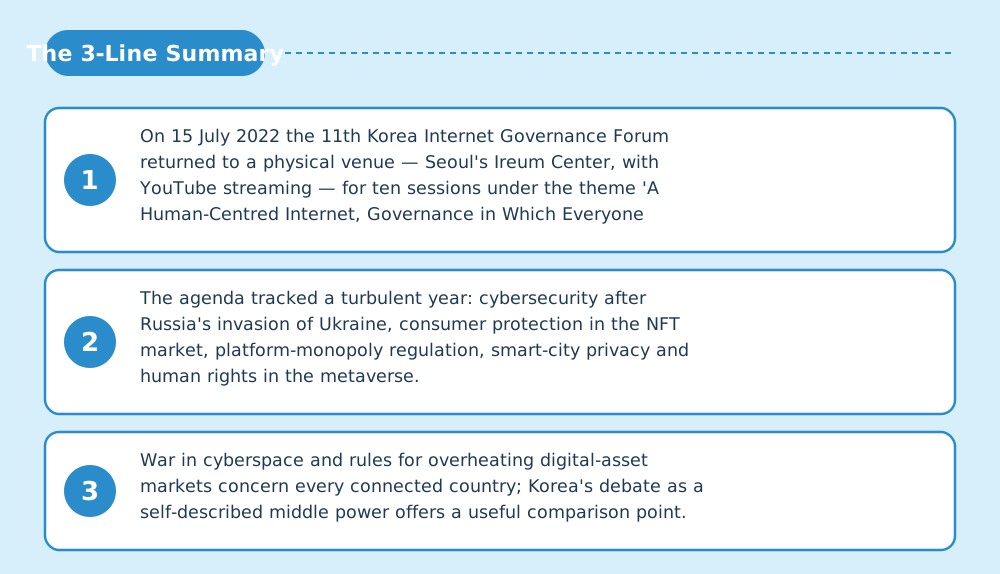
- On 15 July 2022 the 11th Korea Internet Governance Forum returned to a physical venue — Seoul's Ireum Center, with YouTube streaming — for ten sessions under the theme 'A Human-Centred Internet, Governance in Which Everyone Participates.'
- The agenda tracked a turbulent year: cybersecurity after Russia's invasion of Ukraine, consumer protection in the NFT market, platform-monopoly regulation, smart-city privacy and human rights in the metaverse.
- War in cyberspace and rules for overheating digital-asset markets concern every connected country; Korea's debate as a self-described middle power offers a useful comparison point.
Welcome — this is the Japan IGF Support Organization. This in-depth report on The 11th Korea Internet Governance Forum (KrIGF 2022) draws on official outputs, session records and on-site reporting. In a hurry? The three lines above and the diagrams carry the gist.
📍 After two online years, the forum returned to a physical venue for the first time in three years, in hybrid format (09:40–17:50)
Conference at a Glance (from official records)
| Item | Detail |
|---|---|
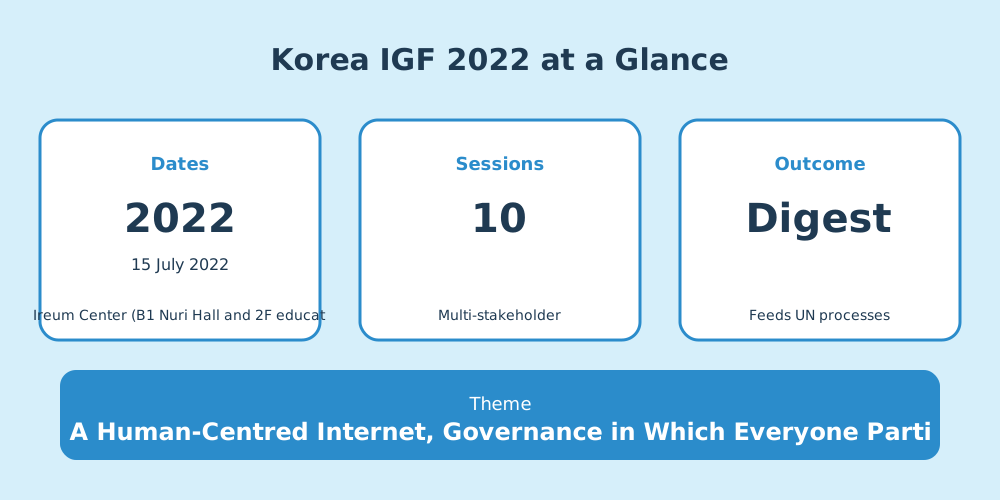
| Official name | The 11th Korea Internet Governance Forum (KrIGF 2022) |
| Edition | 11th |
| Dates | 15 July 2022 |
| Venue | Ireum Center (B1 Nuri Hall and 2F education rooms), Yeouido, Seoul, with YouTube live streaming |
| Theme | A Human-Centred Internet, Governance in Which Everyone Participates |
| Sessions | 10 |
| Host | Co-hosted by nine organisations including KISA and KIGA, co-organised by Gabia, the Future Internet Forum, CyberCommerce and Open Net |
(See the source list at the end of this article.)
Discussion Digest — from the Session Records
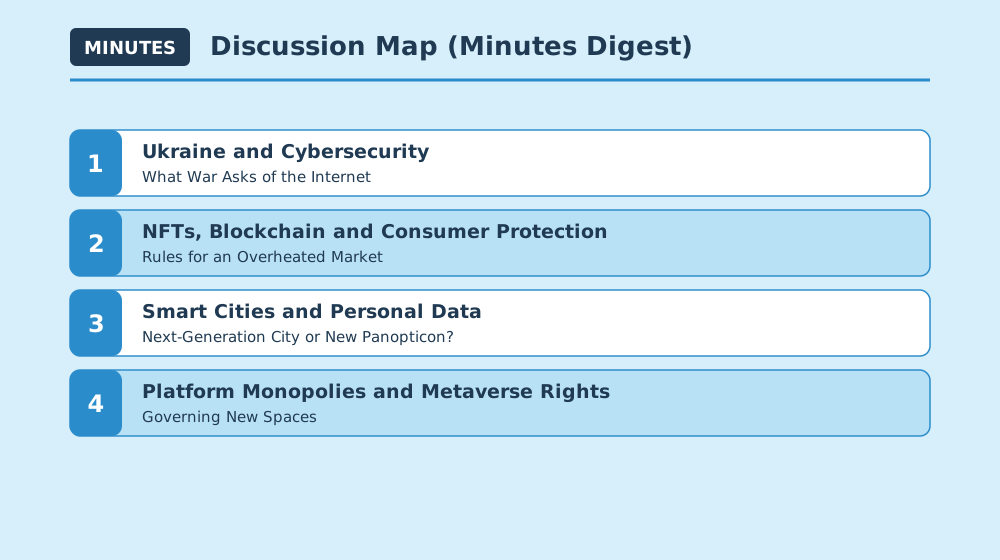
Key exchanges extracted from session records and transcripts.
1. Ukraine and Cybersecurity — What War Asks of the Internet
Sessions: Session 8 'Ukraine and Cybersecurity'
- Prompted by Russia's invasion, the session examined attacks on critical infrastructure — citing the 2015 Ukraine power-grid attack — and how war now enlists companies and civil society, not just states [3]
- Panellists flagged stalled norm-building at the UN GGE and OSCE, and warned of an accelerating 'splinternet' or cyber-balkanisation [3]
- Korea's strategic position as a middle power, and the role of younger generations and social networks in norm formation, were also debated [3]
2. NFTs, Blockchain and Consumer Protection — Rules for an Overheated Market
Sessions: Sessions on NFT consumer protection, blockchain regulation and fintech governance (Session 7)
- Consumer protection in the speculative NFT market and approaches to blockchain regulation each had dedicated sessions [1]
- A further session on fintech governance made digital-asset rule-making one of the year's pillars [1]
3. Smart Cities and Personal Data — Next-Generation City or New Panopticon?
Sessions: Session 9 'Use and Protection of Personal Data in Smart Cities'
- In the context of Korea's 2050 carbon-neutrality drive, the session weighed the collection, use and sharing of personal data in data-driven smart cities [4]
- Framed as 'next-generation city or new panopticon?', it compared the GDPR, CCPA and other regimes to seek privacy safeguards for IoT environments [4]
4. Platform Monopolies and Metaverse Rights — Governing New Spaces
Sessions: Session 5 'Directions for Regulating Platform Companies' and Session 10 'Expanding Human Rights in the Metaverse'
- Regulatory directions for platform monopolies were debated head-on, reflecting Korea's intensifying platform-regulation discourse [1][2]
- The then-novel question of human rights inside the metaverse also featured; KISA framed the internet as the core foundation of a future digital society spanning the metaverse, smart cities and AI [1][2]
Three-Minute Short Talk — Your Questions Answered
Q. What changed with the return to in-person?
A. Participants gathered physically at Seoul's Ireum Center while YouTube streaming kept the wider online audience — a hybrid format that preserved the reach gained during the online years.
Q. The timeliest topic?
A. War and cyberspace. From power-grid attacks to fears of a 'splinternet,' the Ukraine session confronted how war accelerates internet fragmentation — seen from a middle power's perspective.
Q. Why should I care?
A. NFT and platform regulation were being written in many countries at once, and defending critical infrastructure from cyberattack is a shared security agenda everywhere.
What Is Korea IGF? (for first-time readers)
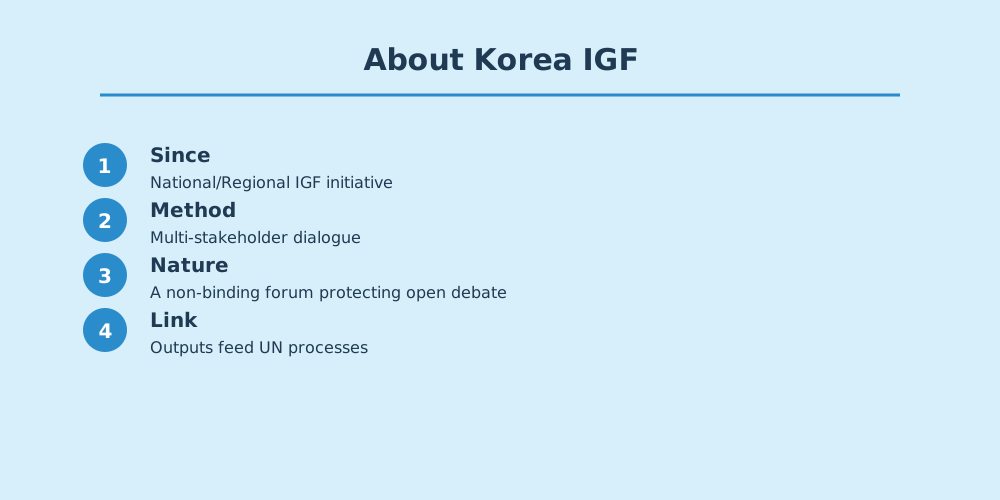
Korea IGF is a National or Regional IGF Initiative (NRI), aligning local internet governance discussion with global IGF principles.
Why It Matters to You
What was discussed here becomes the baseline for national digital policy, platform rules and AI regulation worldwide within a few years. The principles confirmed at the 2022 meeting are the foundation of the "next rules" for the phones, social platforms and AI services you use every day.
Sources & References
- KISA, 2022년 제11회 한국인터넷거버넌스포럼(KrIGF) 개최(KISAプレスリリース) — 韓国インターネット振興院(KISA) (accessed 2026-07-11)
- 2022년 한국인터넷거버넌스포럼(KrIGF)(開催案内) — 進歩ネットワークセンター(digitaljustice.kr) (accessed 2026-07-11)
- [세션8] 우크라이나와 사이버안보(ウクライナとサイバー安保) — KrIGF事務局(韓国インターネットガバナンスフォーラム公式サイト) (accessed 2026-07-11)
- [세션9] 스마트도시 내의 개인정보 이용과 보호(スマート都市における個人情報の利用と保護) — KrIGF事務局(韓国インターネットガバナンスフォーラム公式サイト) (accessed 2026-07-11)
- 2022 한국인터넷거버넌스포럼(KrIGF) 국문보고서/영문보고서(公式報告書・韓国語/英語) — KrIGF事務局(韓国インターネットガバナンスフォーラム公式サイト) (accessed 2026-07-11)
Quotes are translated or condensed from the records listed above. Bracketed numbers [n] refer to the source list.
Related links
- IGF official (NRI list): https://www.intgovforum.org/en/content/national-and-regional-igf-initiatives
- Japan IGF: https://japanigf.jp/
- Yuki Nakazawa's blog: https://nkzw.jp/category/igf/
Revision History
Rev. 1 — published 15 July 2022, 12:00 (Article published)
Rev. 2 — updated 16 July 2026, 20:09 (Fully revised into the in-depth edition: added the 3-line summary, minutes digest, short talk, source list and diagrams (all quotes verified against the listed sources))
— 中澤祐樹

