


The 3-Line Summary
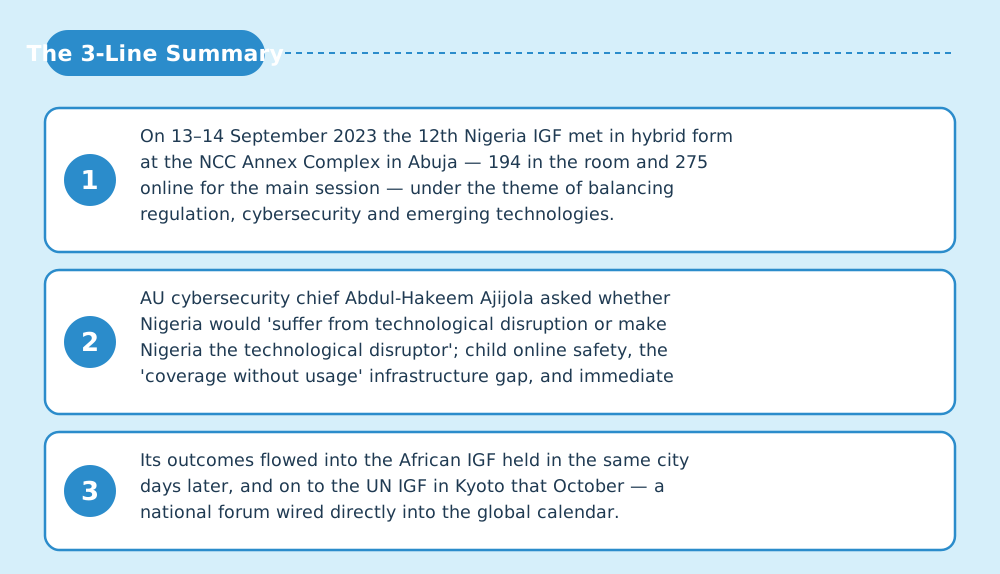
- On 13–14 September 2023 the 12th Nigeria IGF met in hybrid form at the NCC Annex Complex in Abuja — 194 in the room and 275 online for the main session — under the theme of balancing regulation, cybersecurity and emerging technologies.
- AU cybersecurity chief Abdul-Hakeem Ajijola asked whether Nigeria would 'suffer from technological disruption or make Nigeria the technological disruptor'; child online safety, the 'coverage without usage' infrastructure gap, and immediate implementation of the new Data Protection Act dominated.
- Its outcomes flowed into the African IGF held in the same city days later, and on to the UN IGF in Kyoto that October — a national forum wired directly into the global calendar.
Welcome — this is the Japan IGF Support Organization. This in-depth report on Nigeria Internet Governance Forum 2023 (12th edition) draws on official outputs, session records and on-site reporting. In a hurry? The three lines above and the diagrams carry the gist.
Conference at a Glance (from official records)
| Item | Detail |
|---|---|
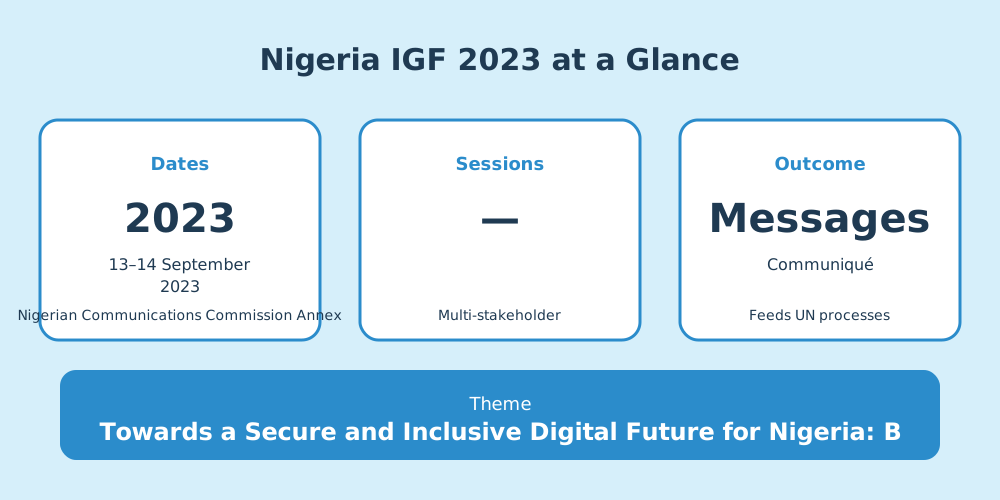
| Official name | Nigeria Internet Governance Forum 2023 (12th edition) |
| Dates | 13–14 September 2023 |
| Venue | Nigerian Communications Commission Annex Complex, Mbora, Abuja, with online participation (hybrid) |
| Theme | Towards a Secure and Inclusive Digital Future for Nigeria: Balancing Regulation, Cybersecurity and Emerging Technologies |
| Keynote | Keynote by Minister of Communications, Innovation and Digital Economy Dr Bosun Tijani (delivered by Permanent Secretary Dr William Alo); lead paper for the high-level panel by Abdul-Hakeem Ajijola, chair of the AU Cyber Security Expert Group |
| Host | NIGF Multistakeholder Advisory Group (Federal Ministry of Communications, Innovation and Digital Economy, NCC, NITDA, NiRA, ISOC Nigeria, CITAD and other stakeholders) |
| Outcome | Communiqué (published October 2023) |
(See the source list at the end of this article.)
Discussion Digest — from the Session Records
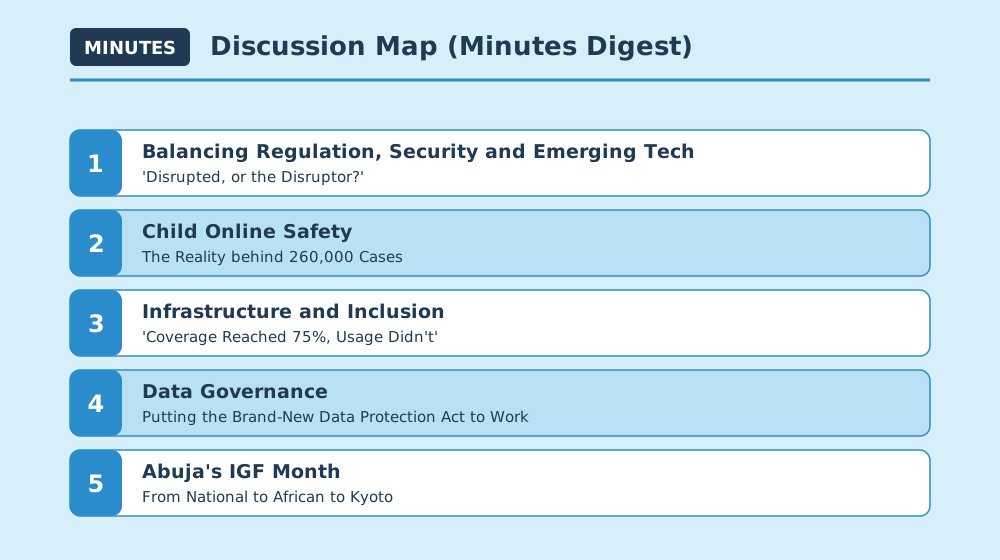
Key exchanges extracted from session records and transcripts.
1. Balancing Regulation, Security and Emerging Tech — 'Disrupted, or the Disruptor?'
Sessions: High-level panel (14 September; lead paper by Abdul-Hakeem Ajijola, chair, AU Cyber Security Expert Group; moderated by Eyitayo Iyortim, COO, NiRA)
"As Nigerian leaders, we must ask ourselves: 'Will Nigeria suffer from technological disruption or do we make Nigeria the technological disruptor?'"
— Abdul-Hakeem Ajijola (Chair, African Union Cyber Security Expert Group) [1]
"Innovation is only truly innovation only when it can solve the issues specific to that region or geographical area"
— Eyitayo Iyortim (Chief Operating Officer, NiRA) [1]
- Ajijola set out a seven-point call to collective action — collaboration, education, inclusive infrastructure, innovation with integrity, data-privacy partnerships, youth empowerment, and action — urging priority for cyber-literacy education and 'safe reporting spaces' created by regulators [1]
- From MAG chair Adesola Akinsanya's welcome onwards, the forum kept returning to the premise that emerging technologies bring unprecedented opportunity and new vulnerability, and that Nigeria's digital future hinges on balancing regulation with prudent adoption [1]
- In the keynote, Minister Bosun Tijani (read by Permanent Secretary William Alo) pledged partnership with the private sector, committing to make Nigeria first 'not just in Africa but in the world' in digital transformation, and asked the forum for implementable recommendations [1]
2. Child Online Safety — The Reality behind 260,000 Cases
Sessions: Breakout Session 1 'Building a Trusted Internet: Cybersecurity and Child Online Safety' (moderated by Adewunmi Akinbo, Secretary-General, ISOC Nigeria)
- The head of NAPTIP's cyber response team reported over 260,000 cases involving child online protection, with compromised Facebook accounts used to target minors, and described trend analysis conducted with Meta [1]
- A survey by the Cyber Security Education Initiative found primary and junior-secondary pupils helping internet fraudsters construct social-engineering scenarios and scripts; the response favoured tackling root causes and awareness campaigns (including essay competitions) over punishment alone [1]
- Panellists confirmed that the NDPR contains child-online-safety provisions and that the NCC and other agencies were drafting a dedicated policy framework for child online safety [1]
3. Infrastructure and Inclusion — 'Coverage Reached 75%, Usage Didn't'
Sessions: High-level panel and Breakout Session 2 'Strengthening Digital Infrastructure for Inclusive Services in Nigeria'
- Meta policy manager Sade Dada distinguished infrastructure's two-sided challenge — coverage versus usage — noting coverage had grown to about 75% over five years while actual usage lagged, and urged investment beyond deployment into affordability and usage-enabling policies such as lower right-of-way fees [1]
- Joining remotely from Brussels, Cullen International's Elena Scaramuzzi shared comparative regulatory findings from countries with similar indicators (Brazil, Egypt, India, South Africa), arguing that competitive markets are essential to solving coverage, affordability and access [1]
- Youth IGF coordinator Morisola Alaba attributed the usage lag chiefly to weak capacity building, recommending demographic-specific content and the integration of internet-awareness material into school curricula [1]
4. Data Governance — Putting the Brand-New Data Protection Act to Work
Sessions: Breakout Session 4 'Navigating Data Governance and Privacy in the Digital Economy of Nigeria'
- For the Data Protection Act passed that year, the session recommended amendments to prevent sharing of personal data with third parties without consent, accountability for data-storage providers, and immediate implementation [1][2]
- Participants proposed that the NDPC involve state and local governments — using polling units as the outreach pattern — for data-privacy sensitisation, and that big tech firms operating in Nigeria be required to open local offices so their use of the nation's data can be monitored [1][2]
- The refrain that 'privacy is the greatest risk of present and future emerging technology' was paired with calls for user self-defence (actually reading terms and conditions) and for stable, clearly articulated regulation that lets the economy thrive [1][2]
5. Abuja's IGF Month — From National to African to Kyoto
Sessions: Opening and closing ceremonies (14 September)
- West Africa IGF coordinator Mary Uduma praised Nigeria for convening its national IGF every year since 2012 — 'a good example of the national IGF process' for other West African countries — and pledged to carry the day's recommendations to the African IGF [1][3]
- Closing the forum, NIGF-MAG chair Adesola Akinsanya (NiRA president) invited participants to the 12th African IGF in the same city on 19–21 September and to the UN IGF in Kyoto on 8–12 October, promising publication of the communiqué [1][3]
- The main session drew 194 in-person and 275 online participants; the previous day's pre-events were the Youth IGF (theme 'Shaping Nigeria's Digital Landscape: Internet Universality', 170 online) and the Women's IGF (60 participants, debating whether women are 'invisible or absent' in digital policy-making) [1][3]
Three-Minute Short Talk — Your Questions Answered
Q. What did the conference actually decide?
A. Nothing binding — it's a UN-IGF-family dialogue forum. But its communiqué handed agencies concrete homework: implement the brand-new Data Protection Act immediately and build a child-online-safety framework.
Q. Most memorable moment?
A. The AU cybersecurity chief's challenge: will Nigeria suffer from technological disruption, or become the disruptor? Neither fear new technology nor let it run wild — take the initiative.
Q. Why should I care?
A. This forum's outcomes flowed through the African IGF into the UN IGF in Kyoto the following month — one clear channel showing how national voices actually reach the global table.
What Is Nigeria IGF? (for first-time readers)
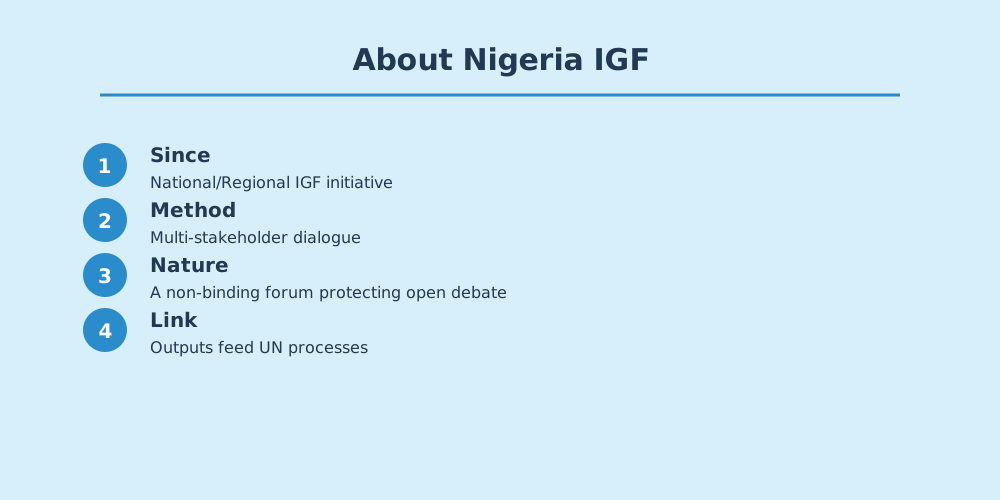
Nigeria IGF is a National or Regional IGF Initiative (NRI), aligning local internet governance discussion with global IGF principles.
Why It Matters to You
What was discussed here becomes the baseline for national digital policy, platform rules and AI regulation worldwide within a few years. The principles confirmed at the 2023 meeting are the foundation of the "next rules" for the phones, social platforms and AI services you use every day.
Sources & References
- Report of the Nigeria Internet Governance Forum (NIGF 2023) Events (PDF) — igf.ng (accessed 2026-07-16)
- Communique issued at the end of the Nigeria Internet Governance Forum (NIGF 2023) Event (PDF) — igf.ng (accessed 2026-07-16)
- NIGF 2023(公式イベントページ) — igf.ng (accessed 2026-07-16)
- Nigeria IGF(NRI紹介ページ) — intgovforum.org (accessed 2026-07-16)
Quotes are translated or condensed from the records listed above. Bracketed numbers [n] refer to the source list.
Related links
- IGF official (NRI list): https://www.intgovforum.org/en/content/national-and-regional-igf-initiatives
- Japan IGF: https://japanigf.jp/
- Yuki Nakazawa's blog: https://nkzw.jp/category/igf/
Revision History
Rev. 1 — published 16 September 2023, 16:00 (Article published)
Rev. 2 — updated 17 July 2026, 12:32 (Fully revised into the in-depth edition: added the 3-line summary, minutes digest, short talk, source list and diagrams (all quotes verified against the listed sources))
— 中澤祐樹

