


The 3-Line Summary
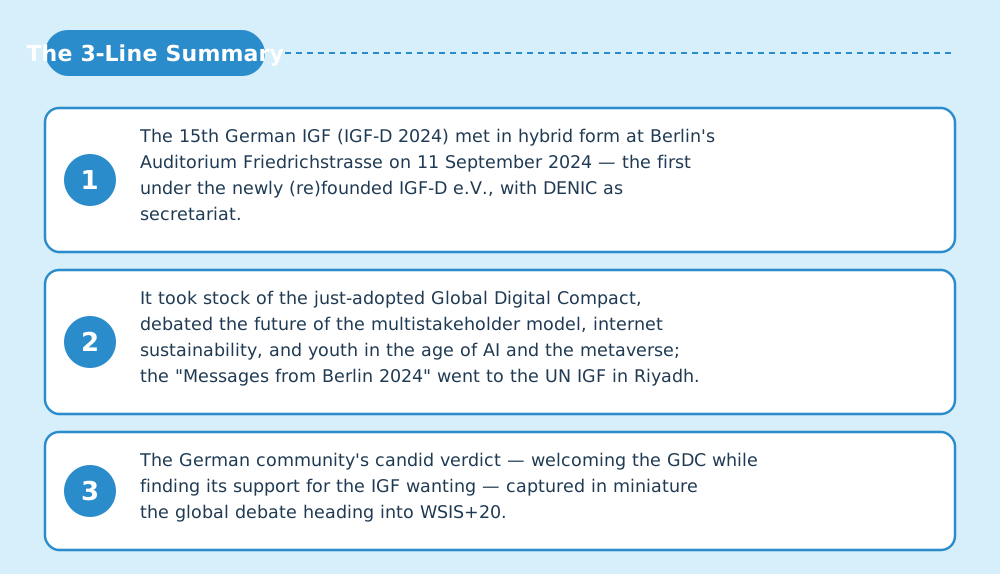
- The 15th German IGF (IGF-D 2024) met in hybrid form at Berlin's Auditorium Friedrichstrasse on 11 September 2024 — the first under the newly (re)founded IGF-D e.V., with DENIC as secretariat.
- It took stock of the just-adopted Global Digital Compact, debated the future of the multistakeholder model, internet sustainability, and youth in the age of AI and the metaverse; the "Messages from Berlin 2024" went to the UN IGF in Riyadh.
- The German community's candid verdict — welcoming the GDC while finding its support for the IGF wanting — captured in miniature the global debate heading into WSIS+20.
Welcome — this is the Japan IGF Support Organization. This in-depth report on IGF-D 2024 (15th German Internet Governance Forum / XV. Internet Governance Forum Deutschland) draws on official outputs, session records and on-site reporting. In a hurry? The three lines above and the diagrams carry the gist.
Conference at a Glance (from official records)
| Item | Detail |
|---|---|
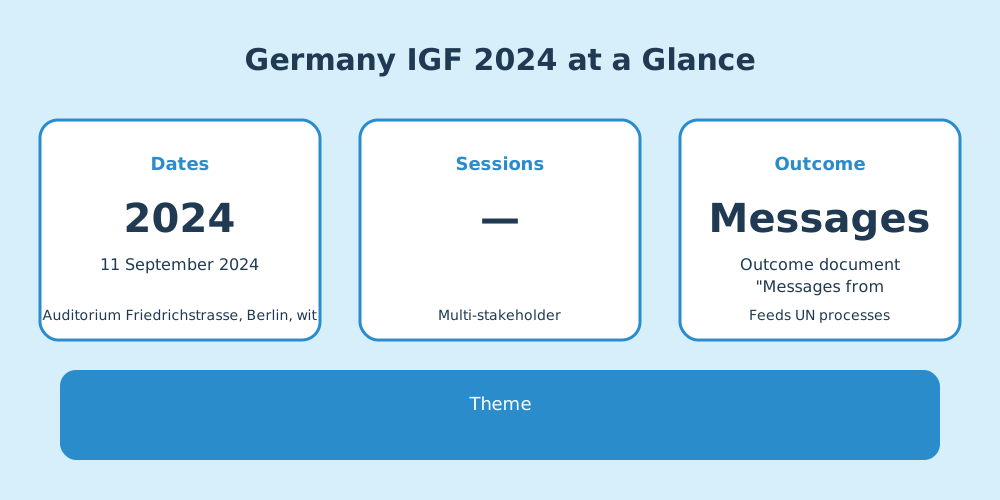
| Official name | IGF-D 2024 (15th German Internet Governance Forum / XV. Internet Governance Forum Deutschland) |
| Dates | 11 September 2024 |
| Venue | Auditorium Friedrichstrasse, Berlin, with online participation (hybrid) |
| Theme | Regional governance themes |
| Host | IGF-D e.V. (newly founded on 8 April 2024 at the Federal Ministry for Digital and Transport); secretariat and main sponsor: DENIC eG |
| Outcome | Outcome document "Messages from Berlin 2024", submitted to the UN IGF in Riyadh (December 2024) |
(See the source list at the end of this article.)
Discussion Digest — from the Session Records
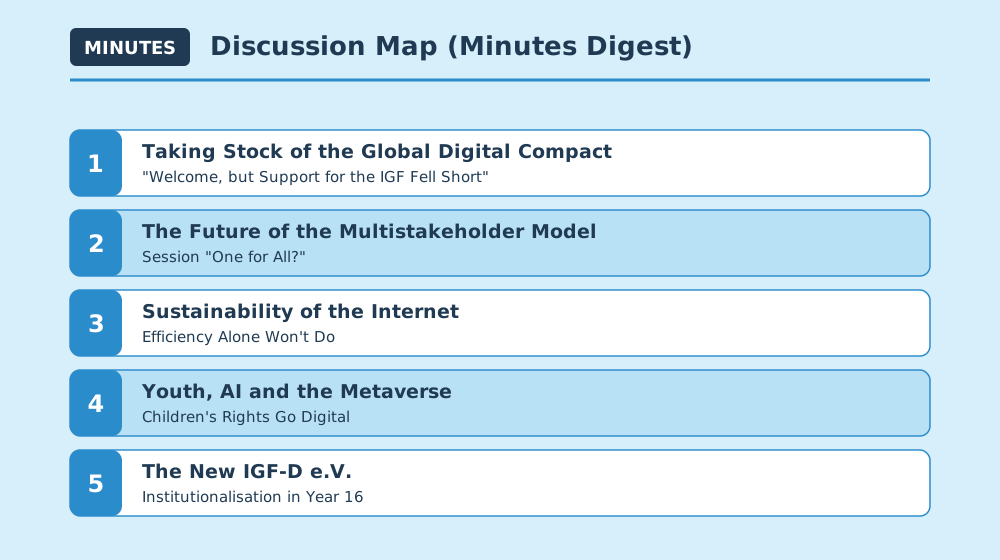
Key exchanges extracted from session records and transcripts.
1. Taking Stock of the Global Digital Compact — "Welcome, but Support for the IGF Fell Short"
Sessions: Session on lessons and consequences of the Global Digital Compact
- The German community welcomed the consensus on the GDC but judged that "the position of the IGF could have been stronger and the intergovernmental process could have benefitted from more transparency" (Messages from Berlin 2024) [2][1]
- It called for further development of the IGF itself, noting that the national IGFs (NRIs) the GDC proposes for implementation are very well suited to the task as multistakeholder communities [2][1]
2. The Future of the Multistakeholder Model — Session "One for All?"
Sessions: Session "One for all? The multi-stakeholder process and its future"
- "Back to the basics": multistakeholder processes must be scrutinised against their own ideals and principles [2]
- "Use them where they fit, but do not overstretch them": as the field shifts from internet policy to the much broader digital policy, the model cannot be applied to every challenge [2]
- National responsibility is justified in fields like economic, industrial and security policy — which in turn increases the importance of national multistakeholder processes [2]
3. Sustainability of the Internet — Efficiency Alone Won't Do
Sessions: Session on the internet and climate/sustainability
- A common understanding of how to govern digital public infrastructure and digital public goods was set as the short-term goal, with "social sustainability" — supporting employees and local communities — explicitly included [2][1]
- Since well-known practices (the 5R rule, high-temperature cooling, renewables) often fail on financial and market grounds, the session called for addressing legal and economic framework conditions, with self-commitments as low-threshold first steps [2][1]
- Efficiency alone cannot be the focus while total emissions and resource use still rise: rebound effects and sufficiency measures must be part of the toolbox [2][1]
4. Youth, AI and the Metaverse — Children's Rights Go Digital
Sessions: Session on youth media protection, AI and virtual reality
- With AI applications and VR pervading young people's lives, forward-looking digital policy must let everyone seize the opportunities without discrimination and manage the risks [2][1]
- To realise young people's rights online in line with the UN Convention on the Rights of the Child, existing rules must be checked for fitness for future technologies, new approaches developed where needed, and skills for responsible use of AI, VR and the metaverse promoted — minors included [2][1]
5. The New IGF-D e.V. — Institutionalisation in Year 16
Sessions: Organisational context: founding assembly on 8 April 2024 at the Federal Ministry for Digital and Transport
"The very broad support for the association is a very good example of the multistakeholder approach in action (original German: "Die sehr breite Unterstützung für den Verein ist ein sehr gutes Beispiel für den gelebten Multistakeholder-Ansatz")"
— Peter Koch (chairman of IGF-D e.V., DENIC), original German [4][3]
- On 8 April 2024 the IGF-D e.V. was founded at a hybrid assembly, with Peter Koch (DENIC) as chairman, Friederike von Franqué (Wikimedia) as deputy, and Kathrin Morasch (Youth IGF-D) and Miguel Vidal (Deutsche Telekom) on the board [4][3]
- The informal structure dating from 2008 thus gained a permanent legal form, and the 15th edition in September was the first annual meeting under it — with regulars such as Julia Pohle, Sabine Grützmacher and Wolfgang Kleinwächter documented among the participants [4][3]
Three-Minute Short Talk — Your Questions Answered
Q. So what did it decide?
A. It doesn't decide — but it distilled the debates into the "Messages from Berlin 2024" and sent them to the UN IGF in Riyadh, headlined by a candid verdict on the freshly adopted Global Digital Compact.
Q. Most contentious point?
A. The limits of the multistakeholder model. As "internet policy" swells into "digital policy", how far does the model stretch? Verdict: back to basics — use it where it fits, don't overstretch it.
Q. Why should I care?
A. The GDC assigns national IGFs a role in its implementation, so the finding that national multistakeholder forums matter more than ever applies to every country — including yours.
What Is Germany IGF? (for first-time readers)
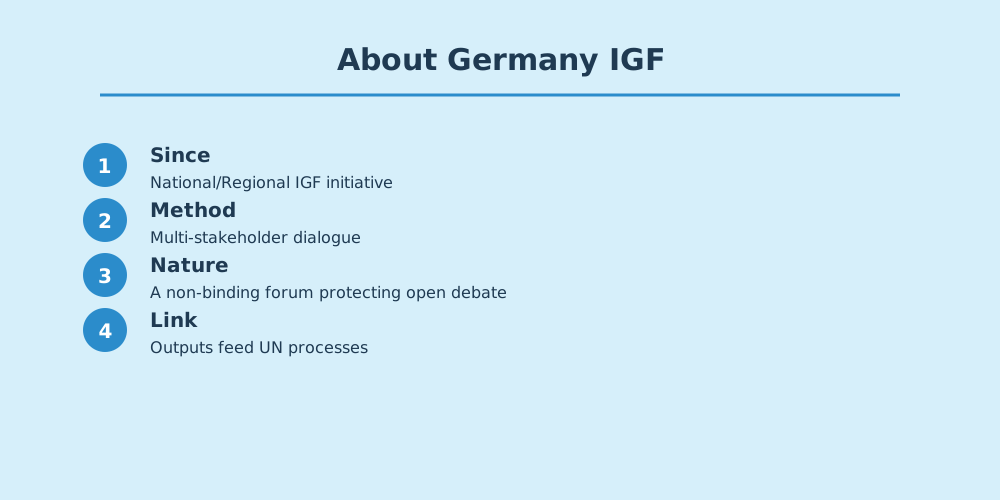
Germany IGF is a National or Regional IGF Initiative (NRI), aligning local internet governance discussion with global IGF principles.
Why It Matters to You
What was discussed here becomes the baseline for national digital policy, platform rules and AI regulation worldwide within a few years. The principles confirmed at the 2024 meeting are the foundation of the "next rules" for the phones, social platforms and AI services you use every day.
Sources & References
- IGF-D 2024 in Berlin on 11 September 2024 — DENIC eG(公式ブログ) (accessed 2026-07-11)
- Messages from Berlin 2024 (PDF) — IGF-D (accessed 2026-07-11)
- IGF-D veröffentlicht Messages aus Berlin — DENIC eG(公式ブログ) (accessed 2026-07-11)
- Berlin – IGF-D gründet den offiziellen Trägerverein »Internet Governance Forum Deutschland e.V.« — domain-recht.de (accessed 2026-07-11)
- Downloads(Messages・報告書一覧) — IGF-D (accessed 2026-07-11)
Quotes are translated or condensed from the records listed above. Bracketed numbers [n] refer to the source list.
Related links
- IGF official (NRI list): https://www.intgovforum.org/en/content/national-and-regional-igf-initiatives
- Japan IGF: https://japanigf.jp/
- Yuki Nakazawa's blog: https://nkzw.jp/category/igf/
Revision History
Rev. 1 — published 3 June 2024, 14:00 (Article published)
Rev. 2 — updated 16 July 2026, 20:09 (Fully revised into the in-depth edition: added the 3-line summary, minutes digest, short talk, source list and diagrams (all quotes verified against the listed sources))
— 中澤祐樹

