


The 3-Line Summary
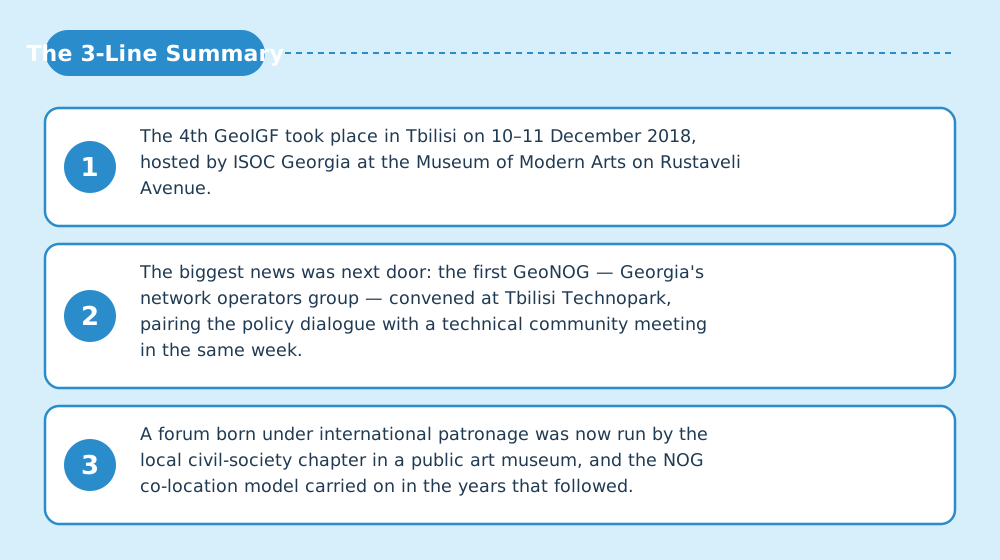
- The 4th GeoIGF took place in Tbilisi on 10–11 December 2018, hosted by ISOC Georgia at the Museum of Modern Arts on Rustaveli Avenue.
- The biggest news was next door: the first GeoNOG — Georgia's network operators group — convened at Tbilisi Technopark, pairing the policy dialogue with a technical community meeting in the same week.
- A forum born under international patronage was now run by the local civil-society chapter in a public art museum, and the NOG co-location model carried on in the years that followed.
Welcome — this is the Japan IGF Support Organization. This in-depth report on GeoIGF 2018 (4th Georgian Internet Governance Forum) draws on official outputs, session records and on-site reporting. In a hurry? The three lines above and the diagrams carry the gist.
Conference at a Glance (from official records)
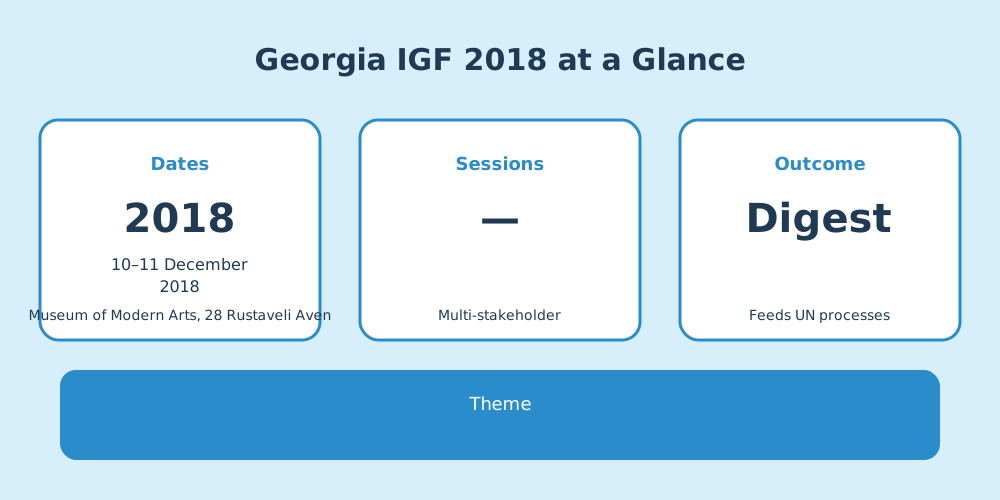
| Item | Detail |
|---|---|
| Official name | GeoIGF 2018 (4th Georgian Internet Governance Forum) |
| Dates | 10–11 December 2018 |
| Venue | Museum of Modern Arts, 28 Rustaveli Avenue, Tbilisi |
| Theme | Regional governance themes |
| Co-located events | Co-located with the first Georgian NOG (Network Operators Group) meeting at Tbilisi Technopark |
| Host | Internet Society – Georgia (ISOC Georgia) |
(See the source list at the end of this article.)
Discussion Digest — from the Session Records
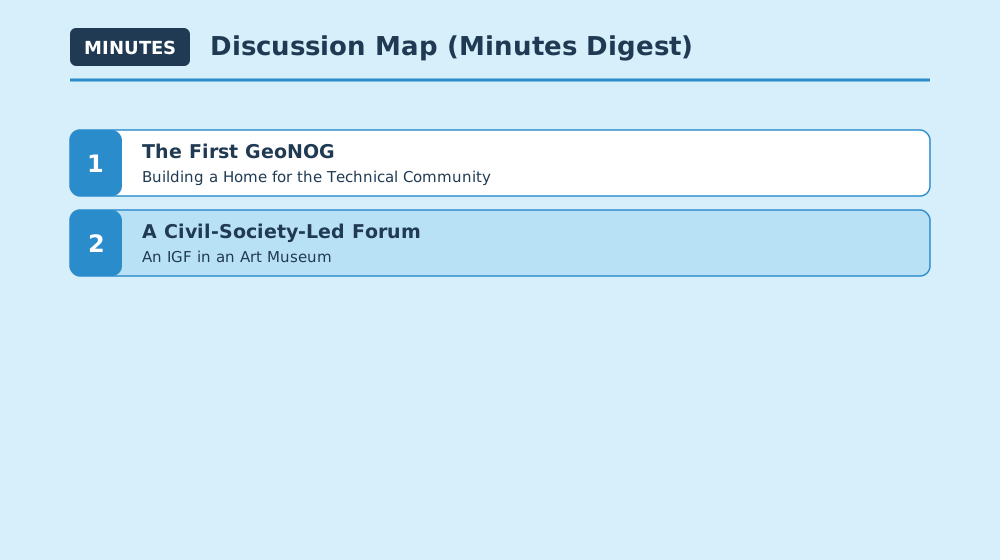
Key exchanges extracted from session records and transcripts.
1. The First GeoNOG — Building a Home for the Technical Community
Sessions: First Georgian NOG meeting (10 December, Tbilisi Technopark)
- Alongside the 4th GeoIGF, ISOC Georgia convened the country's first network operators group meeting (GeoNOG) at Technopark, launching the dedicated site nog.ge (ISOC Georgia announcement) [1]
- Pairing the policy-focused IGF with an operations-focused NOG in the same week began here and carried straight into 2019's 'GeoIGF 5.0 + GeoNOG 2.0' [1]
2. A Civil-Society-Led Forum — An IGF in an Art Museum
Sessions: Multiple sessions
- ISOC Georgia hosted this edition at the Museum of Modern Arts, 28 Rustaveli Avenue, in central Tbilisi (ISOC Georgia announcement) [1][2]
- dig.watch billed the forum as bringing together 'all society members from various stakeholder groups discussing public policy issues relating to the Internet' — cementing its identity as an open, all-comers gathering [1][2]
Three-Minute Short Talk — Your Questions Answered
Q. What did this meeting decide?
A. Nothing formal — it is an annual dialogue. The real deliverable of 2018 was institutional: Georgia's network engineers got their own standing meeting, GeoNOG.
Q. What stood out most?
A. The venue and the host. Run by the local ISOC chapter in an art museum rather than an institutional conference room, the forum visibly took root in Georgian society.
Q. Why should I care?
A. Network operator groups (NOGs) exist in most countries — Japan's JANOG among them — and how a country connects its policy forum with its technical community is a universal question.
What Is Georgia IGF? (for first-time readers)
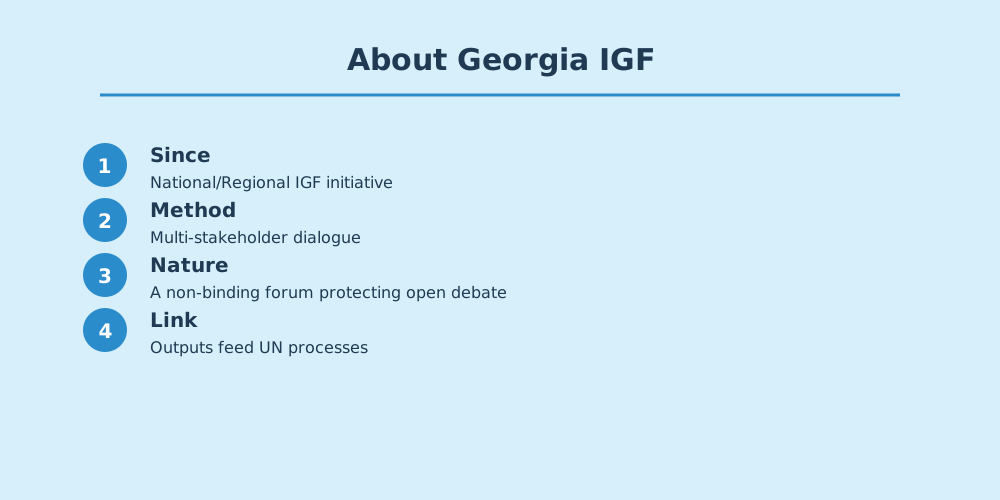
Georgia IGF is a National or Regional IGF Initiative (NRI), aligning local internet governance discussion with global IGF principles.
Why It Matters to You
What was discussed here becomes the baseline for national digital policy, platform rules and AI regulation worldwide within a few years. The principles confirmed at the 2018 meeting are the foundation of the "next rules" for the phones, social platforms and AI services you use every day.
Sources & References
- 4th Georgian Internet Governance Forum and the first Georgian NOG meeting — ISOCジョージア(Internet Society – Georgia) (accessed 2026-07-11)
- Georgian Internet Governance Forum 2018 — DiploFoundation (accessed 2026-07-11)
- Georgia IGF(NRI登録ページ) — UN IGF Secretariat (accessed 2026-07-11)
Quotes are translated or condensed from the records listed above. Bracketed numbers [n] refer to the source list.
Related links
- IGF official (NRI list): https://www.intgovforum.org/en/content/national-and-regional-igf-initiatives
- Japan IGF: https://japanigf.jp/
- Yuki Nakazawa's blog: https://nkzw.jp/category/igf/
Revision History
Rev. 1 — published 23 June 2018, 11:00 (Article published)
Rev. 2 — updated 17 July 2026, 12:32 (Fully revised into the in-depth edition: added the 3-line summary, minutes digest, short talk, source list and diagrams (all quotes verified against the listed sources))
— 中澤祐樹

