


The 3-Line Summary
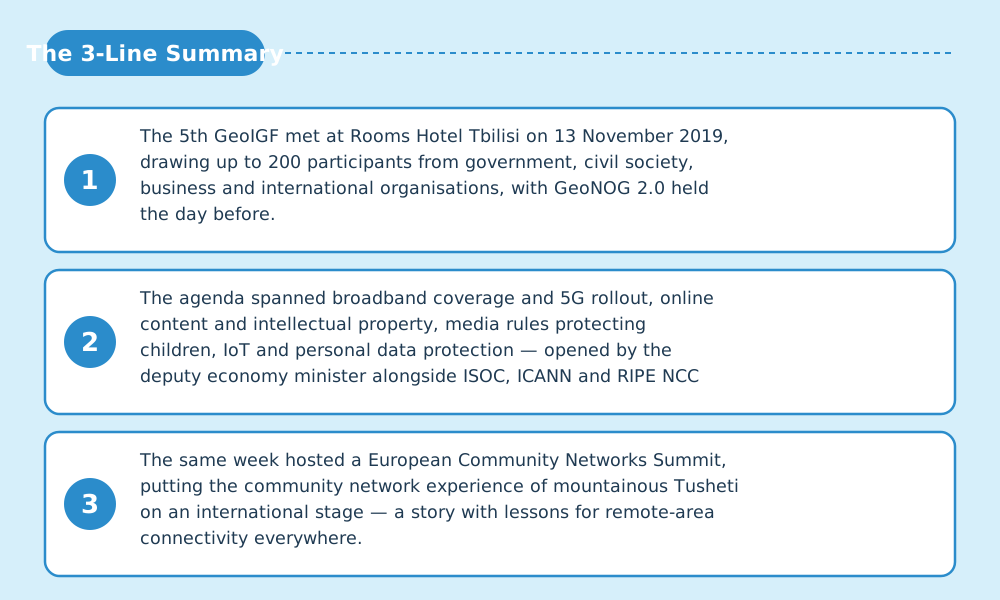
- The 5th GeoIGF met at Rooms Hotel Tbilisi on 13 November 2019, drawing up to 200 participants from government, civil society, business and international organisations, with GeoNOG 2.0 held the day before.
- The agenda spanned broadband coverage and 5G rollout, online content and intellectual property, media rules protecting children, IoT and personal data protection — opened by the deputy economy minister alongside ISOC, ICANN and RIPE NCC executives.
- The same week hosted a European Community Networks Summit, putting the community network experience of mountainous Tusheti on an international stage — a story with lessons for remote-area connectivity everywhere.
Welcome — this is the Japan IGF Support Organization. This in-depth report on GeoIGF 2019 (5th Georgian Internet Governance Forum) draws on official outputs, session records and on-site reporting. In a hurry? The three lines above and the diagrams carry the gist.
Conference at a Glance (from official records)
| Item | Detail |
|---|---|
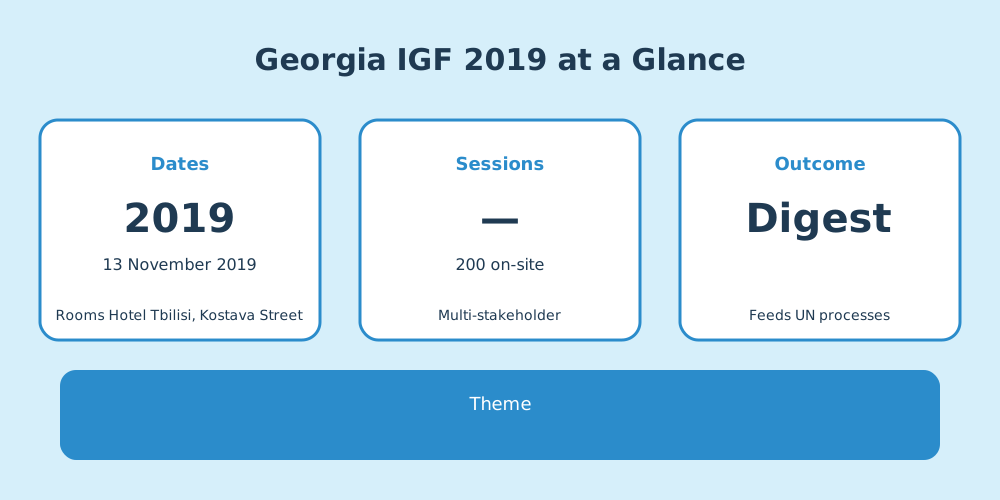
| Official name | GeoIGF 2019 (5th Georgian Internet Governance Forum) |
| Dates | 13 November 2019 |
| Venue | Rooms Hotel Tbilisi, Kostava Street |
| Theme | Regional governance themes |
| Participants | 200 |
| Co-located events | Co-located with the 2nd GeoNOG (12 November) and a European Community Networks Summit the same week |
| Host | Organised by the Council of Europe (project 'Supporting Freedom of Media and Internet in Georgia') together with ISOC, ICANN, the RIPE NCC and the IGF Support Association |
(See the source list at the end of this article.)
Discussion Digest — from the Session Records
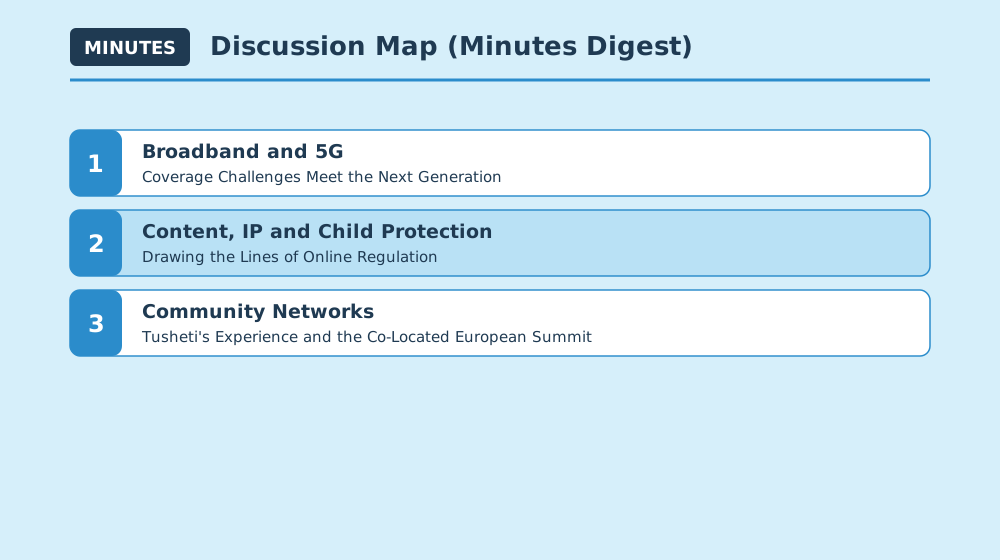
Key exchanges extracted from session records and transcripts.
1. Broadband and 5G — Coverage Challenges Meet the Next Generation
Sessions: Multiple sessions
- Georgia's broadband coverage challenges and the implementation of 5G were headline topics (Council of Europe report) [1][2]
- Announcing Deputy Minister Nikoloz Alavidze's opening, the Economy Ministry stated that developing Georgia's digital economy through ICT is one of the government's priorities [1][2]
- ISOC's Europe director Frederick Donck, the RIPE NCC's Vahan Hovsepyan, ICANN's Natalia Mochu and CoE office head Cristian Urse joined the opening (Council of Europe report) [1][2]
2. Content, IP and Child Protection — Drawing the Lines of Online Regulation
Sessions: Multiple sessions
- Online content and intellectual property rights, online media regulation and protecting children from harmful influence were all debated (Council of Europe report) [1]
- IoT and personal data protection rounded out the agenda, weighing user protection against freedom of expression and enterprise [1]
3. Community Networks — Tusheti's Experience and the Co-Located European Summit
Sessions: European Community Networks Summit 'Community Networks: Connecting the Next Billion' (same week)
- In the same week as GeoIGF and GeoNOG, a European Community Networks Summit was held with ISOC and the Economy Ministry, sharing international experience of resident-built connectivity (XIRIS trip report) [4][3]
- Plans to extend LoRaWAN coverage in the mountainous Tusheti region and apply it to smart agriculture were discussed — locally driven connectivity for remote areas (XIRIS trip report) [4][3]
- GeoIGF itself featured a youth panel, folding the next generation into the governance dialogue (XIRIS trip report) [4][3]
Three-Minute Short Talk — Your Questions Answered
Q. What did this meeting decide?
A. Nothing binding, but with up to 200 participants it set the shared priorities — 5G, data protection, child safety — that shaped Georgia's telecom policy conversation.
Q. What stood out most?
A. Community networks. The story of Tusheti, where mountain villagers built their own connectivity, was shared at a co-located European summit — 'if no one connects you, connect yourselves.'
Q. Why should I care?
A. Rural 5G rollout and protecting children online were live debates in most countries that year, and community networks remain a practical answer for remote areas everywhere.
What Is Georgia IGF? (for first-time readers)
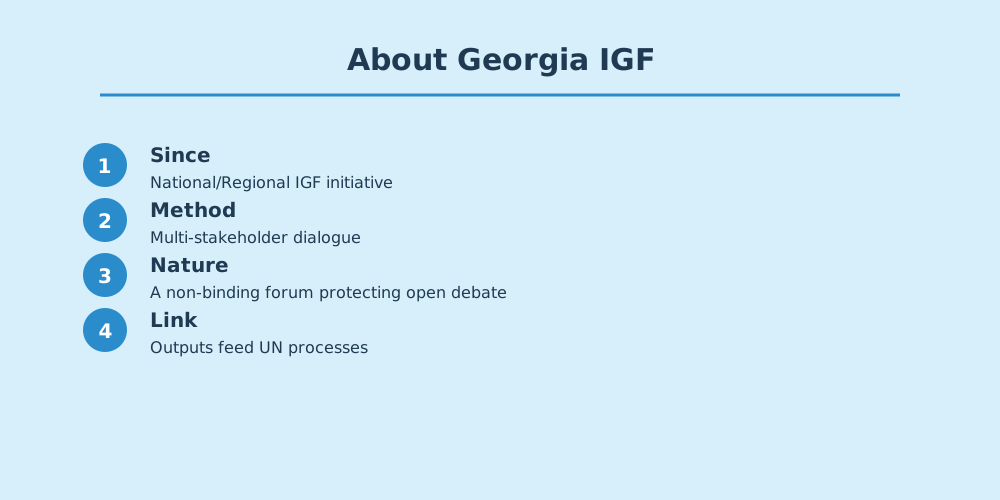
Georgia IGF is a National or Regional IGF Initiative (NRI), aligning local internet governance discussion with global IGF principles.
Why It Matters to You
What was discussed here becomes the baseline for national digital policy, platform rules and AI regulation worldwide within a few years. The principles confirmed at the 2019 meeting are the foundation of the "next rules" for the phones, social platforms and AI services you use every day.
Sources & References
- 5th Georgian Internet Governance Forum GeoIGF 2019 — 欧州評議会(Council of Europe, Freedom of Expression) (accessed 2026-07-11)
- საქართველოში ინტერნეტმმართველობის რიგით მეხუთე ფორუმი GeoIGF გაიხსნა(第5回GeoIGF開幕) — ジョージア経済持続開発省 (accessed 2026-07-11)
- GEO IGF 5.0 and NOG 2.0 – 2019 — ISOCジョージア(Internet Society – Georgia) (accessed 2026-07-11)
- GeoNOG2019, GeoIGF 2019 and ISOC CN Summit(参加報告) — XIRIS(スロベニアの技術企業・登壇者) (accessed 2026-07-11)
Quotes are translated or condensed from the records listed above. Bracketed numbers [n] refer to the source list.
Related links
- IGF official (NRI list): https://www.intgovforum.org/en/content/national-and-regional-igf-initiatives
- Japan IGF: https://japanigf.jp/
- Yuki Nakazawa's blog: https://nkzw.jp/category/igf/
Revision History
Rev. 1 — published 4 June 2019, 16:00 (Article published)
Rev. 2 — updated 17 July 2026, 12:32 (Fully revised into the in-depth edition: added the 3-line summary, minutes digest, short talk, source list and diagrams (all quotes verified against the listed sources))
— 中澤祐樹

