


The 3-Line Summary
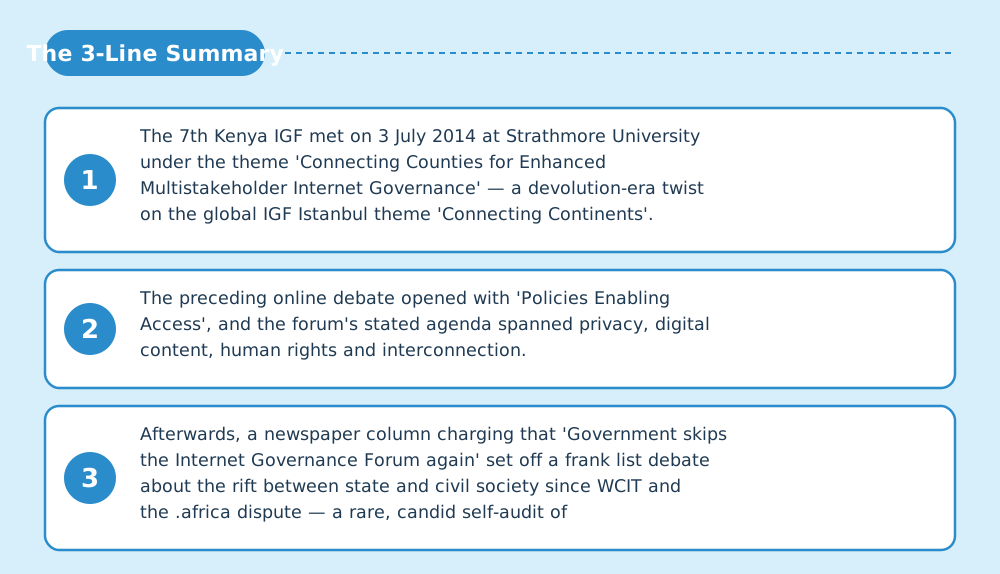
- The 7th Kenya IGF met on 3 July 2014 at Strathmore University under the theme 'Connecting Counties for Enhanced Multistakeholder Internet Governance' — a devolution-era twist on the global IGF Istanbul theme 'Connecting Continents'.
- The preceding online debate opened with 'Policies Enabling Access', and the forum's stated agenda spanned privacy, digital content, human rights and interconnection.
- Afterwards, a newspaper column charging that 'Government skips the Internet Governance Forum again' set off a frank list debate about the rift between state and civil society since WCIT and the .africa dispute — a rare, candid self-audit of multistakeholderism at a national IGF.
Welcome — this is the Japan IGF Support Organization. This in-depth report on Kenya Internet Governance Forum 2014 (7th Kenya IGF) draws on official outputs, session records and on-site reporting. In a hurry? The three lines above and the diagrams carry the gist.
Conference at a Glance (from official records)
| Item | Detail |
|---|---|
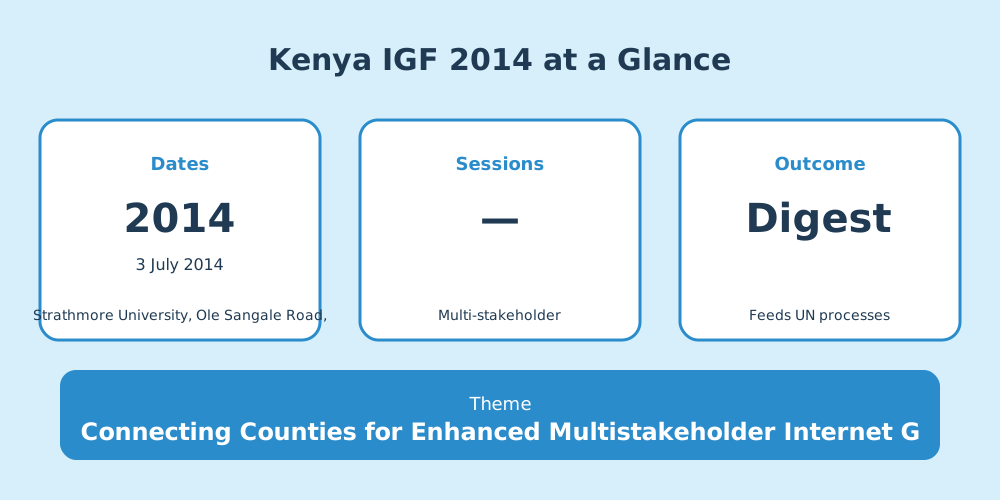
| Official name | Kenya Internet Governance Forum 2014 (7th Kenya IGF) |
| Dates | 3 July 2014 |
| Venue | Strathmore University, Ole Sangale Road, Nairobi, Kenya |
| Theme | Connecting Counties for Enhanced Multistakeholder Internet Governance |
| Host | Internet Society Kenya Chapter and partner organisations |
(See the source list at the end of this article.)
Discussion Digest — from the Session Records
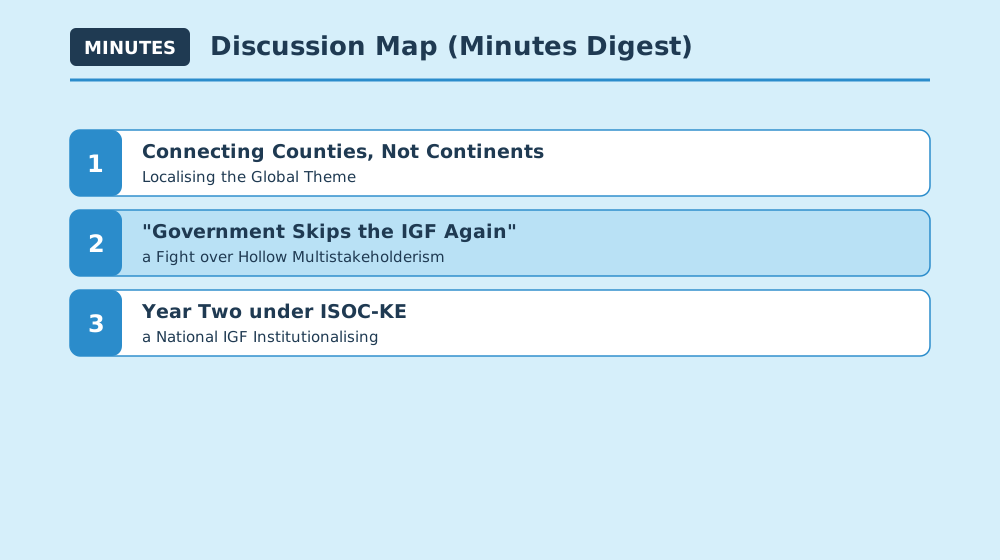
Key exchanges extracted from session records and transcripts.
1. Connecting Counties, Not Continents — Localising the Global Theme
Sessions: Main forum (8:30-18:00, Strathmore University) and online debate Day 1: 'Policies Enabling Access'
- Swapping 'Continents' for 'Counties' in the Istanbul global theme, the forum made devolved-era connectivity gaps across the 47 counties the headline national issue [1][2][4]
- The invitation called the IGF 'a unique platform for all stakeholders to openly exchange perspectives and concerns on key issues that may affect the future of the Internet for millions of Kenyans', listing privacy, digital content, human rights and interconnection as core issues [1][2][4]
- The online debate opened with 'Policies Enabling Access', putting universal access funding and county-level infrastructure policy on the table [1][2][4]
2. "Government Skips the IGF Again" — a Fight over Hollow Multistakeholderism
Sessions: Post-forum mailing-list debate (22 July 2014), sparked by John Walubengo's Daily Nation column
"We are basically engaging among ourselves without any significant input from business and government."
— Mwendwa Kivuva (Secretary, ISOC Kenya; KIGF organising team) [3]
- John Walubengo's Daily Nation column criticised senior government absence from the KIGF, triggering a list-wide diagnosis of why the state had disengaged [3]
- Kivuva traced the 'bad blood' to the WCIT-12 split between government and other stakeholders and the .africa dispute, where Kenya's GAC representative and civil society backed rival bids — and called for 'a truce in Gotham city' [3]
- The same thread carried the counterpoint that CAK was well represented and Hon. Rege attended — 'if the legislature is still an arm of government' — making the very definition of government absence contested [3]
3. Year Two under ISOC-KE — a National IGF Institutionalising
Sessions: Forum operations (Eventbrite registration, kenyaigf.or.ke, ISOC webcast)
- The invitation recorded that the forum had gathered government, private sector, technical community, academia and civil society 'on an equal basis… since 2008' — making 2014 the seventh edition [1][2]
- Eventbrite registration, the dedicated kenyaigf.or.ke site and an all-day ISOC webcast (8:30-18:00) showed a maturing operational template [1][2]
- Organising meetings at Nairobi's iHub wove the city's tech-community institutions into the KIGF's fabric [1][2]
Three-Minute Short Talk — Your Questions Answered
Q. What does 'Connecting Counties' mean?
A. A play on the global IGF theme 'Connecting Continents'. Devolution to 47 counties had begun in 2013, so the message was: before connecting continents, connect our own counties.
Q. What was the most contentious point?
A. Government absence. A post-forum column charged the government with skipping the IGF again, and the mailing list traced the rift to WCIT and the .africa bid dispute — an unusually frank public post-mortem.
Q. Why should I care?
A. Whether governments genuinely show up to multistakeholder forums is a live question everywhere. Kenya's 2014 debate is a candid case study in keeping such dialogues from becoming echo chambers.
What Is Kenya IGF? (for first-time readers)
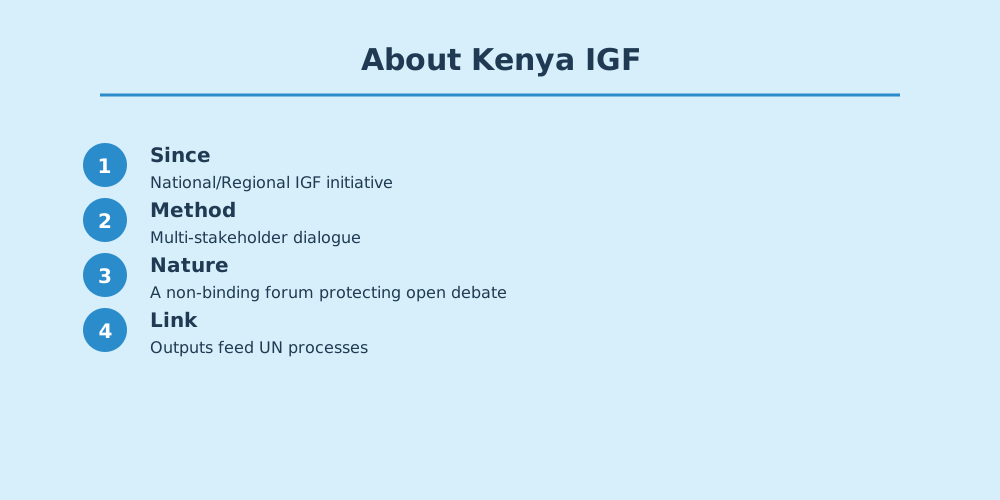
Kenya IGF is a National or Regional IGF Initiative (NRI), aligning local internet governance discussion with global IGF principles.
Why It Matters to You
What was discussed here becomes the baseline for national digital policy, platform rules and AI regulation worldwide within a few years. The principles confirmed at the 2014 meeting are the foundation of the "next rules" for the phones, social platforms and AI services you use every day.
Sources & References
- Invitation to the Kenya IGF to be held on 3rd July 2014 at Strathmore University(ISOC-KE公式招待状、テーマ・会場を明記) — KICTANetメーリングリスト・アーカイブ(一次資料) (accessed 2026-07-11)
- WEBCAST NOW: Kenya Internet Governance Forum(2014年7月3日の配信告知。日時・テーマを記録) — Internet Society (accessed 2026-07-11)
- Government Skips Internet Governance Forum again(ワルベンゴ氏コラムを巡る会合後討議スレッド) — KICTANetメーリングリスト・アーカイブ(一次資料) (accessed 2026-07-11)
- KICTANetメーリングリスト2014年6月アーカイブ(件名索引。オンライン討議Day1「Policies Enabling Access」を確認) — KICTANetメーリングリスト・アーカイブ(一次資料) (accessed 2026-07-11)
- Kenya country report: Internet governance from the ground up(Grace Githaiga / Victor Kapiyo, 2017) — APC (accessed 2026-07-11)
Quotes are translated or condensed from the records listed above. Bracketed numbers [n] refer to the source list.
Related links
- IGF official (NRI list): https://www.intgovforum.org/en/content/national-and-regional-igf-initiatives
- Japan IGF: https://japanigf.jp/
- Yuki Nakazawa's blog: https://nkzw.jp/category/igf/
Revision History
Rev. 1 — published 17 September 2014, 15:00 (Article published)
Rev. 2 — updated 17 July 2026, 12:32 (Fully revised into the in-depth edition: added the 3-line summary, minutes digest, short talk, source list and diagrams (all quotes verified against the listed sources))
— 中澤祐樹

