


The 3-Line Summary
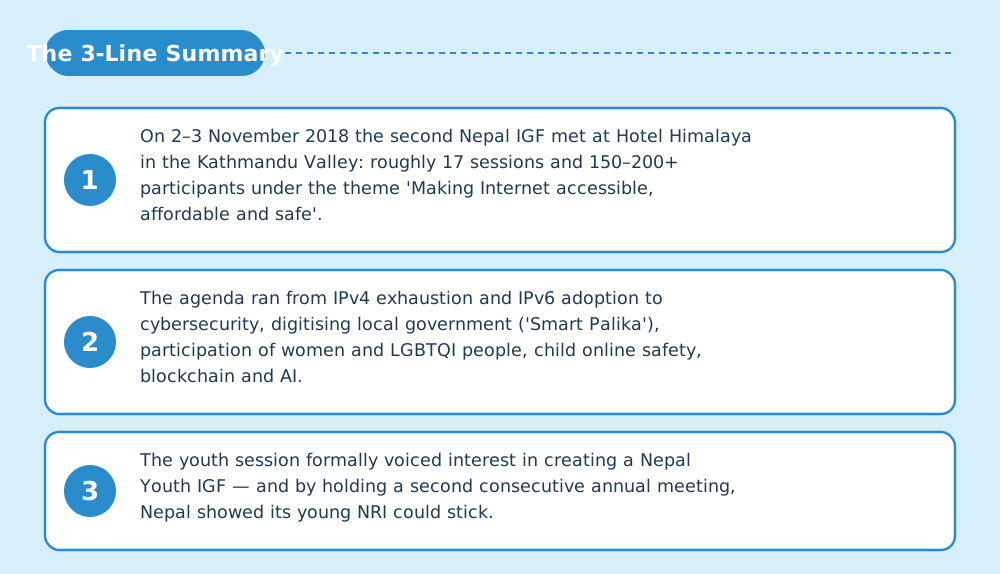
- On 2–3 November 2018 the second Nepal IGF met at Hotel Himalaya in the Kathmandu Valley: roughly 17 sessions and 150–200+ participants under the theme 'Making Internet accessible, affordable and safe'.
- The agenda ran from IPv4 exhaustion and IPv6 adoption to cybersecurity, digitising local government ('Smart Palika'), participation of women and LGBTQI people, child online safety, blockchain and AI.
- The youth session formally voiced interest in creating a Nepal Youth IGF — and by holding a second consecutive annual meeting, Nepal showed its young NRI could stick.
Welcome — this is the Japan IGF Support Organization. This in-depth report on Nepal Internet Governance Forum 2018 (2nd Nepal IGF) draws on official outputs, session records and on-site reporting. In a hurry? The three lines above and the diagrams carry the gist.
📍 Catalogued as Kathmandu; the venue, Hotel Himalaya, is in Kupondole in adjacent Lalitpur within the Kathmandu Valley
Conference at a Glance (from official records)
| Item | Detail |
|---|---|
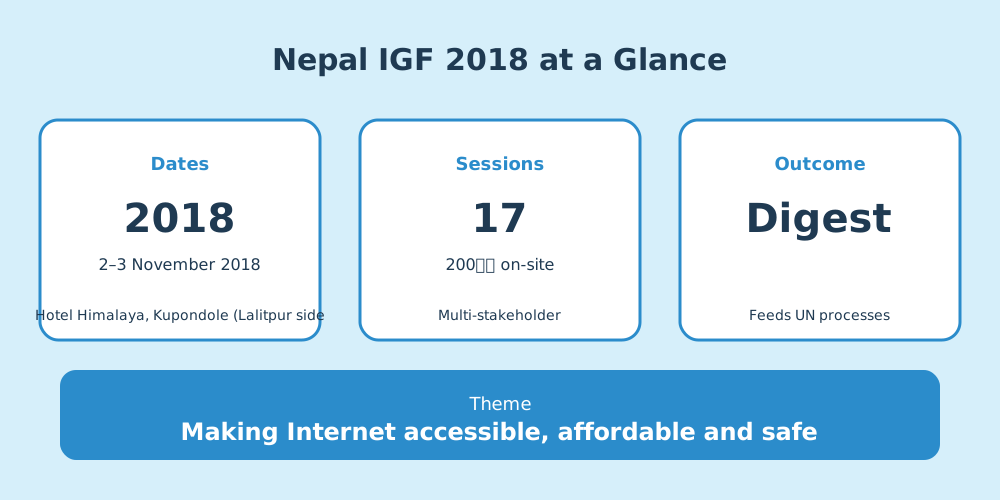
| Official name | Nepal Internet Governance Forum 2018 (2nd Nepal IGF) |
| Dates | 2–3 November 2018 |
| Venue | Hotel Himalaya, Kupondole (Lalitpur side of the Kathmandu Valley) |
| Theme | Making Internet accessible, affordable and safe |
| Participants | 200+ attendees per APNIC's event wrap; the official report cites 150 participants |
| Sessions | 17 |
| Host | Organised by the Internet Society Nepal and the Internet Governance Institute, with the Ministry of Information and Communication Technology and the Nepal Telecommunications Authority, supported by Facebook, ICANN, APNIC and LIRNEasia among others |
(See the source list at the end of this article.)
Discussion Digest — from the Session Records
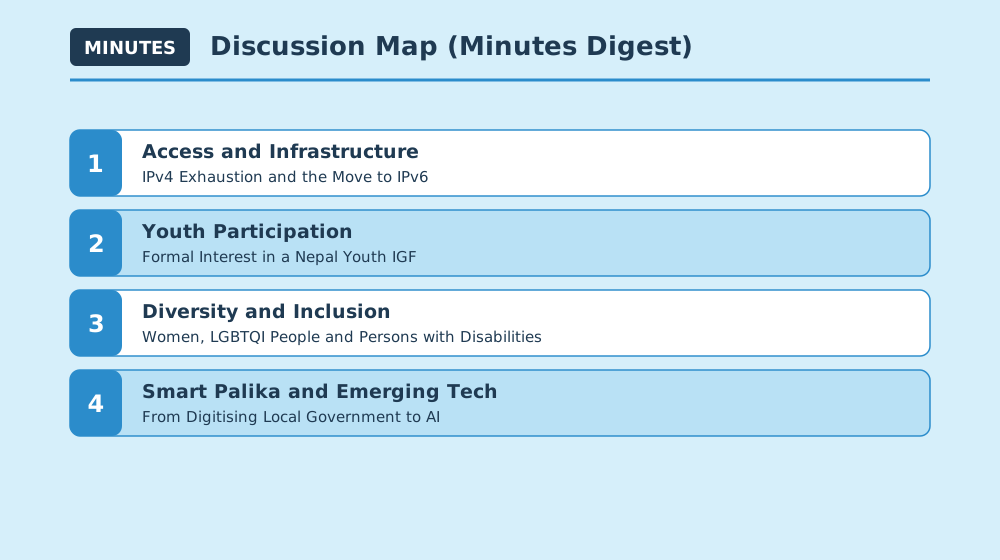
Key exchanges extracted from session records and transcripts.
1. Access and Infrastructure — IPv4 Exhaustion and the Move to IPv6
Sessions: Session 'Infrastructure of the Internet and its Access' (2 November)
- The session linked IPv4 exhaustion and slow IPv6 adoption to Nepal's access divide, drawing on APNIC community expertise [1][2]
- The conference theme — accessible, affordable, safe — mirrored the connectivity gap between Nepal's cities and mountain districts [1][2]
- APNIC also provided technical webcasting support for the event [1][2]
2. Youth Participation — Formal Interest in a Nepal Youth IGF
Sessions: Session 'Participation of Youth in Global and Regional Internet Governance Platforms'
- Organised by past APNIC Fellow Dikchya Raut, the session mapped pathways for young people into regional and global IG platforms — APNIC fellowships, ICANN and regional IGFs [1]
- Participants expressed interest in establishing a Nepal Youth IGF, foreshadowing the country's later youth-track activities [1]
- Speakers from ICANN, Facebook and the government IT side laid out the options [1]
3. Diversity and Inclusion — Women, LGBTQI People and Persons with Disabilities
Sessions: 'Internet Governance for Women and LGBTQI individuals' and 'ICT Access for Persons with Disability' (3 November)
- Dedicated sessions covered internet governance for women and LGBTQI individuals and ICT access for persons with disabilities [1][2]
- Where 2017 had a single 'Women and ICT' session, the 2018 edition widened the circle of voices [1][2]
- APNIC's event wrap records the emphasis on multistakeholder dialogue and gender diversity in the IG ecosystem [1][2]
4. Smart Palika and Emerging Tech — From Digitising Local Government to AI
Sessions: 'Smart Palika – Transforming into Digital Governance', 'Blockchain Technology', 'Artificial Intelligence' and related sessions
- The 'Smart Palika' session took e-government down to Nepal's newly empowered municipalities under federalism [2]
- Blockchain, AI, IoT for smart cities, and fake news on social media were all tackled in a developing-country frame [2]
- Government participants signalled that stakeholder input from the forum would feed national ICT policy and regulation [2]
Three-Minute Short Talk — Your Questions Answered
Q. What defined this edition?
A. The theme says it all: accessible, affordable, safe. Seventeen sessions inventoried the issues closest to Nepali life — the connectivity gap, IPv6 migration, child safety, and the participation of women and LGBTQI people.
Q. Anything new come out of it?
A. Yes — the youth session formally voiced interest in creating a Nepal Youth IGF, the starting point of the youth-track activities that materialised a few years later.
Q. Why should I care?
A. 'Smart Palika' — digitising local government — is the same problem every country's municipalities face, and the APNIC/ICANN regional cooperation on show here is the same framework the wider Asia-Pacific internet community works within.
What Is Nepal IGF? (for first-time readers)
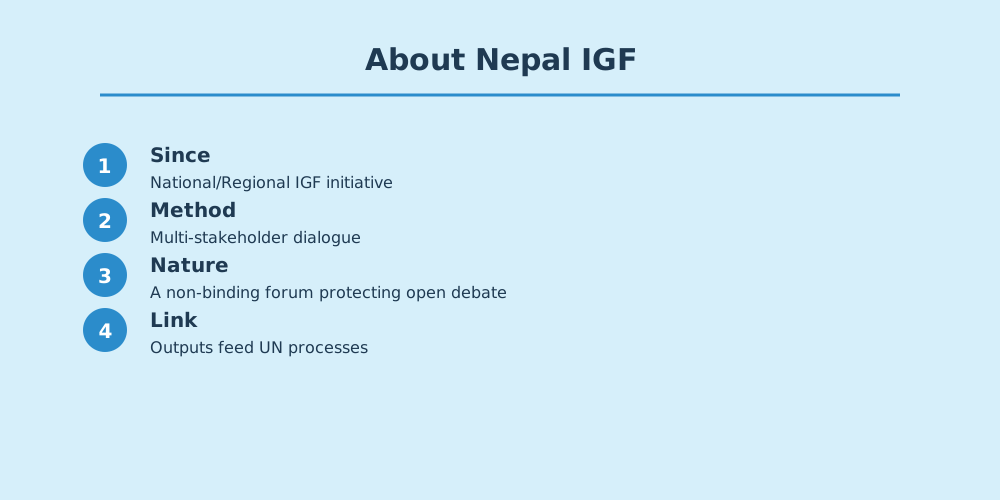
Nepal IGF is a National or Regional IGF Initiative (NRI), aligning local internet governance discussion with global IGF principles.
Why It Matters to You
What was discussed here becomes the baseline for national digital policy, platform rules and AI regulation worldwide within a few years. The principles confirmed at the 2018 meeting are the foundation of the "next rules" for the phones, social platforms and AI services you use every day.
Sources & References
- Event Wrap: Nepal IGF 2018 — APNIC Blog (accessed 2026-07-16)
- Nepal Internet Governance Forum 2018 Report — Nepal IGF(ICT Frame経由・SlideShare掲載) (accessed 2026-07-16)
- Nepal IGF — en (accessed 2026-07-16)
- Nepal IGF(NRI会合記録:カトマンズ開催) — intgovforum.org (accessed 2026-07-16)
Quotes are translated or condensed from the records listed above. Bracketed numbers [n] refer to the source list.
Related links
- IGF official (NRI list): https://www.intgovforum.org/en/content/national-and-regional-igf-initiatives
- Japan IGF: https://japanigf.jp/
- Yuki Nakazawa's blog: https://nkzw.jp/category/igf/
Revision History
Rev. 1 — published 23 July 2018, 13:00 (Article published)
Rev. 2 — updated 17 July 2026, 12:32 (Fully revised into the in-depth edition: added the 3-line summary, minutes digest, short talk, source list and diagrams (all quotes verified against the listed sources))
— 中澤祐樹

