


The 3-Line Summary
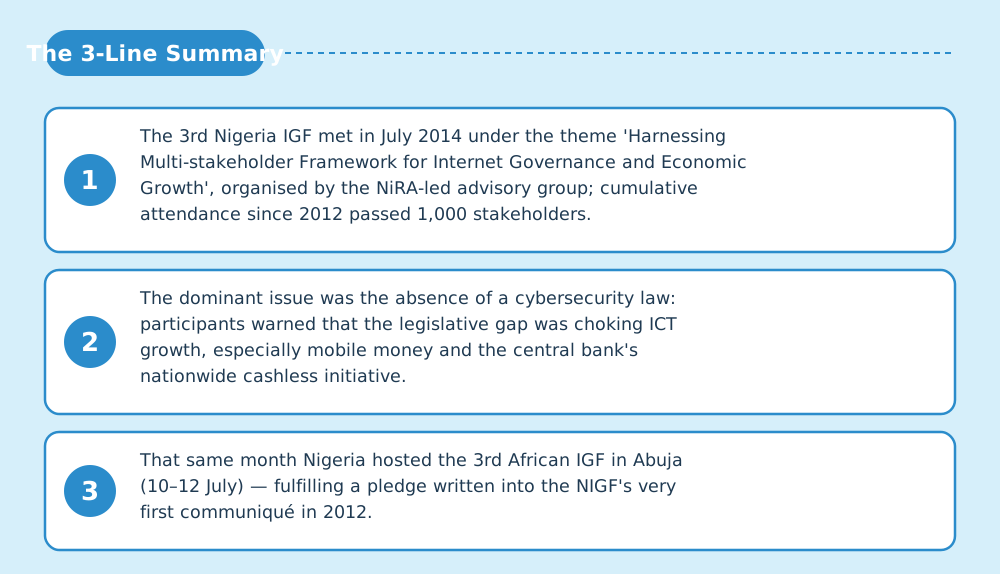
- The 3rd Nigeria IGF met in July 2014 under the theme 'Harnessing Multi-stakeholder Framework for Internet Governance and Economic Growth', organised by the NiRA-led advisory group; cumulative attendance since 2012 passed 1,000 stakeholders.
- The dominant issue was the absence of a cybersecurity law: participants warned that the legislative gap was choking ICT growth, especially mobile money and the central bank's nationwide cashless initiative.
- That same month Nigeria hosted the 3rd African IGF in Abuja (10–12 July) — fulfilling a pledge written into the NIGF's very first communiqué in 2012.
Welcome — this is the Japan IGF Support Organization. This in-depth report on 3rd Nigeria Internet Governance Forum (NIGF 2014) draws on official outputs, session records and on-site reporting. In a hurry? The three lines above and the diagrams carry the gist.
📍 The host city was most likely Abuja, but neither venue nor exact date could be confirmed in primary sources
Conference at a Glance (from official records)
| Item | Detail |
|---|---|
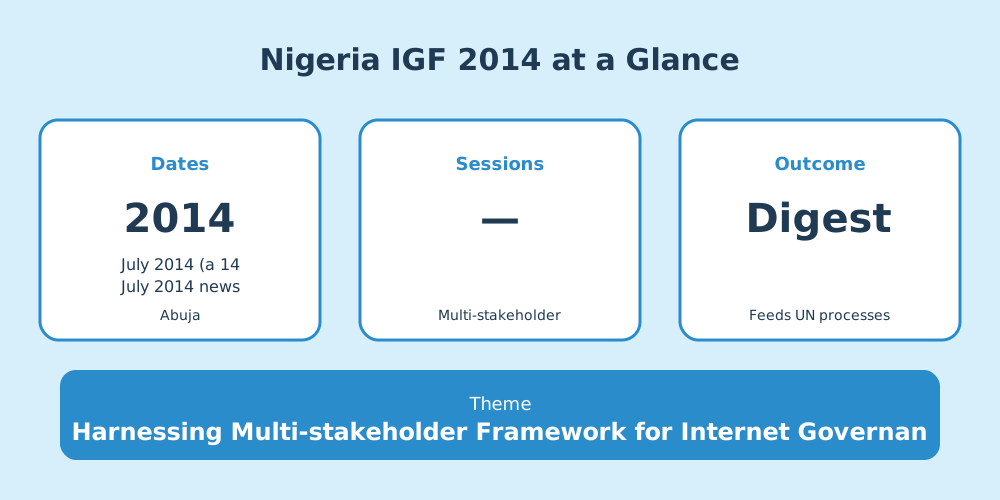
| Official name | 3rd Nigeria Internet Governance Forum (NIGF 2014) |
| Dates | July 2014 (a 14 July 2014 news report calls it 'recently held'; exact date unconfirmed) |
| Venue | Abuja, Nigeria |
| Theme | Harnessing Multi-stakeholder Framework for Internet Governance and Economic Growth |
| Host | Organised by the NiRA-led Local Multi-stakeholder Advisory Group (LMAG) |
(See the source list at the end of this article.)
Discussion Digest — from the Session Records
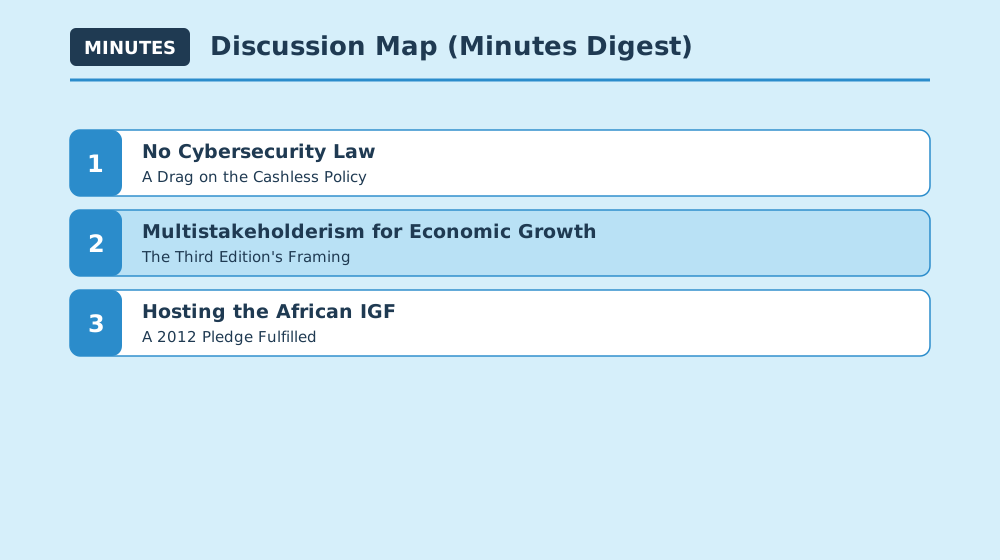
Key exchanges extracted from session records and transcripts.
1. No Cybersecurity Law — A Drag on the Cashless Policy
Sessions: Headline concern of the forum (per news coverage of 14 July 2014)
- The unpassed cybersecurity bill topped participants' concerns as an impediment to ICT growth — above all to mobile money and the central bank's newly nationwide cashless initiative (contemporary news coverage) [2]
- With ICT contributing roughly 8.5% of GDP by Q3 2013, delegates argued the sector deserved a properly designed cybersecurity policy [2]
- The bill finally passed the Senate that October and became the Cybercrime Act in 2015 — movement at last on a demand the NIGF had pressed every year since 2012 [2]
2. Multistakeholderism for Economic Growth — The Third Edition's Framing
Sessions: Overall forum theme
- The stated objective was to harness the forum's multistakeholder nature to aggregate productive ideas and best practices into an inclusive internet governance framework that would actively stimulate economic growth (dig.watch) [1][3]
- GISWatch's country report preserves the year-by-year themes; 2014 was the first edition to put economic growth front and centre [1][3]
- Cumulative attendance since inception passed 1,000 stakeholders, cementing the forum as Nigeria's standing cross-sector dialogue [1][3]
3. Hosting the African IGF — A 2012 Pledge Fulfilled
Sessions: Held the same month as the 3rd African IGF (10–12 July 2014, Nicon Luxury Hotel, Abuja)
- Nigeria hosted the 3rd African IGF on 10–12 July 2014 at Abuja's Nicon Luxury Hotel — the NIGF's own birthplace — under the theme 'Connecting Continents for Enhanced Multistakeholder Internet Governance' [4][1]
- About 476 participants from 41 countries attended in person with 214 online, preceded by the Africa DNS Forum at the same venue on 7–9 July (ICANN blog) [4][1]
- It fulfilled the first NIGF communiqué's 2012 pledge to bring the African IGF to Nigeria within a year or so, plugging the national forum directly into the continental process [4][1]
Three-Minute Short Talk — Your Questions Answered
Q. What did this meeting decide?
A. Nothing binding — but it turned the missing cybersecurity law into a cross-industry alarm, framing it as the chief obstacle to mobile money and the cashless policy. The bill passed the Senate that October.
Q. What was the most contentious point?
A. Legislative inaction. An ICT sector generating about 8.5% of GDP still had no legal backbone, and participants named the stalled bill as the single biggest brake on growth.
Q. Why should I care?
A. It is a textbook case of digital payments outrunning the law — the same race every cashless economy runs — and of what regulatory vacuum costs an emerging market.
What Is Nigeria IGF? (for first-time readers)
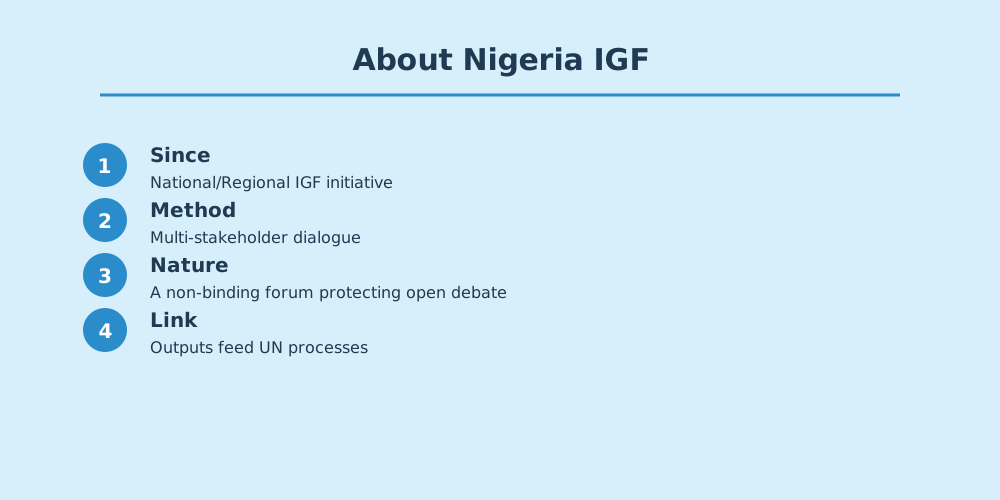
Nigeria IGF is a National or Regional IGF Initiative (NRI), aligning local internet governance discussion with global IGF principles.
Why It Matters to You
What was discussed here becomes the baseline for national digital policy, platform rules and AI regulation worldwide within a few years. The principles confirmed at the 2014 meeting are the foundation of the "next rules" for the phones, social platforms and AI services you use every day.
Sources & References
- Nigeria — GISWatch 2017 country report(歴代テーマ一覧を含む) — Global Information Society Watch (APC) / CITAD (accessed 2026-07-11)
- Nigeria: Absence of Cyber Security Laws Impedes Nigeria's ICT Growth(2014年7月14日) — allAfrica(ナイジェリア紙配信) (accessed 2026-07-11)
- Nigeria Internet Governance Forum (NIGF) — DiploFoundation (accessed 2026-07-11)
- Africa Convenes for Her 3rd IGF(2014年7月9日) — ICANN公式ブログ (accessed 2026-07-11)
Quotes are translated or condensed from the records listed above. Bracketed numbers [n] refer to the source list.
Related links
- IGF official (NRI list): https://www.intgovforum.org/en/content/national-and-regional-igf-initiatives
- Japan IGF: https://japanigf.jp/
- Yuki Nakazawa's blog: https://nkzw.jp/category/igf/
Revision History
Rev. 1 — published 26 September 2014, 10:00 (Article published)
Rev. 2 — updated 17 July 2026, 12:32 (Fully revised into the in-depth edition: added the 3-line summary, minutes digest, short talk, source list and diagrams (all quotes verified against the listed sources))
— 中澤祐樹

