


The 3-Line Summary
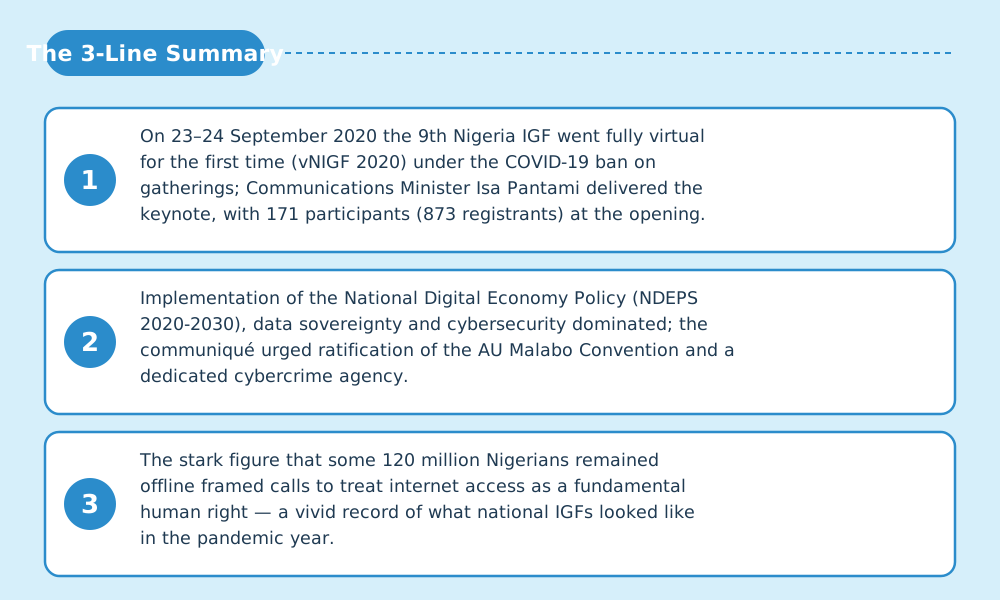
- On 23–24 September 2020 the 9th Nigeria IGF went fully virtual for the first time (vNIGF 2020) under the COVID-19 ban on gatherings; Communications Minister Isa Pantami delivered the keynote, with 171 participants (873 registrants) at the opening.
- Implementation of the National Digital Economy Policy (NDEPS 2020-2030), data sovereignty and cybersecurity dominated; the communiqué urged ratification of the AU Malabo Convention and a dedicated cybercrime agency.
- The stark figure that some 120 million Nigerians remained offline framed calls to treat internet access as a fundamental human right — a vivid record of what national IGFs looked like in the pandemic year.
Welcome — this is the Japan IGF Support Organization. This in-depth report on Nigeria Internet Governance Forum 2020 (9th edition), held virtually as vNIGF 2020 draws on official outputs, session records and on-site reporting. In a hurry? The three lines above and the diagrams carry the gist.
📍 Held fully online as 'vNIGF 2020' owing to the NCDC ban on large gatherings during COVID-19; the minister's keynote was delivered from the Communications and Digital Economy Complex auditorium in Mbora, Abuja
Conference at a Glance (from official records)
| Item | Detail |
|---|---|
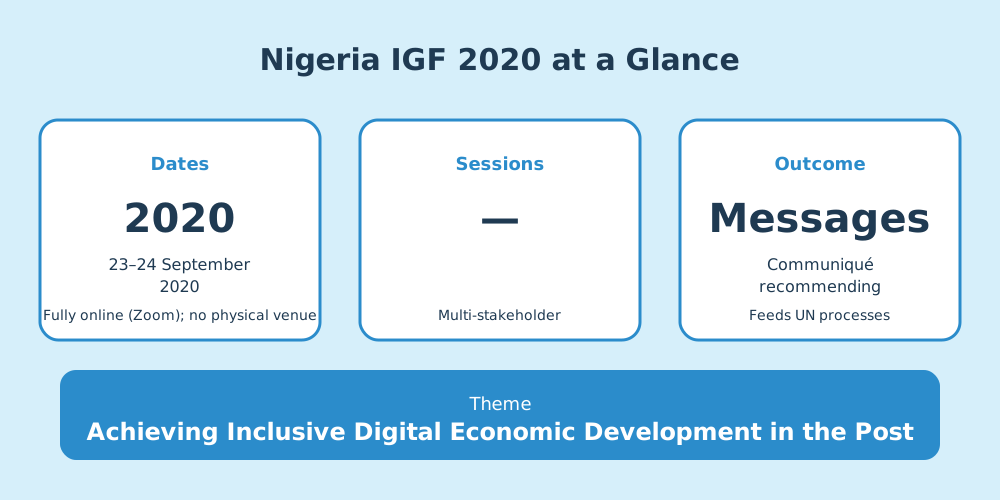
| Official name | Nigeria Internet Governance Forum 2020 (9th edition), held virtually as vNIGF 2020 |
| Dates | 23–24 September 2020 |
| Venue | Fully online (Zoom); no physical venue |
| Theme | Achieving Inclusive Digital Economic Development in the Post-COVID 19 Era |
| Host | NIGF, supported by the Federal Ministry of Communications and Digital Economy, NCC, NITDA, NiRA, IXPN, ISOC Nigeria, CITAD, DigitalSENSE Africa Media, MainOne and SUBURBAN Fibre |
| Outcome | Communiqué recommending, inter alia, ratification of the AU Malabo Convention and a dedicated cybercrime agency |
(See the source list at the end of this article.)
Discussion Digest — from the Session Records
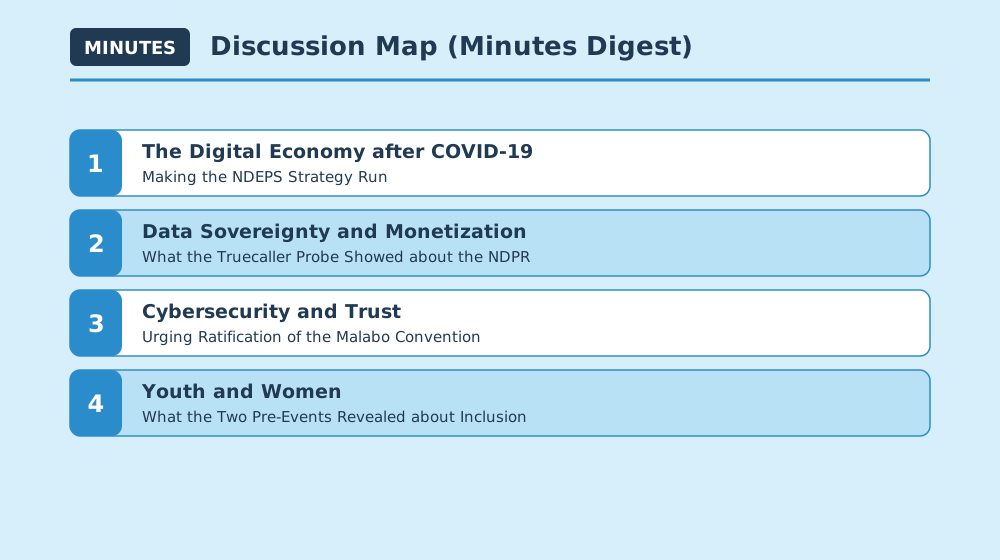
Key exchanges extracted from session records and transcripts.
1. The Digital Economy after COVID-19 — Making the NDEPS Strategy Run
Sessions: Opening ceremony and plenary (24 September; keynote by Dr Isa Ali Ibrahim 'Pantami', Minister of Communications and Digital Economy)
- In his keynote, Minister Pantami argued the pandemic had proven ICT's importance and accelerated the digital economy: anchored in the Digital Nigeria Policy 2020-2030 and the National Broadband Plan 2020-2025, broadband penetration reached 42.2% by end-July 2020 — 10 points gained within a year — with ICT alone contributing over 17% of GDP [1]
- Permanent Secretary Istifanus Fuktur noted that about 120 million Nigerians were digitally excluded — 'more than the combined populations of Ghana and South Africa' — and urged the Human Rights Commission to treat internet access as a fundamental right [1]
- The plenary featured MainOne CEO Funke Opeke and the Presidency's Tolu Ogunlesi; citing the direct relationship between access and GDP and states' right-of-way fee waivers, it recommended joint public-private infrastructure investment and basic digital literacy for citizens [1]
- IGF MAG chair Anriette Esterhuysen sent a recorded goodwill message, pledging to feed vNIGF 2020's outcomes into the global IGF that November [1]
2. Data Sovereignty and Monetization — What the Truecaller Probe Showed about the NDPR
Sessions: Breakout Session 1 'Data Sovereignty and Monetization' (moderated by Eyitayo Iyortim, COO, NiRA)
- Under NITDA's Nigeria Data Protection Regulation (NDPR, 2019), an investigation found Truecaller selling Nigerians' personal data, leading to corrective operating terms and an opt-out for Nigerian users [1]
- Everyday products were criticised by name: StarTimes' policy granting sweeping access to address books, browsing history and passwords, and Tecno handsets that give users no way to disable unsolicited ads [1]
- Titi Akinsanmi (Policy and Government Relations Lead, Google) presented 'The Business of Data', citing projections of some 30 billion connected devices by 2023 and urging government to make data usable by individuals and businesses rather than focusing on protection alone [1]
- The session's blunt diagnosis — Nigerians are technology consumers, not producers, and thus lack data sovereignty — fed a recommendation to prioritise long-term infrastructure and capacity investment over short-term taxes and fees [1]
3. Cybersecurity and Trust — Urging Ratification of the Malabo Convention
Sessions: Breakout Session 2 'Cyber Security & Trust' (moderated by Rev. Sunday Folayan, GDES/SKANNET)
- With 66% of breaches attributed to weak passwords, the session weighed biometric identity, PKI and a national trust ecosystem [1][2]
- Folake Olagunju of the ECOWAS Commission reported that only six of the region's fifteen member states had a national cyber strategy, and only six had CSIRTs and digital forensic laboratories, highlighting the lack of regional collaboration [1][2]
- Dr Nnenna Ifeanyi-Ajufo (Swansea University) argued that the international profiling of Nigeria as a cybercrime hub rests on inaccurate Western-sourced statistics, urging responses to root causes — urbanisation, unemployment — and job opportunities for youth [1][2]
- The session flowed into the communiqué: ratify the AU Malabo Convention to unify cybersecurity and data-protection implementation across Africa, set up a dedicated cybercrime agency (or cyber policing within the police force), and fully support the NCC CERT [1][2]
4. Youth and Women — What the Two Pre-Events Revealed about Inclusion
Sessions: Nigeria Youth IGF (NYIGF) and Nigeria Women IGF (NWIGF), held in parallel on 23 September
- The Youth IGF, themed 'Shaping a resilient Internet for societal sustainability', ran four breakouts (digital divide and web literacy, the global internet economy, connectivity for e-business, cybersecurity); Nigeria's dearth of community networks — among the lowest in Africa — and the lack of channels for youth voices in policy were key concerns [1]
- The Women's IGF, themed 'Women, COVID-19 and the Internet', documented the surge in domestic violence under lockdown aggravated by the connectivity gap, the statistic that only about 16% of women worldwide are online, and NCC data putting broadband subscriptions at 42.02% of Nigerians as of July 2020 [1]
- Keynote speaker Prof. Nike Osofisan (University of Ibadan, former president of the Nigeria Computer Society) championed digital inclusion of the girl-child; recommendations included equal educational opportunity for girls, internet-safety education for women, and government action against cyberbullying targeting women [1]
Three-Minute Short Talk — Your Questions Answered
Q. What did the conference actually decide?
A. It's the national chapter of the UN's IGF — a forum where government, business and civil society talk as equals. It decides nothing formally, but its communiqué gave government concrete asks: ratify the AU Malabo Convention and create a dedicated cybercrime agency.
Q. Did the online format work?
A. Organisers compressed the main event into about 4.5 hours to fight webinar fatigue. Still, only 171 of 873 registrants showed up for the opening — the official report candidly records how hard virtual attendance was.
Q. Why should I care?
A. It's a vivid snapshot of the year every national IGF went virtual. The debate over internet access as a human right, and over telemedicine, remote education and data protection, mirrors what most countries were arguing about in 2020.
What Is Nigeria IGF? (for first-time readers)
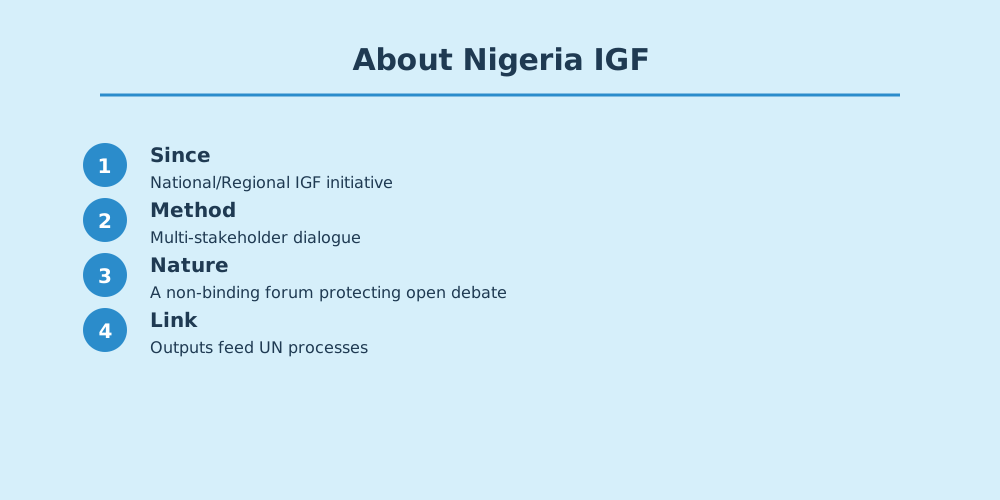
Nigeria IGF is a National or Regional IGF Initiative (NRI), aligning local internet governance discussion with global IGF principles.
Why It Matters to You
What was discussed here becomes the baseline for national digital policy, platform rules and AI regulation worldwide within a few years. The principles confirmed at the 2020 meeting are the foundation of the "next rules" for the phones, social platforms and AI services you use every day.
Sources & References
- Report of the Virtual Nigeria Internet Governance Forum (vNIGF 2020) Events (PDF) — igf.ng (accessed 2026-07-16)
- NIGF urge ratification of Malabo Convention on cybersecurity, data protection — The Guardian Nigeria (accessed 2026-07-16)
- Nigeria IGF(NRI紹介ページ) — intgovforum.org (accessed 2026-07-16)
- Why NIGF? — igf.ng (accessed 2026-07-16)
Quotes are translated or condensed from the records listed above. Bracketed numbers [n] refer to the source list.
Related links
- IGF official (NRI list): https://www.intgovforum.org/en/content/national-and-regional-igf-initiatives
- Japan IGF: https://japanigf.jp/
- Yuki Nakazawa's blog: https://nkzw.jp/category/igf/
Revision History
Rev. 1 — published 24 September 2020, 12:00 (Article published)
Rev. 2 — updated 17 July 2026, 12:32 (Fully revised into the in-depth edition: added the 3-line summary, minutes digest, short talk, source list and diagrams (all quotes verified against the listed sources))
— 中澤祐樹

