


The 3-Line Summary
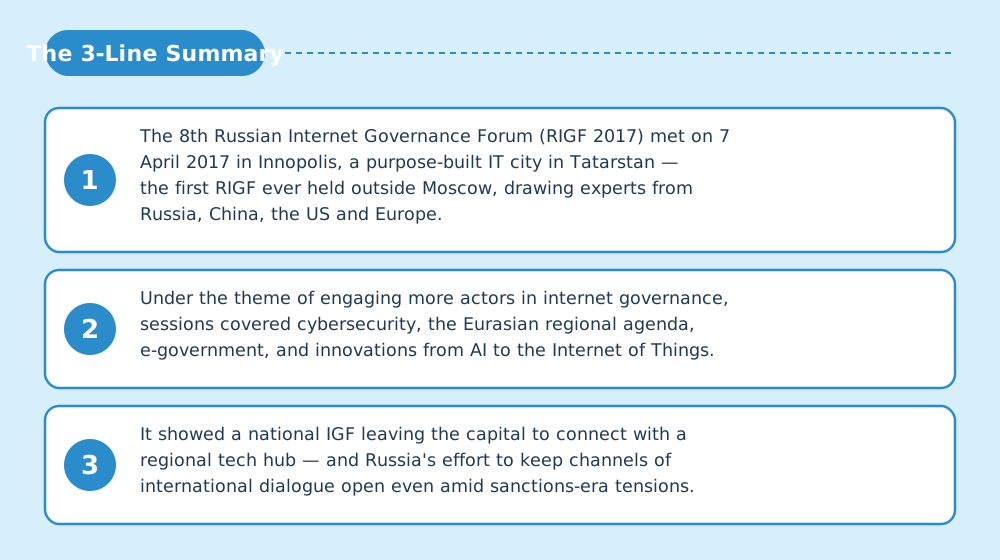
- The 8th Russian Internet Governance Forum (RIGF 2017) met on 7 April 2017 in Innopolis, a purpose-built IT city in Tatarstan — the first RIGF ever held outside Moscow, drawing experts from Russia, China, the US and Europe.
- Under the theme of engaging more actors in internet governance, sessions covered cybersecurity, the Eurasian regional agenda, e-government, and innovations from AI to the Internet of Things.
- It showed a national IGF leaving the capital to connect with a regional tech hub — and Russia's effort to keep channels of international dialogue open even amid sanctions-era tensions.
Welcome — this is the Japan IGF Support Organization. This in-depth report on RIGF 2017 — The 8th Russian Internet Governance Forum draws on official outputs, session records and on-site reporting. In a hurry? The three lines above and the diagrams carry the gist.
📍 The first RIGF held outside Moscow. Innopolis is a purpose-built IT city near Kazan, built around a university and a special economic zone for tech companies
Conference at a Glance (from official records)
| Item | Detail |
|---|---|
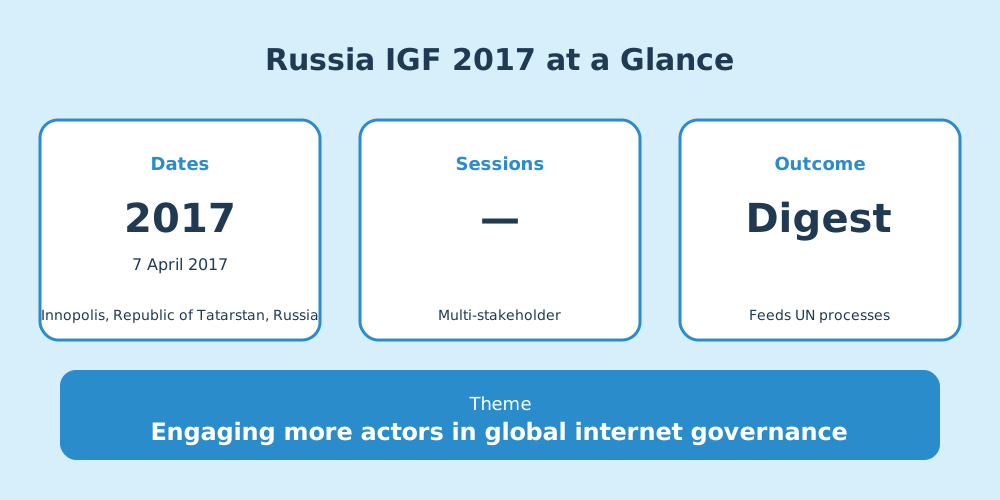
| Official name | RIGF 2017 — The 8th Russian Internet Governance Forum |
| Edition | 8th edition |
| Dates | 7 April 2017 |
| Venue | Innopolis, Republic of Tatarstan, Russia |
| Theme | Engaging more actors in global internet governance |
| Format | In-person |
| Host | Coordination Center for TLD .RU/.РФ |
(See the source list at the end of this article.)
Discussion Digest — from the Session Records
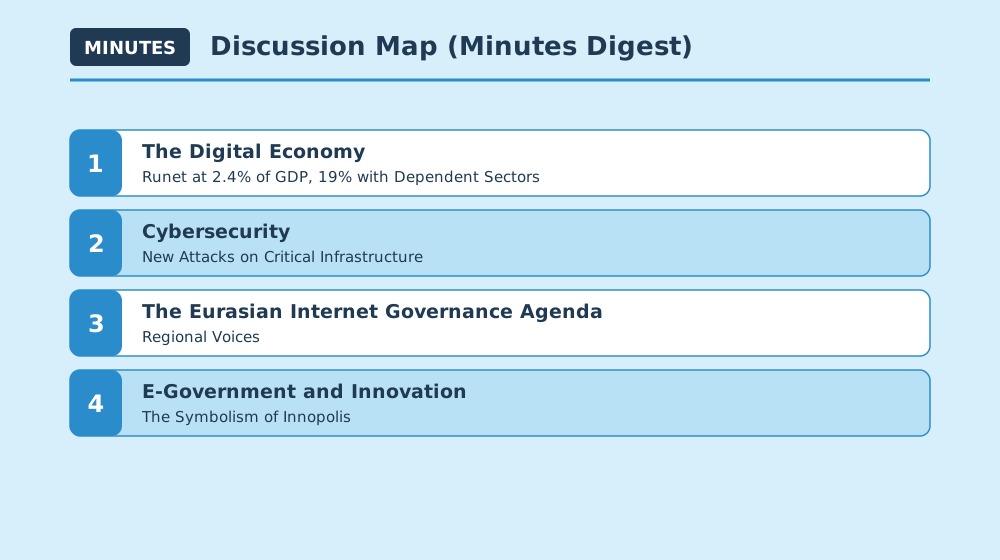
Key exchanges extracted from session records and transcripts.
1. The Digital Economy — Runet at 2.4% of GDP, 19% with Dependent Sectors
Sessions: Keynote by Sergey Plugotarenko, Director of the Russian Association for Electronic Communications (RAEC)
- RAEC estimated that the Russian internet sector (Runet) accounted for 2.4% of GDP in 2015 — and 19% of GDP counting sectors that rely on the internet [4]
- Despite a difficult economy the sector kept growing; Plugotarenko called the internet-enabled digital economy a "force for good" (per ISOC's participant report) [4]
2. Cybersecurity — New Attacks on Critical Infrastructure
Sessions: Session "Cybersecurity" (7 April, 14:00, moderated by Mikhail Anisimov)
- Panellists noted that new types of attacks affecting industrial and transportation companies, energy systems and government services had become routine [2][1]
- US, European and Russian experts — including Bruce McConnell (EastWest Institute) and Maarit Palovirta (ISOC) — shared the stage to discuss responses [2][1]
3. The Eurasian Internet Governance Agenda — Regional Voices
Sessions: Session "Eurasian Agenda in Internet Governance" (moderated by Alexandra Kulikova)
- Speakers from Armenia, Belarus, Kazakhstan, China (Shen Yi of Fudan University) and the Council of Europe (Patrick Penninckx) compared governance approaches across Eurasia [2][3]
- The forum's core question — who should play a more active role in global internet governance and how to engage new stakeholders — was examined through a regional lens [2][3]
4. E-Government and Innovation — The Symbolism of Innopolis
Sessions: Sessions "E-Governance: Secrets Behind Success" and "Innovations and New Internet Frontiers" (7 April, 15:45)
- Chengetai Masango (UN IGF Secretariat), Lucky Masilela (ZACR, South Africa) and speakers from Vietnam's VNNIC compared what makes e-government succeed [2][4]
- A parallel innovation session covered AI, machine learning, big data and IoT — with host city Innopolis itself showcased as proof of the opportunities the internet creates [2][4]
Three-Minute Short Talk — Your Questions Answered
Q. What kind of meeting was this?
A. The 8th edition of Russia's national IGF, run annually since 2010 by the Coordination Center that manages .ru/.рф. For the first time it left Moscow for Innopolis, a purpose-built IT city near Kazan.
Q. Why Innopolis?
A. Innopolis was built from scratch as an IT special economic zone — a showcase of regional digitalisation and tech-talent policy. Holding the forum there embodied its theme of bringing new actors into internet governance.
Q. Why should I care?
A. US, European, Russian and Chinese experts debated infrastructure cyberattacks on the same stage — a record of technical-community dialogue continuing despite geopolitical tension.
What Is Russia IGF? (for first-time readers)
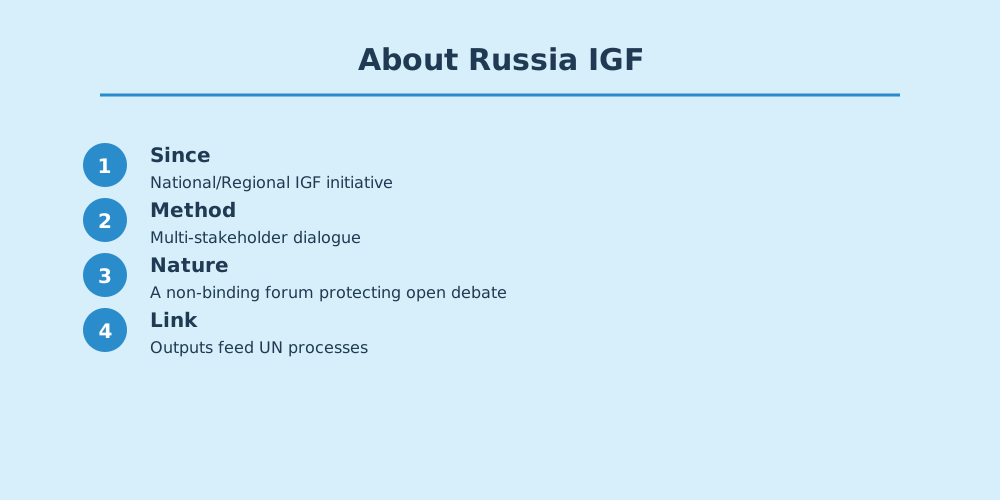
Russia IGF is a National or Regional IGF Initiative (NRI), aligning local internet governance discussion with global IGF principles.
Why It Matters to You
What was discussed here becomes the baseline for national digital policy, platform rules and AI regulation worldwide within a few years. The principles confirmed at the 2017 meeting are the foundation of the "next rules" for the phones, social platforms and AI services you use every day.
Sources & References
- RIGF 2017 公式サイト — Coordination Center for TLD RU/РФ (accessed 2026-07-11)
- RIGF 2017 Agenda(プログラム・登壇者一覧) — ccTLD .RU/.РФ調整センター (accessed 2026-07-11)
- Russian Internet Governance Forum 2017 — DiploFoundation (accessed 2026-07-11)
- Internet Security & Digital Economy: RIGF Forum — Standing by the Internet of Opportunity — ISOC (accessed 2026-07-11)
Quotes are translated or condensed from the records listed above. Bracketed numbers [n] refer to the source list.
Related links
- IGF official (NRI list): https://www.intgovforum.org/en/content/national-and-regional-igf-initiatives
- Japan IGF: https://japanigf.jp/
- Yuki Nakazawa's blog: https://nkzw.jp/category/igf/
Revision History
Rev. 1 — published 25 June 2017, 13:00 (Article published)
Rev. 2 — updated 17 July 2026, 12:32 (Fully revised into the in-depth edition: added the 3-line summary, minutes digest, short talk, source list and diagrams (all quotes verified against the listed sources))
— 中澤祐樹

