


The 3-Line Summary
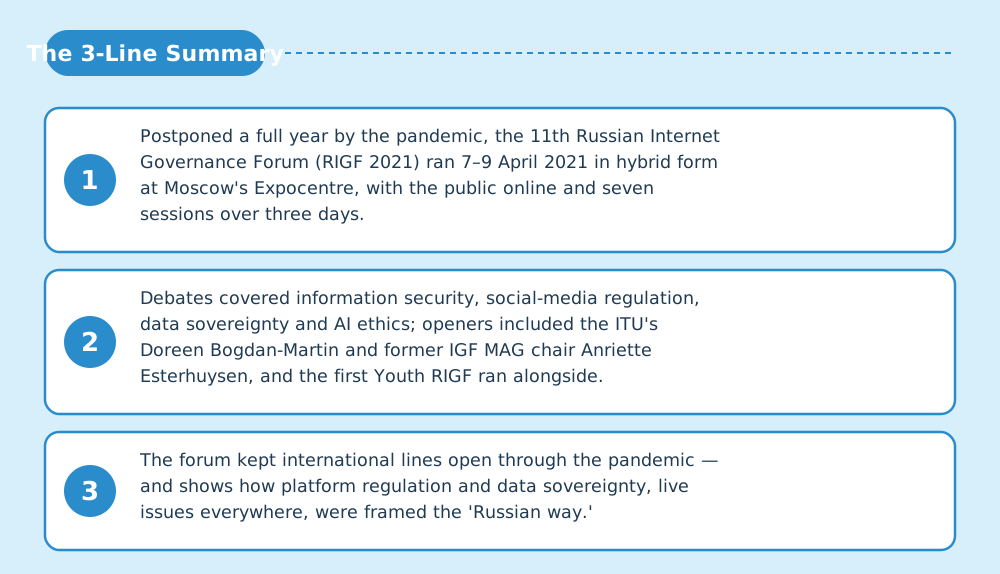
- Postponed a full year by the pandemic, the 11th Russian Internet Governance Forum (RIGF 2021) ran 7–9 April 2021 in hybrid form at Moscow's Expocentre, with the public online and seven sessions over three days.
- Debates covered information security, social-media regulation, data sovereignty and AI ethics; openers included the ITU's Doreen Bogdan-Martin and former IGF MAG chair Anriette Esterhuysen, and the first Youth RIGF ran alongside.
- The forum kept international lines open through the pandemic — and shows how platform regulation and data sovereignty, live issues everywhere, were framed the 'Russian way.'
Welcome — this is the Japan IGF Support Organization. This in-depth report on RIGF 2021 — The 11th Russian Internet Governance Forum draws on official outputs, session records and on-site reporting. In a hurry? The three lines above and the diagrams carry the gist.
Conference at a Glance (from official records)
| Item | Detail |
|---|---|
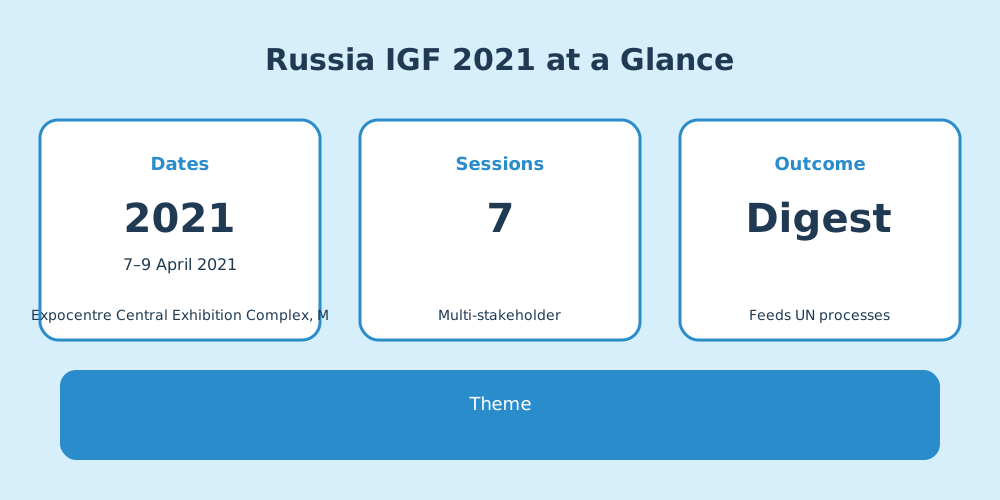
| Official name | RIGF 2021 — The 11th Russian Internet Governance Forum |
| Edition | 11th edition |
| Dates | 7–9 April 2021 |
| Venue | Expocentre Central Exhibition Complex, Moscow, Russia |
| Theme | Regional governance themes |
| Sessions | 7 (Seven main sessions plus a youth track; the inaugural Youth RIGF was held at Skoltech on 6 April) |
| Format | Hybrid — speakers on-site and remote; venue attendance limited to contest winners, journalists and invited guests, with the public joining via livestream (The 11th edition had originally been scheduled for 7 April 2020 but was postponed over COVID-19; it was held in 2021, with no forum taking place in 2020) |
| Award | The Virtuti Interneti award went to Bertrand de La Chapelle, co-founder of the Internet & Jurisdiction Policy Network |
| Host | Coordination Center for TLD .RU/.РФ |
(See the source list at the end of this article.)
Discussion Digest — from the Session Records
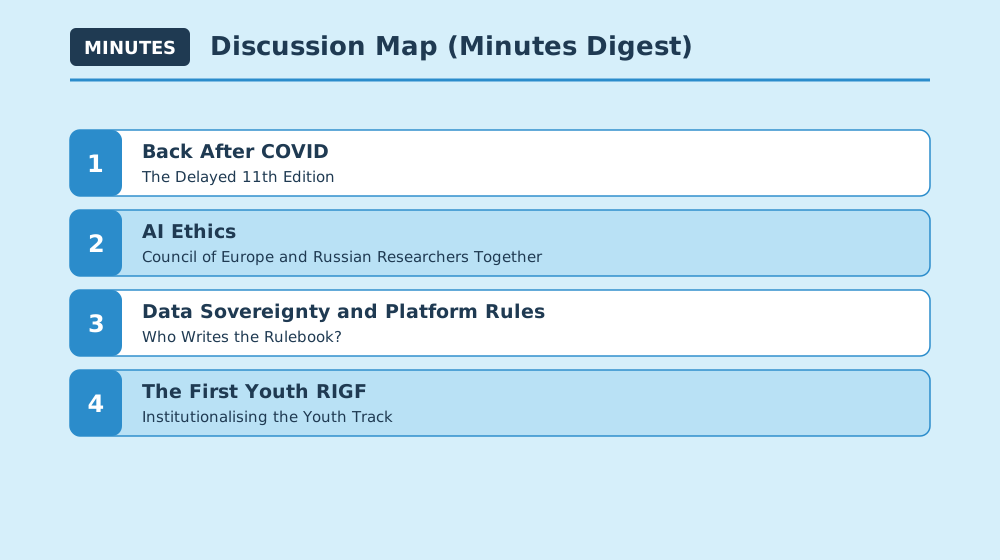
Key exchanges extracted from session records and transcripts.
1. Back After COVID — The Delayed 11th Edition
Sessions: Opening session (7 April, 10:00) with Digital Minister Maksut Shadayev, presidential ICT chief Tatyana Matveeva and the ITU's Doreen Bogdan-Martin
- Originally slated for 7 April 2020, the 11th edition returned after a two-year gap in pandemic-adapted hybrid form: venue access for laureates, journalists and invitees only, with everyone else streaming [1][2]
- The ITU's Doreen Bogdan-Martin, former IGF MAG chair Anriette Esterhuysen and ICANN's Mandy Carver joined the programme, keeping the UN-IGF dialogue channel intact [1][2]
2. AI Ethics — Council of Europe and Russian Researchers Together
Sessions: Session 2 "Emerging Technologies — Artificial Intelligence and Ethics" (7 April, 13:50–15:20)
- Jan Kleijssen (Council of Europe), Maxim Fedorov (Skoltech) and Microsoft's Elsa Ganeeva were among those debating AI ethics principles and regulation [2][4]
- The discussion prefigured Russia's national AI Ethics Code signed later that year, and AI regulation became a fixture of subsequent RIGFs [2][4]
3. Data Sovereignty and Platform Rules — Who Writes the Rulebook?
Sessions: Session 3 "Regulation — Data Sovereignty" and Session 4 "Digital Platforms — The Rules of the Game" (8 April)
- Bertrand de La Chapelle (Internet & Jurisdiction) and Switzerland's Thomas Schneider joined the data-sovereignty debate on the tension between state jurisdiction over data and global data flows [2][4]
- The platforms session asked who sets 'the rules of the game' between states, platforms and users — against the backdrop of Russia's tightening social-media regulation [2][4]
- A day-three session on platform user agreements tackled the global issue of asymmetry between platforms and their users [2][4]
4. The First Youth RIGF — Institutionalising the Youth Track
Sessions: Youth RIGF (6 April, Skoltech) and the youth session (9 April, 13:20)
- On 6 April, ahead of the main forum, the first Youth RIGF at Skoltech had under-30s work with experts on theses for a future 'youth message' [1][3][2]
- Results were presented in the main forum's closing youth session (by Ilona Stadnik), and Youth RIGF became an annual series in its own right [1][3][2]
- The Virtuti Interneti award went to Bertrand de La Chapelle for his work on cross-border jurisdiction [1][3][2]
Three-Minute Short Talk — Your Questions Answered
Q. What happened to 2020?
A. Nothing — the 11th edition was scheduled for 7 April 2020, postponed over COVID-19, and held in 2021 still as the 11th. Any record of a '2020 online RIGF' is wrong.
Q. What defined this edition?
A. Pandemic-format hybrid logistics and a strong international cast: ITU, IGF MAG, ICANN and Council of Europe figures all took part, keeping global dialogue alive.
Q. Why should I care?
A. Data sovereignty, social-media regulation and AI ethics are on every country's agenda — here you can compare how the same issues read in a state-led framing.
What Is Russia IGF? (for first-time readers)
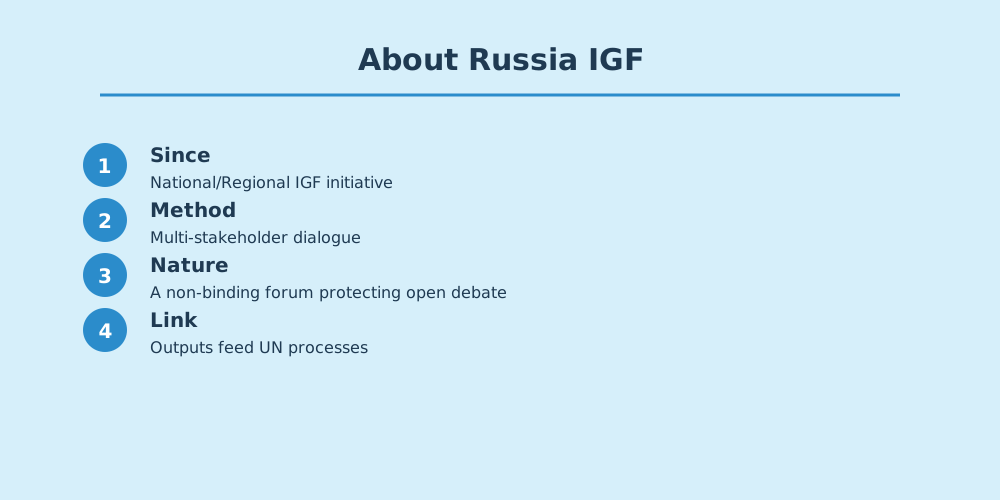
Russia IGF is a National or Regional IGF Initiative (NRI), aligning local internet governance discussion with global IGF principles.
Why It Matters to You
What was discussed here becomes the baseline for national digital policy, platform rules and AI regulation worldwide within a few years. The principles confirmed at the 2021 meeting are the foundation of the "next rules" for the phones, social platforms and AI services you use every day.
Sources & References
- RIGF 2021 公式サイト — Coordination Center for TLD RU/РФ (accessed 2026-07-11)
- RIGF 2021 Agenda(プログラム・登壇者一覧) — ccTLD .RU/.РФ調整センター (accessed 2026-07-11)
- RIGF 2021 Press Center — ccTLD .RU/.РФ調整センター (accessed 2026-07-11)
- Russian Internet Governance Forum (RIGF) 2021 — DiploFoundation (accessed 2026-07-11)
Quotes are translated or condensed from the records listed above. Bracketed numbers [n] refer to the source list.
Related links
- IGF official (NRI list): https://www.intgovforum.org/en/content/national-and-regional-igf-initiatives
- Japan IGF: https://japanigf.jp/
- Yuki Nakazawa's blog: https://nkzw.jp/category/igf/
Revision History
Rev. 1 — published 6 June 2021, 10:00 (Article published)
Rev. 2 — updated 17 July 2026, 12:32 (Fully revised into the in-depth edition: added the 3-line summary, minutes digest, short talk, source list and diagrams (all quotes verified against the listed sources))
— 中澤祐樹

