


The 3-Line Summary
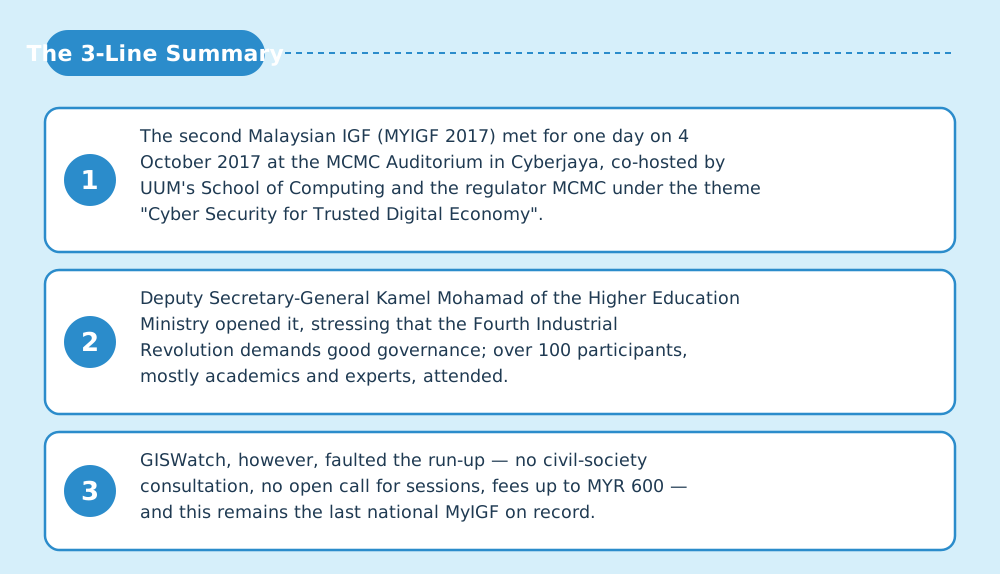
- The second Malaysian IGF (MYIGF 2017) met for one day on 4 October 2017 at the MCMC Auditorium in Cyberjaya, co-hosted by UUM's School of Computing and the regulator MCMC under the theme "Cyber Security for Trusted Digital Economy".
- Deputy Secretary-General Kamel Mohamad of the Higher Education Ministry opened it, stressing that the Fourth Industrial Revolution demands good governance; over 100 participants, mostly academics and experts, attended.
- GISWatch, however, faulted the run-up — no civil-society consultation, no open call for sessions, fees up to MYR 600 — and this remains the last national MyIGF on record.
Welcome — this is the Japan IGF Support Organization. This in-depth report on 2nd Malaysian Internet Governance Forum (MYIGF 2017) draws on official outputs, session records and on-site reporting. In a hurry? The three lines above and the diagrams carry the gist.
Conference at a Glance (from official records)
| Item | Detail |
|---|---|
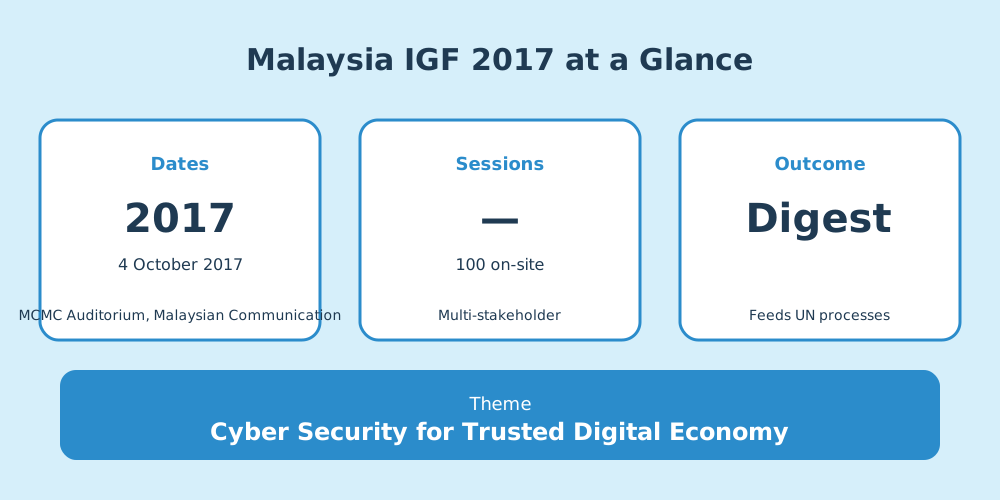
| Official name | 2nd Malaysian Internet Governance Forum (MYIGF 2017) |
| Dates | 4 October 2017 |
| Venue | MCMC Auditorium, Malaysian Communications and Multimedia Commission headquarters, Cyberjaya, Selangor |
| Theme | Cyber Security for Trusted Digital Economy |
| Participants | 100 |
| Host | School of Computing, Universiti Utara Malaysia (UUM), in collaboration with the MCMC |
(See the source list at the end of this article.)
Discussion Digest — from the Session Records
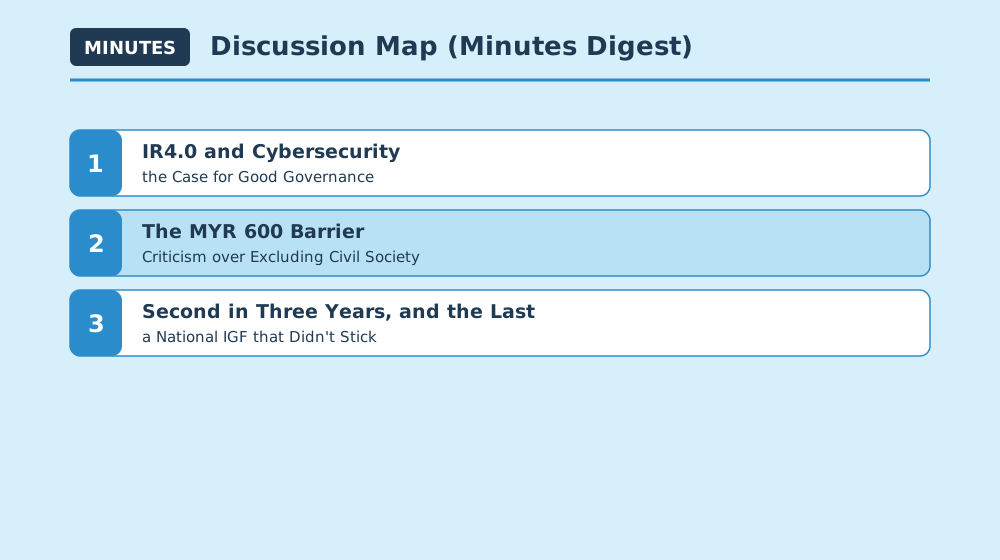
Key exchanges extracted from session records and transcripts.
1. IR4.0 and Cybersecurity — the Case for Good Governance
Sessions: Opening ceremony and keynotes (MCMC Auditorium, morning of 4 October)
"Being driven by rapid advancement in technology would affect all disciplines, economies and industries. However, great creations in the field of technology, if misused, could also cause damage and actual threat. Therefore, good governance is crucial"
— Dato' Kamel Mohamad (Deputy Secretary-General (Management), Ministry of Higher Education, opening address) [1][3]
- The opening framed IR4.0 as a force that would "empower, transform and reorganise" individuals and communities, and called for multi-party cooperation to keep the nation's cyberspace free from intrusion and hacking [1][3]
- Keynotes by UUM Vice-Chancellor Mohamed Mustafa Ishak and MCMC's Chief Officer for the Communications and Digital Ecosystem Sector, Mohd Ali Hanafiah, embodied the academia-regulator partnership [1][3]
- Officially, the forum was cast as a platform for channelling cyberspace research into national and global debates on securing the digital economy [1][3]
2. The MYR 600 Barrier — Criticism over Excluding Civil Society
Sessions: Assessment in the GISWatch 2017 Malaysia country report
- GISWatch (by EMPOWER) recorded that civil society was neither consulted during organising nor given an open call for workshops or sessions [2]
- Fees of MYR 600 (about USD 150) for internationals, MYR 400 for locals and MYR 100 for students were charged — a financial wall that especially deterred grassroots groups outside Selangor [2]
- Its charge that "multistakeholder" was being used absent participation from a much wider net of stakeholders cut at the gap with the UN IGF's free-and-open norm [2]
3. Second in Three Years, and the Last — a National IGF that Didn't Stick
Sessions: Series trajectory (Langkawi 2014 → Cyberjaya 2017 → nothing since)
- Coming three years after Langkawi 2014, the forum shrank from a two-day resort event to a single day inside the regulator's headquarters [1][2][3]
- UUM's own account describes the 100-plus attendees as mainly academics and cyberspace experts — the government-academia tilt of the first edition, only stronger [1][2][3]
- No edition after 2018 can be found in English or Malay sources; Malaysia's national IGF ended at two, with the separate Malaysia Youth IGF (est. 2019) carrying youth dialogue forward [1][2][3]
Three-Minute Short Talk — Your Questions Answered
Q. So what did the meeting actually decide?
A. Nothing binding — it was a government-and-academia exchange on cybersecurity and the digital economy, converging on the view that the IR4.0 era demands good governance.
Q. What was the most contentious topic?
A. How the forum itself was run. With fees up to MYR 600 and no consultation or open call for sessions, civil society's records question whether it deserved the multistakeholder label.
Q. Why should I care?
A. Design choices — fees, open calls — decide whether dialogue survives. Malaysia's national IGF ended with this edition: a lesson in why open process matters.
What Is Malaysia IGF? (for first-time readers)
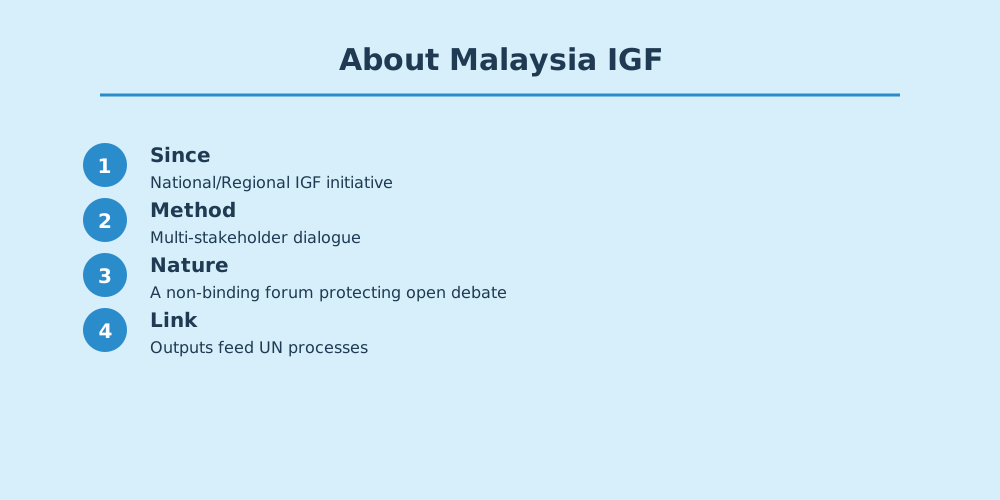
Malaysia IGF is a National or Regional IGF Initiative (NRI), aligning local internet governance discussion with global IGF principles.
Why It Matters to You
What was discussed here becomes the baseline for national digital policy, platform rules and AI regulation worldwide within a few years. The principles confirmed at the 2017 meeting are the foundation of the "next rules" for the phones, social platforms and AI services you use every day.
Sources & References
- MYIGF 2017 Disseminates Views On Cyber Security Issues(UUM公式ニュース・2017-10-05付) — Universiti Utara Malaysia(Wayback Machine 2017-10-08取得) (accessed 2026-07-11)
- Internet governance in Malaysia: Struggling towards self-regulation and inclusive decision making — Global Information Society Watch(EMPOWER執筆・APC) (accessed 2026-07-11)
- Second Malaysian Internet Governance Forum(アップデート記事) — DiploFoundation (accessed 2026-07-11)
Quotes are translated or condensed from the records listed above. Bracketed numbers [n] refer to the source list.
Related links
- IGF official (NRI list): https://www.intgovforum.org/en/content/national-and-regional-igf-initiatives
- Japan IGF: https://japanigf.jp/
- Yuki Nakazawa's blog: https://nkzw.jp/category/igf/
更新履歴
第1稿投稿 2026年7月9日 18時01分(記事コンテンツアップ)
— 中澤祐樹

