


The 3-Line Summary
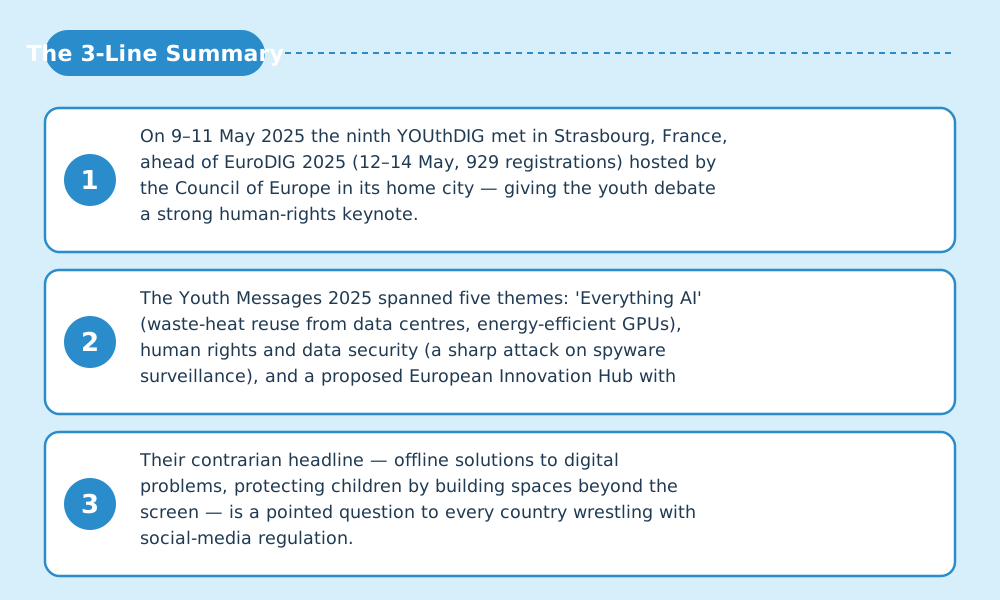
- On 9–11 May 2025 the ninth YOUthDIG met in Strasbourg, France, ahead of EuroDIG 2025 (12–14 May, 929 registrations) hosted by the Council of Europe in its home city — giving the youth debate a strong human-rights keynote.
- The Youth Messages 2025 spanned five themes: 'Everything AI' (waste-heat reuse from data centres, energy-efficient GPUs), human rights and data security (a sharp attack on spyware surveillance), and a proposed European Innovation Hub with regulatory sandboxes — with the Council of Europe named as its overseer.
- Their contrarian headline — offline solutions to digital problems, protecting children by building spaces beyond the screen — is a pointed question to every country wrestling with social-media regulation.
Welcome — this is the Japan IGF Support Organization. This in-depth report on YOUthDIG 2025 — Youth Dialogue on Internet Governance, Strasbourg draws on official outputs, session records and on-site reporting. In a hurry? The three lines above and the diagrams carry the gist.
Conference at a Glance (from official records)
| Item | Detail |
|---|---|
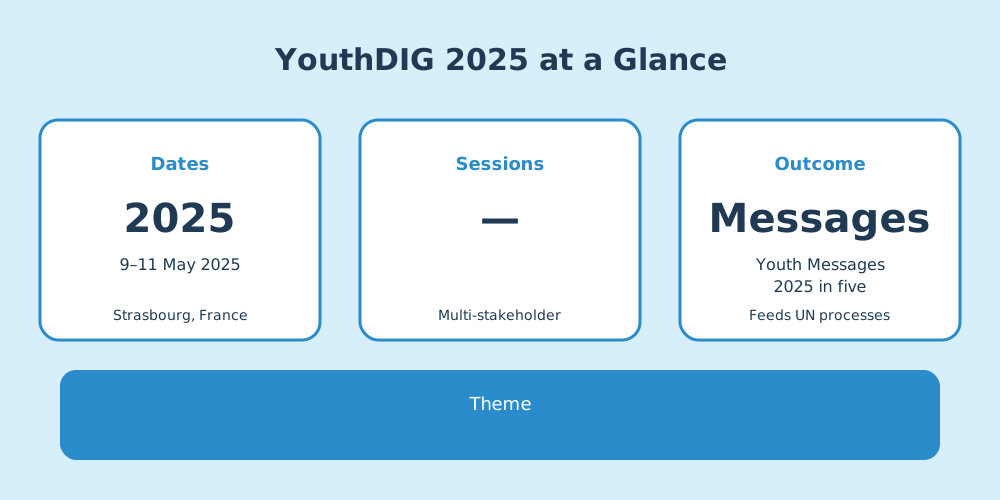
| Official name | YOUthDIG 2025 — Youth Dialogue on Internet Governance, Strasbourg |
| Dates | 9–11 May 2025 |
| Venue | Strasbourg, France |
| Theme | Regional governance themes |
| Outcome | Youth Messages 2025 in five themes — offline solutions to digital problems (digital literacy), content moderation from two perspectives, Everything AI, human rights and data security, and digital ecosystems/regulation (a European Innovation Hub) — presented at EuroDIG and the global IGF |
(See the source list at the end of this article.)
Discussion Digest — from the Session Records
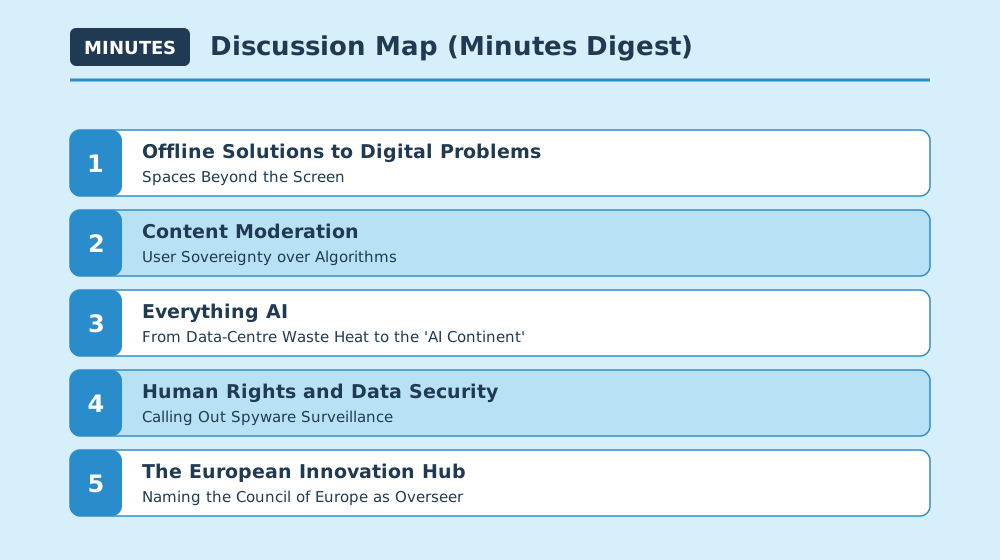
Key exchanges extracted from session records and transcripts.
1. Offline Solutions to Digital Problems — Spaces Beyond the Screen
Sessions: Youth Messages, 'Offline Solutions to Digital Problems / Digital Literacy'
- As online spaces for youth become increasingly controlled and restricted, offline spaces offer a crucial alternative where young people can freely interact, organise and express themselves — rebuilding agency in both worlds [1]
- Because few people grasp how algorithmic manipulation breeds polarisation, schools need comprehensive digital literacy education, with teachers given targeted training and resources [1]
- Digital literacy 'must remain politically neutral and rebuild public trust', they warned, noting that scepticism toward scientists and politicians undermines even accurate information [1]
2. Content Moderation — User Sovereignty over Algorithms
Sessions: Youth Messages, 'Content Moderation from Two Perspectives'
- Instead of passively scrolling, users should be empowered to give feedback on what they want to see more or less of — taking control of once-hidden algorithms that now shape everything [1]
- Private control of content can undermine state authority and democratic oversight, but unchecked government power risks censorship and authoritarian control: 'the ultimate power over digital spaces should rest with the people — through transparent, democratic governance' [1]
- They championed democratic moderation tools such as community notes and wider awareness of user-control features for managing one's own feed [1]
3. Everything AI — From Data-Centre Waste Heat to the 'AI Continent'
Sessions: Youth Messages, 'Everything AI'
- Against AI's surging compute demand they proposed an environmental trio: collaborative development of energy-efficient GPUs, smart cities reusing data-centre waste heat, and transparent energy-consumption information for AI tools [1]
- Visible labels when AI is operating, risk and impact assessments before deployment with clear legal liability for AI errors, and AI literacy across school curricula and lifelong learning [1]
- They envisioned youth 'shaping the AI Continent' — a digitally sovereign future — backed by sandboxes, funding and mentorship for students, researchers and entrepreneurs [1]
4. Human Rights and Data Security — Calling Out Spyware Surveillance
Sessions: Youth Messages, 'Human Rights and Data Security'
- Surveillance technologies including spyware pose serious threats to privacy, personal security and free expression — journalists, human rights defenders and activists are particularly vulnerable, and misuse leads to self-censorship and suppression of dissent, demanding government accountability and oversight [1]
- 'The internet should not be exploited as a tool of control by those in positions of power to manipulate public opinion or suppress dissent' — a fittingly Strasbourg note [1]
- They also demanded regulation of automated decision-making affecting migrants, asylum seekers and LGBTQ+ people, corporate responsibility for data protection, and more judicial and law-enforcement resources against cybercrime [1]
5. The European Innovation Hub — Naming the Council of Europe as Overseer
Sessions: Youth Messages, 'Digital Ecosystems / Regulation'
- On a foundation of updated, simplified and harmonised 'smart regulation', they proposed a European Innovation Hub with a secure sandbox for testing, interconnected talent centres and a shared pool of funding, knowledge, legal counsel and technology [1]
- 'The Council of Europe should oversee the initiative to ensure adherence to human rights and rule of law principles' — naming the host institution itself as guardian [1]
- Flexible participation models matched to countries' financial capabilities, a rotating presidency, a EuroDIG-style multistakeholder governance body — and physical infrastructure located in a developing country in Europe to promote inclusion [1]
Three-Minute Short Talk — Your Questions Answered
Q. What made this edition distinctive?
A. The setting. The Council of Europe hosted the parent meeting in its home city of Strasbourg, and the youth agenda took on a strong human-rights tone — from spyware surveillance to protecting vulnerable groups. It was also the series' first May edition.
Q. What was the most surprising recommendation?
A. Offline solutions to digital problems: the first step in protecting children online is building physical spaces where young people can gather and express themselves freely — a youthful rejoinder to regulation-only debates.
Q. Why should I care?
A. The demands for waste-heat reuse and energy-efficient compute speak to every country in the middle of an AI data-centre boom, and the sandbox-equipped innovation hub is a ready-made comparison point for national innovation policy.
What Is YouthDIG? (for first-time readers)
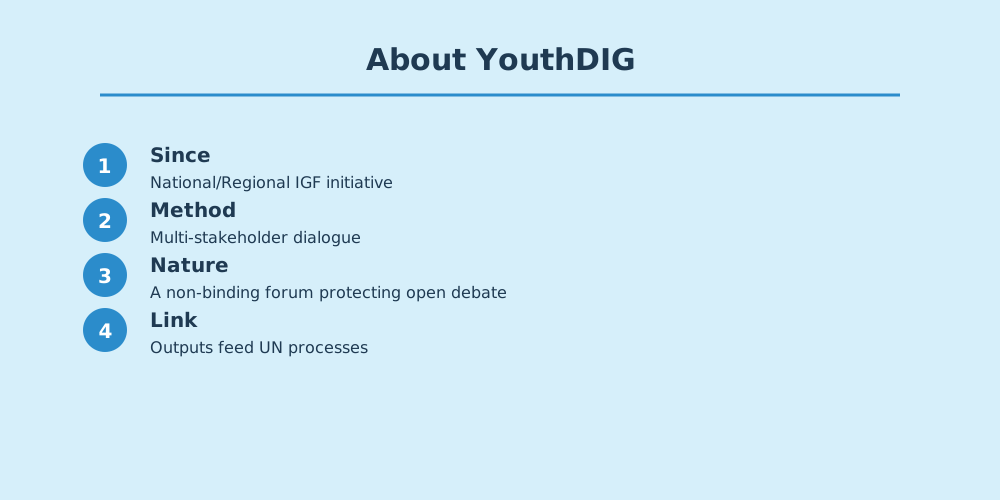
YouthDIG is a National or Regional IGF Initiative (NRI), aligning local internet governance discussion with global IGF principles.
Why It Matters to You
What was discussed here becomes the baseline for national digital policy, platform rules and AI regulation worldwide within a few years. The principles confirmed at the 2025 meeting are the foundation of the "next rules" for the phones, social platforms and AI services you use every day.
Sources & References
- YOUthDIG 2025(ユースメッセージ全文・開催概要) — EuroDIG Wiki(EuroDIG公式) (accessed 2026-07-22)
- EuroDIG 2025(May 12–14 in Strasbourg・欧州評議会ホスト・登録929人) — EuroDIG(eurodig.org) (accessed 2026-07-22)
- EuroDIG 2025(May 12–14 in Strasbourg, France・ホスト体制) — EuroDIG Wiki(EuroDIG公式) (accessed 2026-07-22)
- YOUthDIG(系列概要と歴代ユースメッセージのアーカイブ) — EuroDIG(eurodig.org) (accessed 2026-07-22)
Quotes are translated or condensed from the records listed above. Bracketed numbers [n] refer to the source list.
Related links
- IGF official (NRI list): https://www.intgovforum.org/en/content/national-and-regional-igf-initiatives
- Japan IGF: https://japanigf.jp/
- Yuki Nakazawa's blog: https://nkzw.jp/category/igf/
更新履歴
第1稿投稿 2026年7月19日 16時35分(記事コンテンツアップ)
— 中澤祐樹

