


The 3-Line Summary
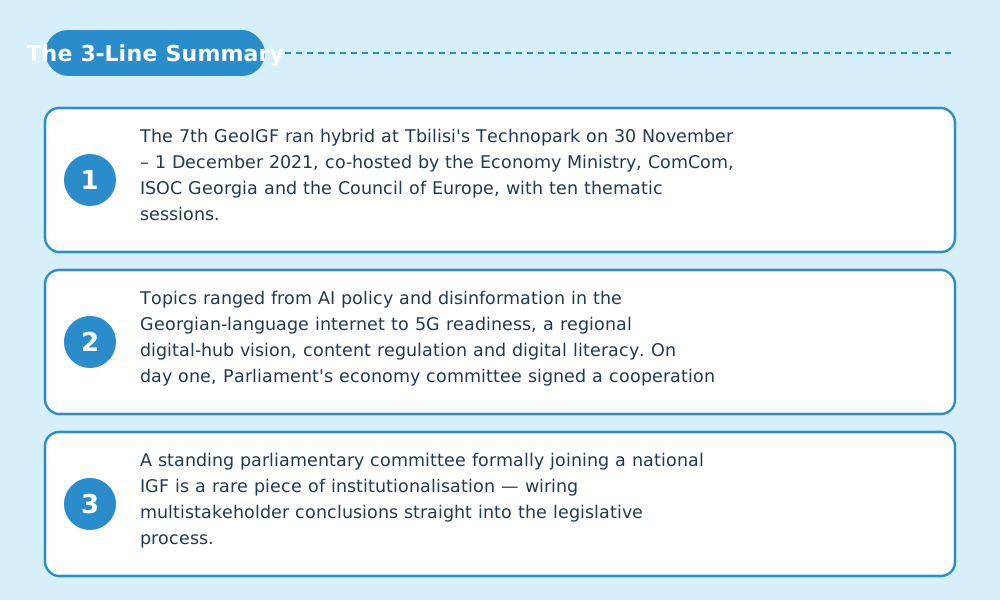
- The 7th GeoIGF ran hybrid at Tbilisi's Technopark on 30 November – 1 December 2021, co-hosted by the Economy Ministry, ComCom, ISOC Georgia and the Council of Europe, with ten thematic sessions.
- Topics ranged from AI policy and disinformation in the Georgian-language internet to 5G readiness, a regional digital-hub vision, content regulation and digital literacy. On day one, Parliament's economy committee signed a cooperation memorandum, becoming GeoIGF's 36th member.
- A standing parliamentary committee formally joining a national IGF is a rare piece of institutionalisation — wiring multistakeholder conclusions straight into the legislative process.
Welcome — this is the Japan IGF Support Organization. This in-depth report on GeoIGF 2021 (7th Georgian Internet Governance Forum) draws on official outputs, session records and on-site reporting. In a hurry? The three lines above and the diagrams carry the gist.
Conference at a Glance (from official records)
| Item | Detail |
|---|---|
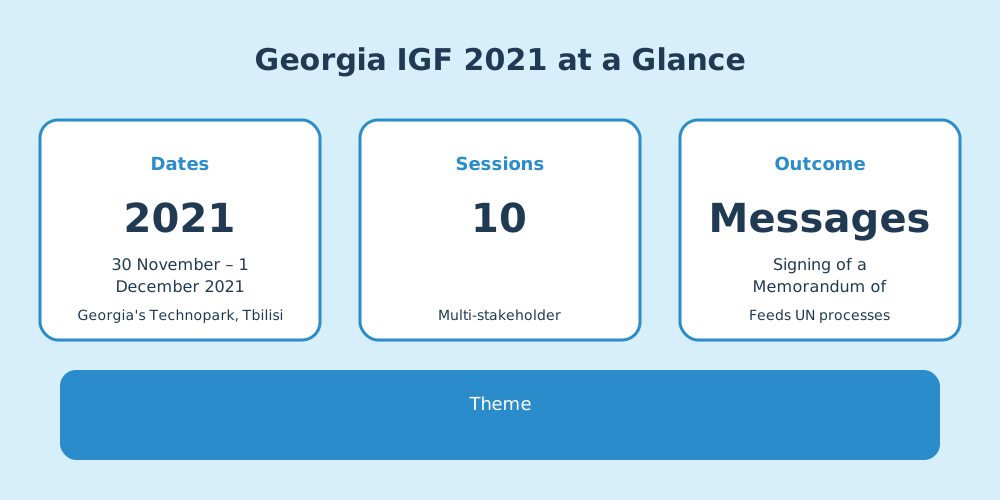
| Official name | GeoIGF 2021 (7th Georgian Internet Governance Forum) |
| Dates | 30 November – 1 December 2021 |
| Venue | Georgia's Technopark, Tbilisi |
| Theme | Regional governance themes |
| Sessions | 10 |
| Host | Ministry of Economy and Sustainable Development, Communications Commission (ComCom), ISOC Georgia, the Council of Europe and the Telecom Operators' Association (TOA) |
| Outcome | Signing of a Memorandum of Cooperation between the Parliament's Sector Economy and Economic Policy Committee and GeoIGF (30 November) |
(See the source list at the end of this article.)
Discussion Digest — from the Session Records
Key exchanges extracted from session records and transcripts.
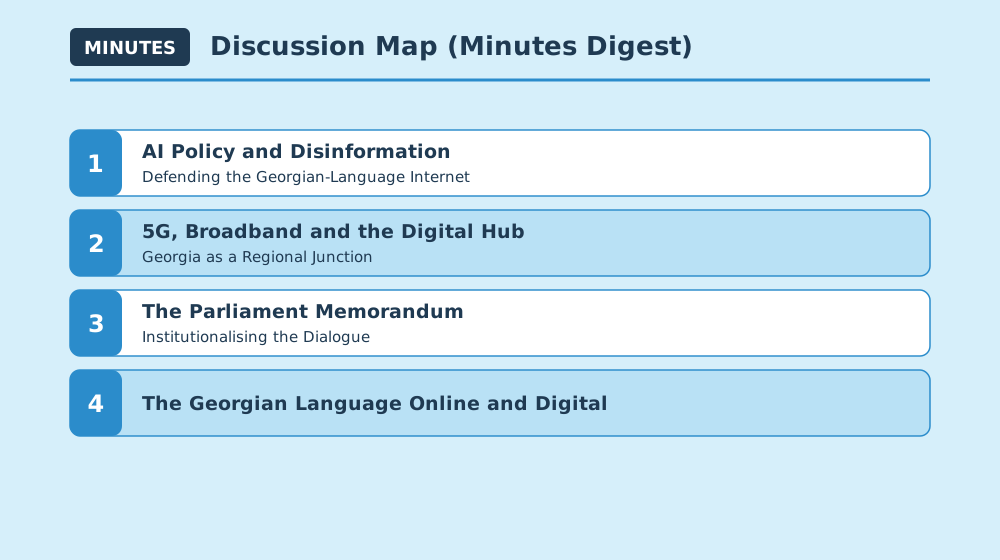
1. AI Policy and Disinformation — Defending the Georgian-Language Internet
Sessions: Multiple sessions
- Policy-making on the opportunities and challenges of AI, and disinformation in Georgia's internet space, each had a dedicated thematic session (ComCom announcement) [1]
- A session on internet content regulation framed the balance between countering disinformation and protecting free expression [1]
2. 5G, Broadband and the Digital Hub — Georgia as a Regional Junction
Sessions: Multiple sessions
"As the world economy becomes increasingly digital, it is important to make telecommunications even more secure and accessible"
— Ekaterine Imedadze (Commissioner, Communications Commission) [1]
- Sessions covered the state of broadband, prospects for a digital hub, MVNOs, 5G readiness and new technologies, and internet quality and community networks (ComCom announcement) [1]
- Openers included Deputy Economy Minister Guram Guramishvili, CoE office head Natalia Vutova, IGF MAG chair Anriette Esterhuysen and ISOC senior vice-president Jane Coffin (ComCom announcement) [1]
3. The Parliament Memorandum — Institutionalising the Dialogue
Sessions: Memorandum signing ceremony (30 November)
- Parliament's Sector Economy and Economic Policy Committee (chaired by David Songhulashvili) signed a cooperation memorandum, becoming the 36th member of the 35-organisation forum (Council of Europe report) [2][1]
- Under the memorandum, conclusions of the multistakeholder discussions feed into the committee's decision-making, and GeoIGF becomes an additional platform for the committee's internet debates (Council of Europe report) [2][1]
- The signing was facilitated under the CoE project 'Strengthening Media Freedom, Internet Governance and Personal Data Protection in Georgia' (SMIP-GE) [2][1]
4. The Georgian Language Online and Digital Literacy
Sessions: Multiple sessions
- Dedicated sessions covered the Georgian language online, digital literacy, and pandemic-inspired innovations (ComCom announcement) [1]
- Whether a language of some four million speakers can hold its ground online — in content, search and AI language resources — prefigured the language-diversity debates of the AI era [1]
Three-Minute Short Talk — Your Questions Answered
Q. What did this meeting decide?
A. Dialogue as usual — plus one concrete institutional step: Parliament's economy committee signed a memorandum committing to weigh the forum's multistakeholder conclusions in its decision-making.
Q. What stood out most?
A. The plumbing. By joining GeoIGF as its 36th member, the legislature formally wired the forum's discussions into the law-making process.
Q. Why should I care?
A. Every country struggles to connect IGF-style dialogue to actual policy. Georgia's answer — make a parliamentary committee a member of the forum — is a model worth watching.
What Is Georgia IGF? (for first-time readers)
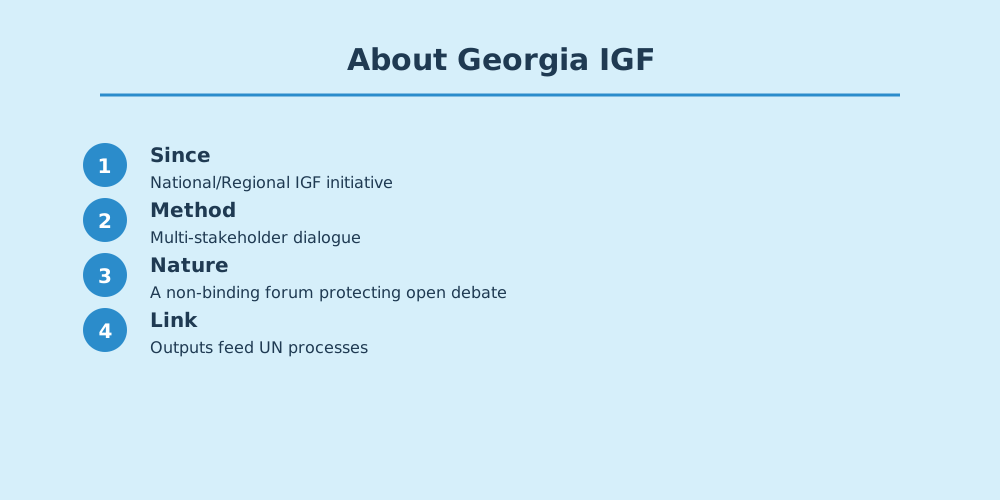
Georgia IGF is a National or Regional IGF Initiative (NRI), aligning local internet governance discussion with global IGF principles.
Why It Matters to You
What was discussed here becomes the baseline for national digital policy, platform rules and AI regulation worldwide within a few years. The principles confirmed at the 2021 meeting are the foundation of the "next rules" for the phones, social platforms and AI services you use every day.
Sources & References
- GeoIGF 2021 – The 7th Internet Governance Forum Takes Place in Georgia — ジョージア通信委員会(ComCom) (accessed 2026-07-11)
- Memorandum of Cooperation between the Sector Economy and Economic Policy Committee of the Parliament of Georgia and the GeoIGF — 欧州評議会(Council of Europe, Freedom of Expression) (accessed 2026-07-11)
- Georgia will hosts the 7th Internet Governance Forum (GeoIGF 2021) — 欧州評議会ジョージア事務所(Council of Europe Office in Georgia) (accessed 2026-07-11)
- Georgia IGF(NRI登録ページ) — UN IGF Secretariat (accessed 2026-07-11)
Quotes are translated or condensed from the records listed above. Bracketed numbers [n] refer to the source list.
Related links
- IGF official (NRI list): https://www.intgovforum.org/en/content/national-and-regional-igf-initiatives
- Japan IGF: https://japanigf.jp/
- Yuki Nakazawa's blog: https://nkzw.jp/category/igf/
Revision History
Rev. 1 — published 16 June 2021, 13:00 (Article published)
Rev. 2 — updated 17 July 2026, 12:32 (Fully revised into the in-depth edition: added the 3-line summary, minutes digest, short talk, source list and diagrams (all quotes verified against the listed sources))
— 中澤祐樹

