


The 3-Line Summary
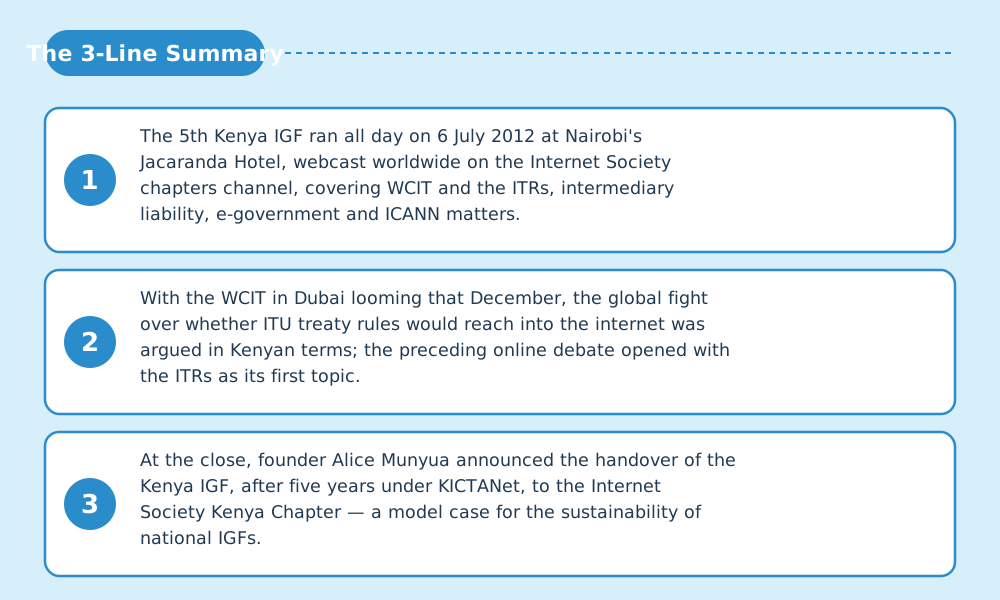
- The 5th Kenya IGF ran all day on 6 July 2012 at Nairobi's Jacaranda Hotel, webcast worldwide on the Internet Society chapters channel, covering WCIT and the ITRs, intermediary liability, e-government and ICANN matters.
- With the WCIT in Dubai looming that December, the global fight over whether ITU treaty rules would reach into the internet was argued in Kenyan terms; the preceding online debate opened with the ITRs as its first topic.
- At the close, founder Alice Munyua announced the handover of the Kenya IGF, after five years under KICTANet, to the Internet Society Kenya Chapter — a model case for the sustainability of national IGFs.
Welcome — this is the Japan IGF Support Organization. This in-depth report on Kenya Internet Governance Forum 2012 (5th Kenya IGF) draws on official outputs, session records and on-site reporting. In a hurry? The three lines above and the diagrams carry the gist.
Conference at a Glance (from official records)
| Item | Detail |
|---|---|
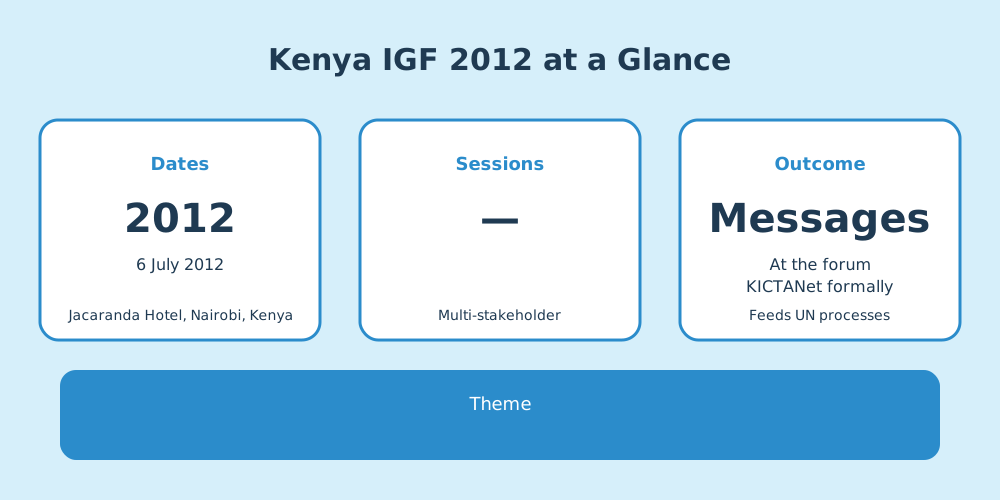
| Official name | Kenya Internet Governance Forum 2012 (5th Kenya IGF) |
| Dates | 6 July 2012 |
| Venue | Jacaranda Hotel, Nairobi, Kenya |
| Theme | Regional governance themes |
| Host | KICTANet and KENIC (organising team: Alice Munyua, Grace Githaiga, Grace Bomu, Barrack Otieno) |
| Outcome | At the forum KICTANet formally handed over the convening of the Kenya IGF to the Internet Society Kenya Chapter (ISOC-KE), marking a generational transition after five founding years |
(See the source list at the end of this article.)
Discussion Digest — from the Session Records
Key exchanges extracted from session records and transcripts.
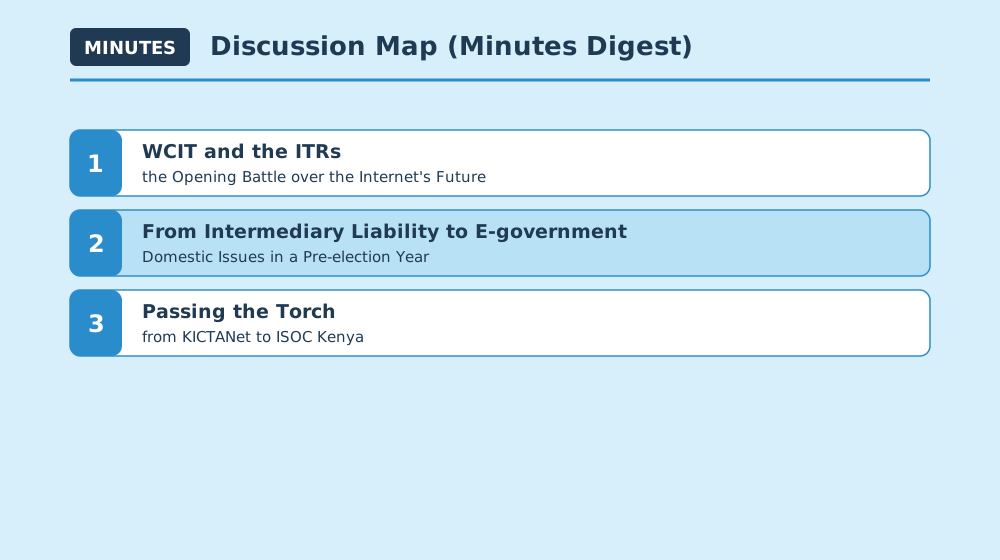
1. WCIT and the ITRs — the Opening Battle over the Internet's Future
Sessions: Forum session on WCIT & ITRs and online debate Day 1: International Telecommunications Regulations (from 14 June)
- Ahead of the December 2012 WCIT in Dubai, Kenyan stakeholders debated whether revising the ITU's International Telecommunication Regulations would extend treaty control into internet governance [1][2]
- The online debate's Day 1 topic was the ITRs, and speakers included Alice Koech of the African Telecommunications Union, putting Africa's negotiating position on the table [1][2]
- The mailing list also pointed members to WCITLeaks, making the secrecy of the treaty process itself a civil-society grievance [1][2]
2. From Intermediary Liability to E-government — Domestic Issues in a Pre-election Year
Sessions: Forum sessions through the day (8:30-16:00)
- Article 19's Sandra Musoga and Stephanie Muchai raised intermediary liability — the free-expression risks of making platforms and ISPs liable for content — an urgent question with the March 2013 general election approaching [2][3]
- Sessions spanned e-government (Esther Wanjau), consumer organisation, ICANN matters and non-formal education, with speakers from government, UNESCO, the technical community, civil society and Nation Media [2][3]
- PS Bitange Ndemo spoke for the fifth consecutive year, underlining sustained government engagement [2][3]
3. Passing the Torch — from KICTANet to ISOC Kenya
Sessions: Closing announcement and next-day handover message on the mailing list
"After 5 years of convening it, I am very pleased to be handing over to our young ISOC Kenya Chapter who will take the Kenya IGF to the next level/phase."
— Alice Munyua (KICTANet founder and founding KIGF convenor) [4][3]
- KICTANet's thank-you message formally recorded that 'KICTANet handed over the process of convening the Kenya IGF to ISOC.KE', with Grace Bomu and Barrack Otieno among the younger generation taking charge [4][3]
- John Walubengo, present at the inaugural KIGF four years earlier, celebrated seeing it 'take on its own life' with 'those on the greener side of 40' running the show [4][3]
- A voluntary handover after five founding years became a reference case for national-IGF sustainability — though KICTANet would be asked to resume the role in 2015 [4][3]
Three-Minute Short Talk — Your Questions Answered
Q. What was the top agenda item?
A. The ITRs. With the WCIT in Dubai at year's end threatening to extend ITU treaty rules into the internet, Kenyan stakeholders debated where their country should stand between state control and the multistakeholder model.
Q. What made this year unique?
A. The handover. After five years building the KIGF, KICTANet's Alice Munyua formally passed the convening role to the young ISOC Kenya Chapter — a key step in keeping a national IGF from remaining a founders' club.
Q. Why should I care?
A. The WCIT fight over who rules the internet shaped global policy for the decade that followed, and the generational-succession question faces every volunteer-run internet governance community, everywhere.
What Is Kenya IGF? (for first-time readers)
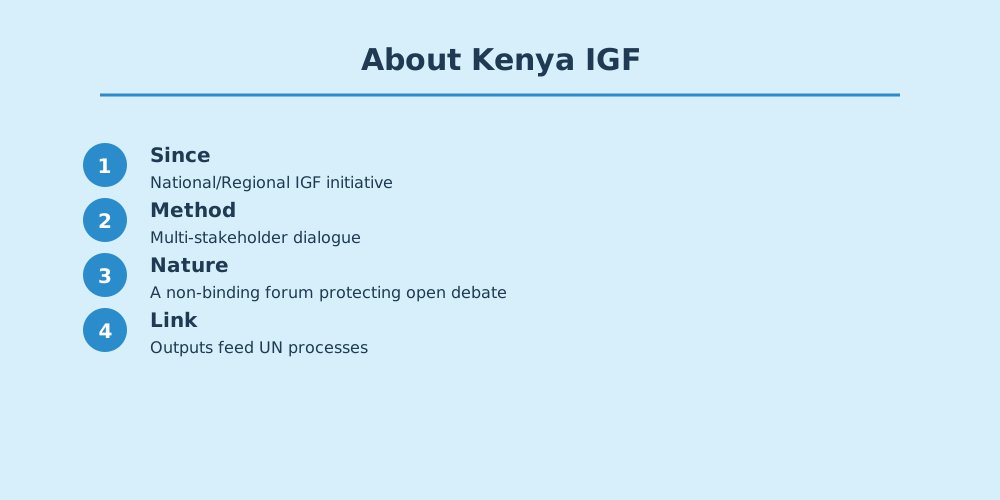
Kenya IGF is a National or Regional IGF Initiative (NRI), aligning local internet governance discussion with global IGF principles.
Why It Matters to You
What was discussed here becomes the baseline for national digital policy, platform rules and AI regulation worldwide within a few years. The principles confirmed at the 2012 meeting are the foundation of the "next rules" for the phones, social platforms and AI services you use every day.
Sources & References
- Kenya IGF (July 6, 2012) — 開催決定と事前オンライン討議の告知(2012年6月7日付) — KICTANetメーリングリスト・アーカイブ(一次資料) (accessed 2026-07-11)
- Video: Kenya IGF webcast archive #kigf12(会場・時間・議題を記録した配信告知) — Internet Society (accessed 2026-07-11)
- Kenya IGF–Thank you!(閉会御礼。登壇者一覧とISOC-KEへの移管を記録) — KICTANetメーリングリスト・アーカイブ(一次資料) (accessed 2026-07-11)
- Kenya IGF(アリス・ムニュアによる運営移管の表明投稿) — KICTANetメーリングリスト・アーカイブ(一次資料) (accessed 2026-07-11)
- WEBCAST live now: Kenya IGF(当日のライブ配信告知・会場ジャカランダホテルを明記) — KICTANetメーリングリスト・アーカイブ(一次資料) (accessed 2026-07-11)
Quotes are translated or condensed from the records listed above. Bracketed numbers [n] refer to the source list.
Related links
- IGF official (NRI list): https://www.intgovforum.org/en/content/national-and-regional-igf-initiatives
- Japan IGF: https://japanigf.jp/
- Yuki Nakazawa's blog: https://nkzw.jp/category/igf/
Revision History
Rev. 1 — published 1 September 2012, 14:00 (Article published)
Rev. 2 — updated 17 July 2026, 12:32 (Fully revised into the in-depth edition: added the 3-line summary, minutes digest, short talk, source list and diagrams (all quotes verified against the listed sources))
— 中澤祐樹

