


The 3-Line Summary
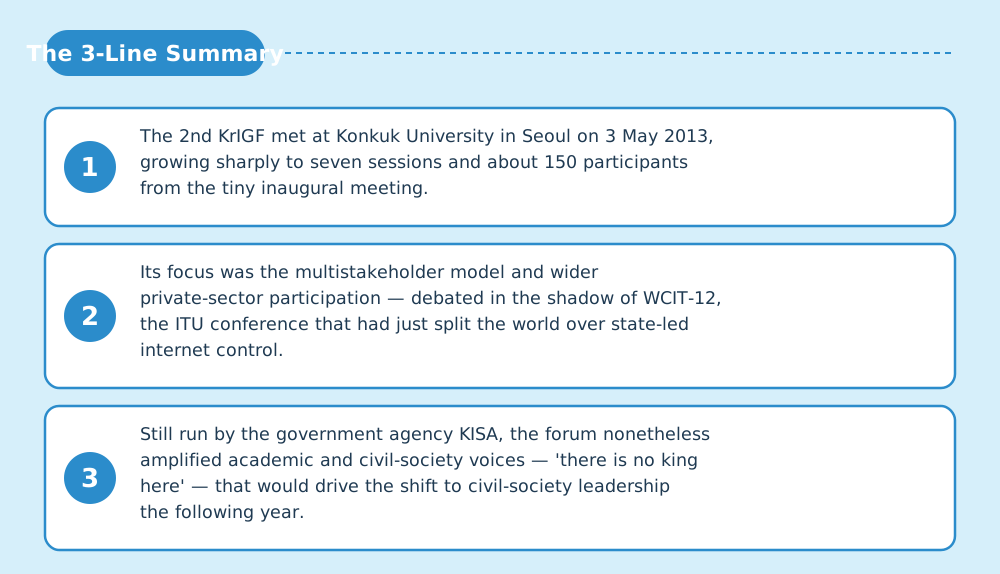
- The 2nd KrIGF met at Konkuk University in Seoul on 3 May 2013, growing sharply to seven sessions and about 150 participants from the tiny inaugural meeting.
- Its focus was the multistakeholder model and wider private-sector participation — debated in the shadow of WCIT-12, the ITU conference that had just split the world over state-led internet control.
- Still run by the government agency KISA, the forum nonetheless amplified academic and civil-society voices — 'there is no king here' — that would drive the shift to civil-society leadership the following year.
Welcome — this is the Japan IGF Support Organization. This in-depth report on 2nd Korea Internet Governance Forum (KrIGF 2013) draws on official outputs, session records and on-site reporting. In a hurry? The three lines above and the diagrams carry the gist.
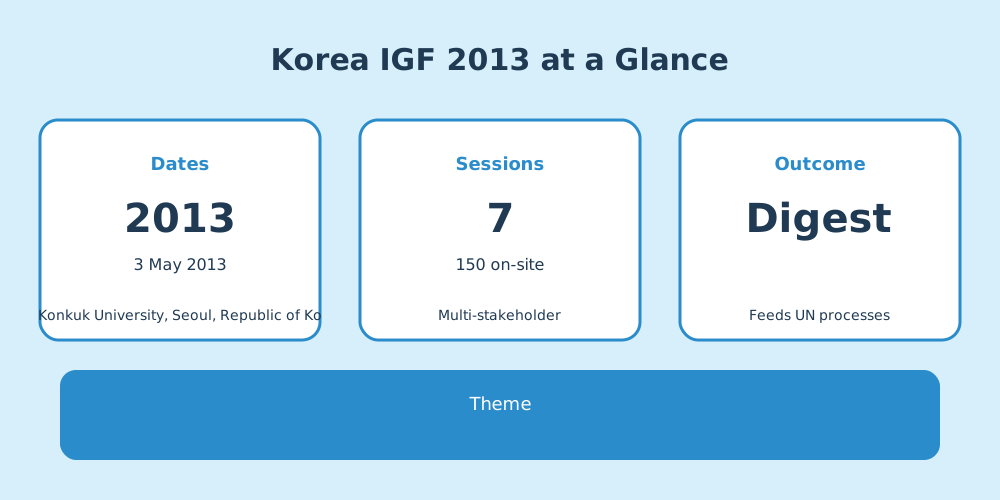
Conference at a Glance (from official records)
| Item | Detail |
|---|---|
| Official name | 2nd Korea Internet Governance Forum (KrIGF 2013) |
| Dates | 3 May 2013 |
| Venue | Konkuk University, Seoul, Republic of Korea |
| Theme | Regional governance themes |
| Participants | 150 |
| Sessions | 7 |
| Host | Korea Internet & Security Agency (KISA) |
(See the source list at the end of this article.)
Discussion Digest — from the Session Records
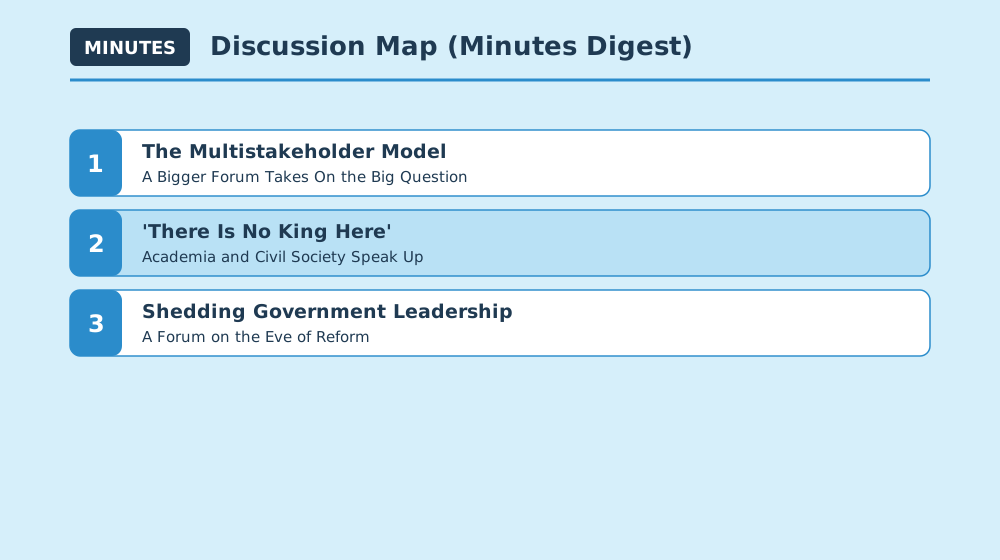
Key exchanges extracted from session records and transcripts.
1. The Multistakeholder Model — A Bigger Forum Takes On the Big Question
Sessions: Multiple sessions
- According to KIGA's official history, the 2nd forum expanded to seven sessions and roughly 150 participants, focusing on multistakeholder models and broader private-sector participation [1][2]
- It came just months after WCIT-12, the December 2012 ITU conference that split the world over state-led internet control, sharpening Korean interest in who should govern the internet [1][2]
2. 'There Is No King Here' — Academia and Civil Society Speak Up
Sessions: Panel 'Internet Governance Forum' held 11 January 2013 at Konkuk University, months before the 2nd KrIGF (reported by Media Today)
"The core of internet governance is bottom-up consensus and the multistakeholder approach — there is no king here (translated from Korean)"
— Lee Dong-man (Professor, KAIST) [2]
- Jeon Eung-hwi of the Green Consumers Alliance called Korea's regime — KISA's monopoly over .kr under the 2004 Internet Address Resources Act — 'far more backward' than international proposals (translated from Korean) [2]
- Activist Oh Byung-il of Jinbonet warned that the debate as then framed excluded the private sector and could enable government control of the internet [2]
3. Shedding Government Leadership — A Forum on the Eve of Reform
Sessions: Multiple sessions
- GISWatch's country report characterises the 2012 and 2013 forums as top-down affairs led by the government agency KISA [3][1]
- The very next edition flipped to a civil-society-proposed format, followed by the founding of the Korea Internet Governance Alliance (KIGA) in November 2014 — making the 2nd forum the last of the old regime [3][1]
Three-Minute Short Talk — Your Questions Answered
Q. What was this meeting about?
A. How to root the multistakeholder model — government, business and civil society deciding internet rules as equals — in Korea, and how to widen private-sector participation.
Q. What was the most contentious point?
A. Who governs the internet. WCIT-12 had just split the world over state control, and at home critics attacked the government agency's monopoly over the .kr domain.
Q. Why should I care?
A. Whether internet rules are written by officials alone or with users at the table is a live question in every country — this forum shows one country wrestling with it early.
What Is Korea IGF? (for first-time readers)
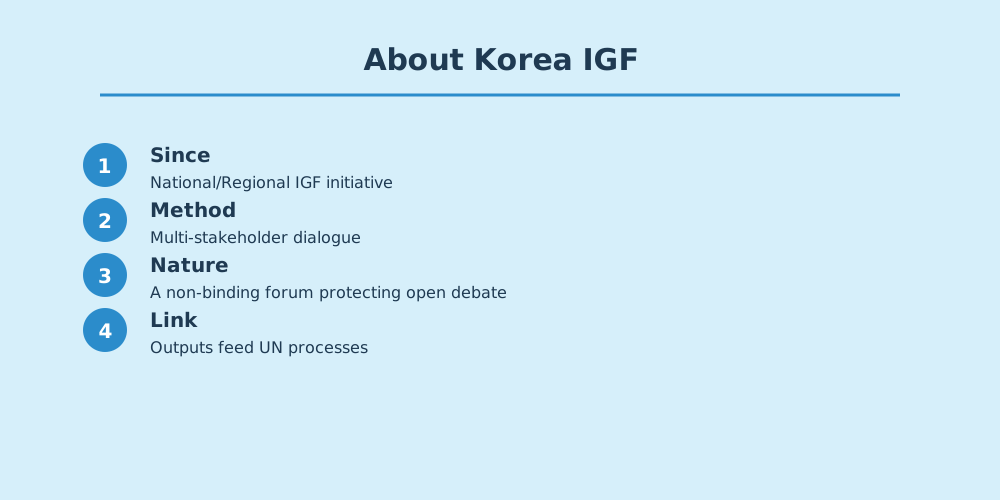
Korea IGF is a National or Regional IGF Initiative (NRI), aligning local internet governance discussion with global IGF principles.
Why It Matters to You
What was discussed here becomes the baseline for national digital policy, platform rules and AI regulation worldwide within a few years. The principles confirmed at the 2013 meeting are the foundation of the "next rules" for the phones, social platforms and AI services you use every day.
Sources & References
- 한국 인터넷거버넌스포럼 (KrIGF) 소개・개최 이력(開催履歴表) — KRNIC 한국인터넷정보센터(KISA運営) (accessed 2026-07-11)
- "인터넷 거버넌스, 왜 야단들이야?"(インターネットガバナンス、なぜ騒ぐのか) — 미디어오늘(Media Today) (accessed 2026-07-11)
- Korea, Republic of — Internet governance country report — Global Information Society Watch(APC) (accessed 2026-07-11)
- Republic of Korea IGF(NRI登録ページ) — UN IGF Secretariat (accessed 2026-07-11)
Quotes are translated or condensed from the records listed above. Bracketed numbers [n] refer to the source list.
Related links
- IGF official (NRI list): https://www.intgovforum.org/en/content/national-and-regional-igf-initiatives
- Japan IGF: https://japanigf.jp/
- Yuki Nakazawa's blog: https://nkzw.jp/category/igf/
Revision History
Rev. 1 — published 16 July 2013, 09:00 (Article published)
Rev. 2 — updated 16 July 2026, 20:09 (Fully revised into the in-depth edition: added the 3-line summary, minutes digest, short talk, source list and diagrams (all quotes verified against the listed sources))
— 中澤祐樹

