


The 3-Line Summary
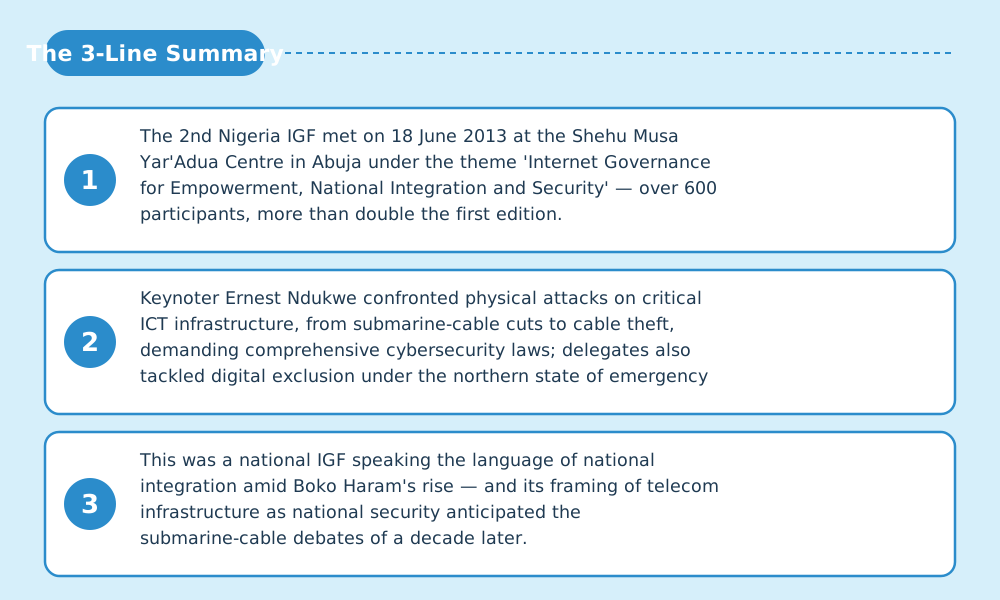
- The 2nd Nigeria IGF met on 18 June 2013 at the Shehu Musa Yar'Adua Centre in Abuja under the theme 'Internet Governance for Empowerment, National Integration and Security' — over 600 participants, more than double the first edition.
- Keynoter Ernest Ndukwe confronted physical attacks on critical ICT infrastructure, from submarine-cable cuts to cable theft, demanding comprehensive cybersecurity laws; delegates also tackled digital exclusion under the northern state of emergency and the infrastructure gaps behind the cashless policy, adopting a 29-point communiqué.
- This was a national IGF speaking the language of national integration amid Boko Haram's rise — and its framing of telecom infrastructure as national security anticipated the submarine-cable debates of a decade later.
Welcome — this is the Japan IGF Support Organization. This in-depth report on 2nd Nigeria Internet Governance Forum (NIGF 2013) draws on official outputs, session records and on-site reporting. In a hurry? The three lines above and the diagrams carry the gist.
📍 Earlier catalogue data said Lagos; the official report confirms the venue was Abuja
Conference at a Glance (from official records)
| Item | Detail |
|---|---|
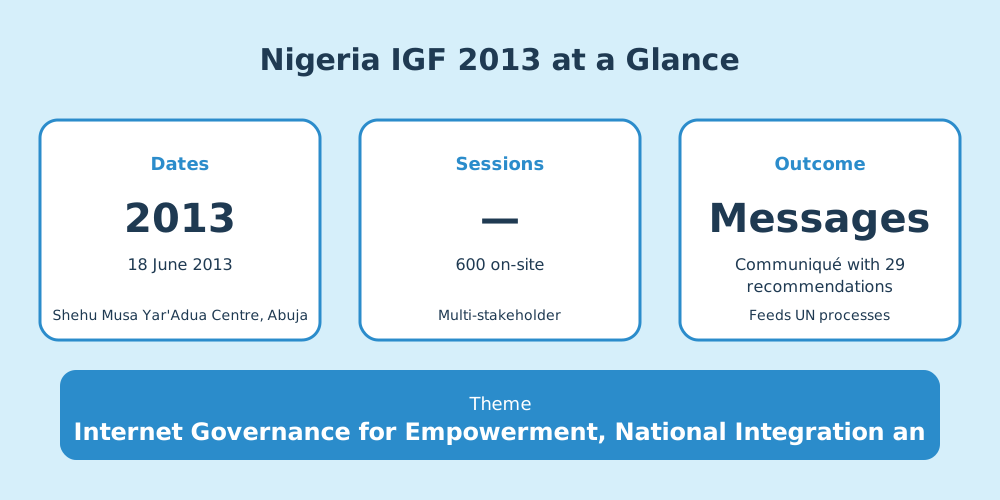
| Official name | 2nd Nigeria Internet Governance Forum (NIGF 2013) |
| Dates | 18 June 2013 |
| Venue | Shehu Musa Yar'Adua Centre, Abuja |
| Theme | Internet Governance for Empowerment, National Integration and Security through Multi-stakeholders' Engagement |
| Participants | 600 |
| Speakers | 50 |
| Chair | Chaired by Dr Ernest Ndukwe (co-chair, Presidential Committee on Broadband; former NCC chief); opened by Minister Omobola Johnson |
| Host | The Local Multi-stakeholder Advisory Group (LMAG): Federal Ministry of Communication Technology, NCC, NITDA, Nigeria Computer Society, NiRA, DigitalSENSE Africa and others (nine bodies) |
| Outcome | Communiqué with 29 recommendations |
(See the source list at the end of this article.)
Discussion Digest — from the Session Records
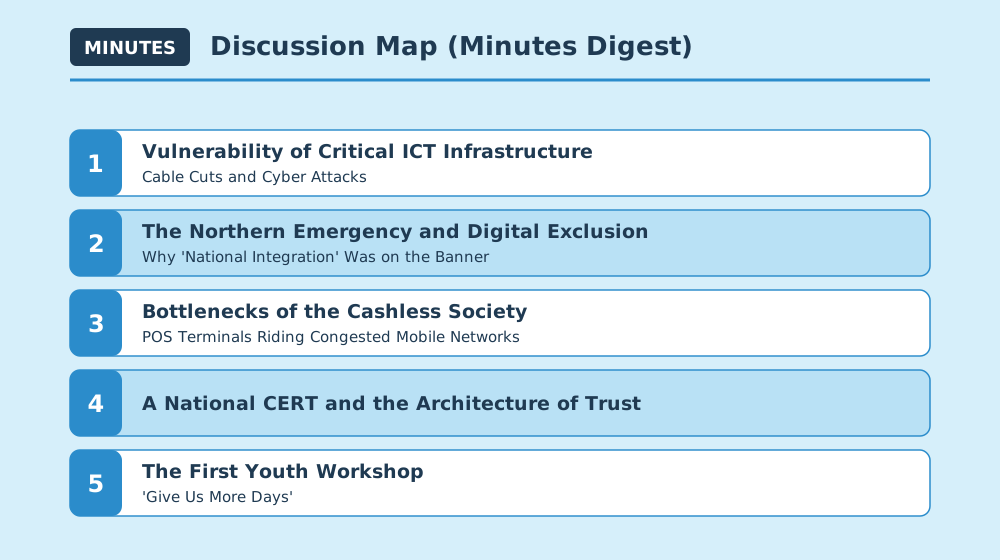
Key exchanges extracted from session records and transcripts.
1. Vulnerability of Critical ICT Infrastructure — Cable Cuts and Cyber Attacks
Sessions: Distinguished paper 'Addressing the Vulnerability of Critical ICT Infrastructure' by forum chair Dr Ernest Ndukwe
- Ndukwe catalogued physical damage to communications infrastructure across Nigeria — submarine fibre cuts, intercity cable cuts, cable theft and terrorist attacks [1]
- Arguing it does not really matter whether critical infrastructure is lost to terrorism, bad planning or deterioration, he urged a long-term vulnerability-mitigation strategy between government and operators and the urgent enactment of comprehensive cybersecurity laws [1]
- He anchored the debate in the new National Broadband Plan's definition of critical ICT infrastructure: networks and systems whose damage would harm national security, the economy, public safety or food security [1]
2. The Northern Emergency and Digital Exclusion — Why 'National Integration' Was on the Banner
Sessions: Track 2: Access, Diversity, Digital Inclusion and Integration (moderated by Chidi Odinkalu, chair of the National Human Rights Commission)
- The official report records that terror attacks and the northern state of emergency had cut affected communities off from the internet entirely — an escalating digital exclusion framed as a threat to inclusion in the information society [1]
- Delegates dissected the digital-literacy gap — devices in hand, but little capacity to use them productively — and low school enrolment in the north, concluding that literacy is a prerequisite for digital citizenship [1]
- Declaring that nations without technological sovereignty are not considered sovereign, the communiqué called for a unified national database and digital independence [1]
3. Bottlenecks of the Cashless Society — POS Terminals Riding Congested Mobile Networks
Sessions: Track 5: Critical Internet Resources and Infrastructure in the Cashless Society (moderated by the CBN's director of banking operations and e-payments)
- IXPN chief Muhammad Rudman explained why payments fail: POS terminals piggyback on congested GSM networks that prioritise voice, so he urged separating data from voice, licensing 4G broadband and government investment in fibre [1]
- Making the central bank's cashless policy work, delegates argued, meant fixing power, fibre and right-of-way problems at once — proposals ranged from a CBN intervention fund modelled on the airline bailout to powerline connectivity [1]
- The bank-telco divide itself became an issue, with calls to treat mobile money as a telecom-industry innovation rather than a purely banking-regulation matter [1]
4. A National CERT and the Architecture of Trust
Sessions: Track 3: Building Trust, Confidence and Assurance on the Internet (moderated by the NCC's Dr Sylvanus Ehikioya)
"It is time to collaborate to achieve the common goals of nation building by breaking down the internal walls and build a better external wall for the country security, privacy and economic development (official report)"
— Prof. Cleopas Angaye (Director General, NITDA) [1]
- A national CERT ecosystem — a coordinated web of national, sectoral and organisational response teams that no single body would own — was tabled, with the National Security Adviser's office backing a national database and national CERT [1]
- The newly launched public key infrastructure and NIMC's unified identity project were presented as the twin pillars of online trust [1]
- The communiqué recorded the forum's dismay that the Cyber Security Bill had languished in the National Assembly for years, again demanding its passage [1]
5. The First Youth Workshop — 'Give Us More Days'
Sessions: Special youth workshop 'Business Opportunity in the Internet Industry'
- A dedicated training track for young people, entrepreneurs and the press debuted, teaching internet-driven business opportunities — and helped push attendance well past the first edition [1][4][5]
- Young participants formally asked for more time, urging a multi-day forum, and proposed a committee to establish national resource telecentres for open internet access [1][4][5]
- The youth track introduced here grew into a full pre-event day at later NIGFs, seeding what became Nigeria's Youth IGF [1][4][5]
Three-Minute Short Talk — Your Questions Answered
Q. What did this meeting decide?
A. A 29-point communiqué: build a national CERT ecosystem, create a unified national database, license 4G broadband, and pass the long-stalled cybersecurity bill — all feeding into Nigeria's position at the global IGF in Bali that October.
Q. What was the most contentious point?
A. Whether government should monopolise policy-making. The communiqué declared the era of government as sole maker of policies and regulations over, enshrining multistakeholder participation at every level.
Q. Why should I care?
A. Treating cable cuts and infrastructure attacks as national security prefigured today's global submarine-cable debates — and the image of payment terminals failing on congested networks is a reminder of how fragile cashless societies can be.
What Is Nigeria IGF? (for first-time readers)
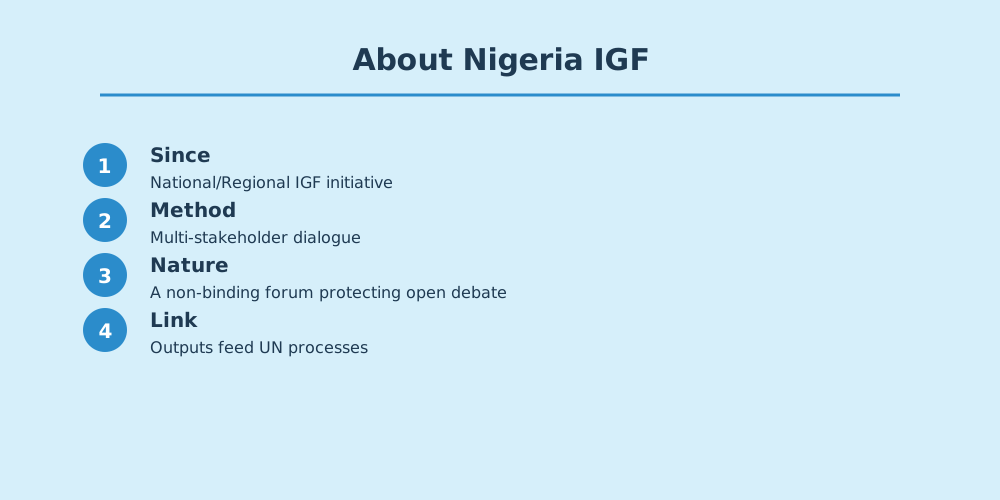
Nigeria IGF is a National or Regional IGF Initiative (NRI), aligning local internet governance discussion with global IGF principles.
Why It Matters to You
What was discussed here becomes the baseline for national digital policy, platform rules and AI regulation worldwide within a few years. The principles confirmed at the 2013 meeting are the foundation of the "next rules" for the phones, social platforms and AI services you use every day.
Sources & References
- NIGF 2013 Report — NIGF事務局(公式サイト igf.ng 掲載) (accessed 2026-07-11)
- NIGF REPORTS(年次報告書アーカイブ) — NiRA(ナイジェリア・インターネット登録協会) (accessed 2026-07-11)
- Nigeria — GISWatch 2017 country report — Global Information Society Watch (APC) / CITAD (accessed 2026-07-11)
- Nigeria IGF — GISWatch special report on national IGF initiatives — APC (accessed 2026-07-11)
- Nigeria Internet Governance Forum (NIGF) — DiploFoundation (accessed 2026-07-11)
Quotes are translated or condensed from the records listed above. Bracketed numbers [n] refer to the source list.
Related links
- IGF official (NRI list): https://www.intgovforum.org/en/content/national-and-regional-igf-initiatives
- Japan IGF: https://japanigf.jp/
- Yuki Nakazawa's blog: https://nkzw.jp/category/igf/
Revision History
Rev. 1 — published 7 September 2013, 14:00 (Article published)
Rev. 2 — updated 17 July 2026, 12:32 (Fully revised into the in-depth edition: added the 3-line summary, minutes digest, short talk, source list and diagrams (all quotes verified against the listed sources))
— 中澤祐樹

