


The 3-Line Summary
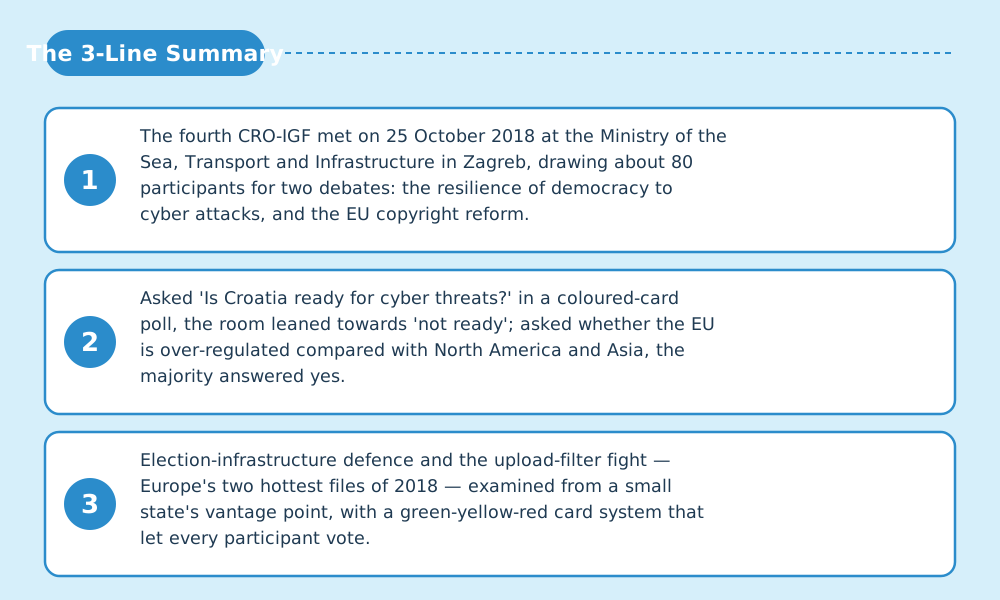
- The fourth CRO-IGF met on 25 October 2018 at the Ministry of the Sea, Transport and Infrastructure in Zagreb, drawing about 80 participants for two debates: the resilience of democracy to cyber attacks, and the EU copyright reform.
- Asked 'Is Croatia ready for cyber threats?' in a coloured-card poll, the room leaned towards 'not ready'; asked whether the EU is over-regulated compared with North America and Asia, the majority answered yes.
- Election-infrastructure defence and the upload-filter fight — Europe's two hottest files of 2018 — examined from a small state's vantage point, with a green-yellow-red card system that let every participant vote.
Welcome — this is the Japan IGF Support Organization. This in-depth report on CRO-IGF 2018 (Croatian Internet Governance Forum) draws on official outputs, session records and on-site reporting. In a hurry? The three lines above and the diagrams carry the gist.
Conference at a Glance (from official records)
| Item | Detail |
|---|---|
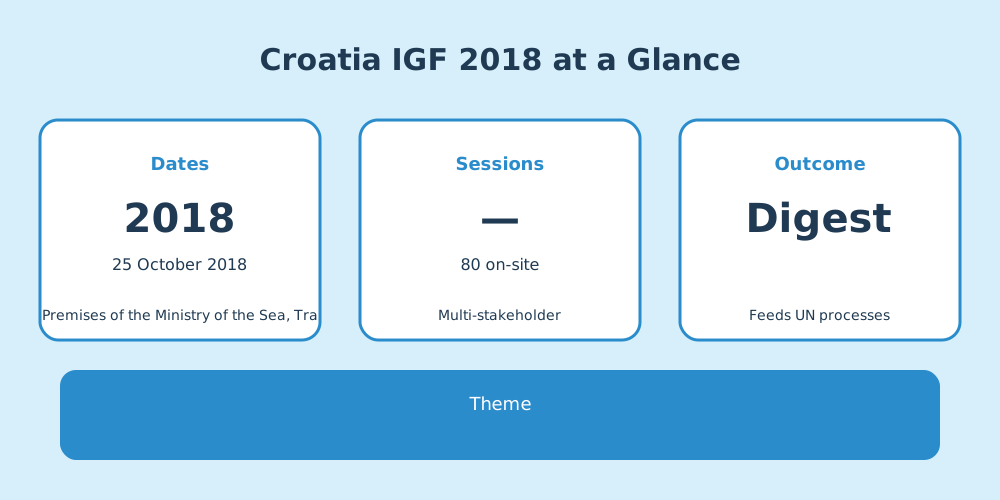
| Official name | CRO-IGF 2018 (Croatian Internet Governance Forum) |
| Edition | 4th edition |
| Dates | 25 October 2018 |
| Venue | Premises of the Ministry of the Sea, Transport and Infrastructure, Zagreb |
| Theme | Regional governance themes |
| Participants | 80 |
| Host | The CRO-IGF Organising Committee (coordinator: Kristijan Zimmer of HrOpen), hosted at the Ministry of the Sea, Transport and Infrastructure |
(See the source list at the end of this article.)
Discussion Digest — from the Session Records
Key exchanges extracted from session records and transcripts.
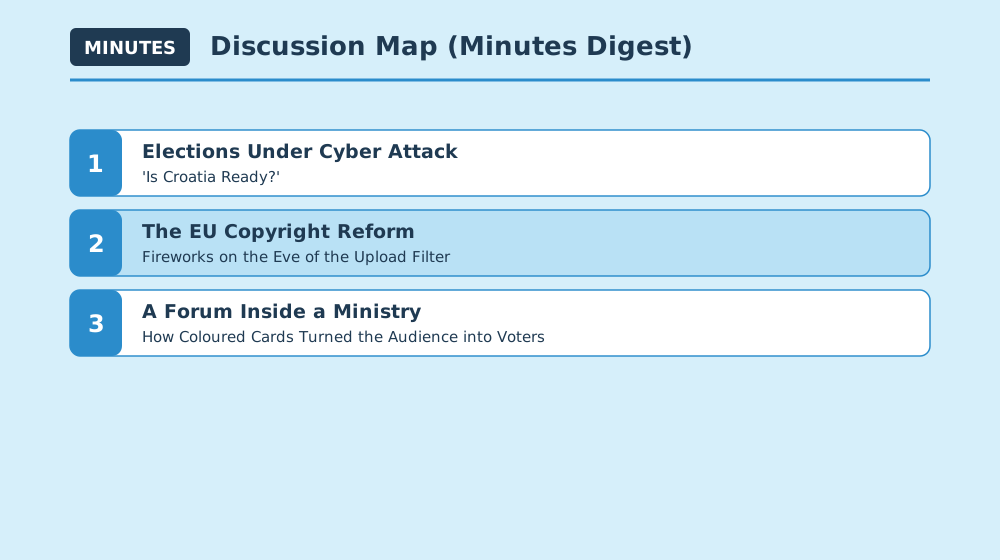
1. Elections Under Cyber Attack — 'Is Croatia Ready?'
Sessions: Panel 'The Resistance of Democracy to Cyber Attacks' (introduced and moderated by Tonimir Kišasondi of Oru; with FER, the National CERT, DefenseCode, HAKOM and the watchdog GONG)
- Citing the 2016 US presidential campaign, the panel showed how cyber attacks have spread from energy and banking to electoral infrastructure; the opening card poll found the room leaning towards 'Croatia is not ready' [1][2]
- Panellists called Croatia a 'low-tech country' — a paradoxical advantage since elections are harder to hack, though parts of the electoral system do rely on IT; against disinformation they pointed to the fact-checking service Faktograf and the EU Code of Practice on transparency of political advertising [1][2]
- To the self-criticism that Croatia over-regulates but under-enforces, a participant countered with the banking sector: ISO 27000 obligations imposed by the central bank left it, twelve years on, well protected [1][2]
2. The EU Copyright Reform — Fireworks on the Eve of the Upload Filter
Sessions: Panel 'EU Copyright Reform' (introduced and moderated by Tihomir Katulić, Faculty of Law; with the Faculty of Law, Digital DemoCroatia, Vukmir & Partners and the Blockchain and Crypto Currencies Association)
- With the directive still in trilogue, defenders framed it as redistributing internet earnings towards creators rather than destroying the net, while critics predicted platforms would pre-emptively remove content to avoid punishment — 'the EU becomes as China, we would have censorship of the content before we put it on the Internet' [1]
- Panellists doubted the technology the law leans on: Facebook and Google already run filters built with millions, small companies cannot afford compliance, and AI cannot recognise a meme's humorous transformation of existing content [1]
- The timing added drama — Italy had withdrawn support the day before — and when the coloured cards asked whether the EU is over-regulated compared with North America and Asia, the majority said yes; blockchain-based rights management was floated as an alternative [1]
3. A Forum Inside a Ministry — How Coloured Cards Turned the Audience into Voters
Sessions: Overall proceedings and participant feedback (as recorded in the official final report)
"Very valuable input from open and inclusive discussions. At times, we could hear very different opinions and opposing positions but that is exactly what this forum is about. Government needs to listen to all stakeholders in order to develop a true national position (written feedback in the official final report)"
— Zdravko Jukić (HAKOM, Croatian GAC Representative) [1][2]
- Hosted inside the Ministry of the Sea, Transport and Infrastructure and opened by the ministry's Krešo Antonović and this year's coordinator Kristijan Zimmer of HrOpen, the forum drew its largest crowd yet — about 80 participants [1][2]
- Every participant received green (agree), yellow (neutral) and red (disagree) cards, letting the whole room vote on questions posed during each panel — a first for the forum, whose topics were again crowdsourced through an open consultation [1][2]
Three-Minute Short Talk — Your Questions Answered
Q. What did this meeting decide?
A. Nothing binding — but government, business, civil society and lawyers publicly fought out two live issues, the EU copyright directive then in trilogue and the defence of elections against cyber attacks, and the record survives in the official report.
Q. What was the most contentious topic?
A. The copyright reform later known as the upload-filter fight. Defenders called it a redistribution of internet earnings to creators; critics warned of preventive censorship that would make the EU 'as China'. The card vote found most of the room saying the EU over-regulates.
Q. Why should I care?
A. The directive passed the next year and reshaped how platforms handle uploads worldwide, and the election-security playbook debated here — from fact-checking to transparency of political ads — is now every democracy's business.
What Is Croatia IGF? (for first-time readers)
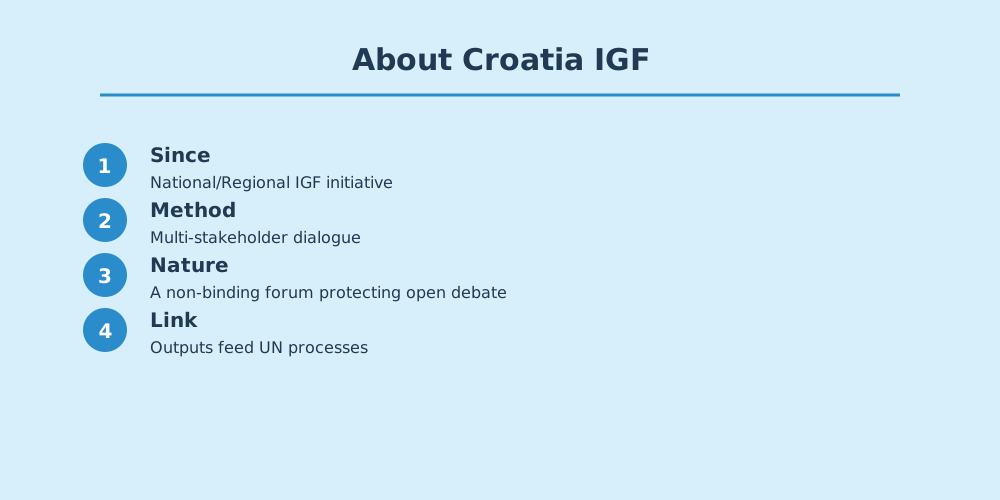
Croatia IGF is a National or Regional IGF Initiative (NRI), aligning local internet governance discussion with global IGF principles.
Why It Matters to You
What was discussed here becomes the baseline for national digital policy, platform rules and AI regulation worldwide within a few years. The principles confirmed at the 2018 meeting are the foundation of the "next rules" for the phones, social platforms and AI services you use every day.
Sources & References
- Croatian IGF 2018 – Final report (PDF) — CRO-IGF組織委員会(CARNET公式サイト掲載) (accessed 2026-07-11)
- Forum o upravljanju Internetom(第4回CRO-IGF パネル構成の紹介記事) — Pokreni posao(クロアチアのビジネス情報サイト) (accessed 2026-07-11)
- Forum o upravljanju internetom (CRO-IGF)(公式プロジェクトページ・歴代最終報告書一覧) — CARNET (accessed 2026-07-11)
Quotes are translated or condensed from the records listed above. Bracketed numbers [n] refer to the source list.
Related links
- IGF official (NRI list): https://www.intgovforum.org/en/content/national-and-regional-igf-initiatives
- Japan IGF: https://japanigf.jp/
- Yuki Nakazawa's blog: https://nkzw.jp/category/igf/
Revision History
Rev. 1 — published 10 June 2018, 12:00 (Article published)
Rev. 2 — updated 17 July 2026, 12:32 (Fully revised into the in-depth edition: added the 3-line summary, minutes digest, short talk, source list and diagrams (all quotes verified against the listed sources))
— 中澤祐樹

