


The 3-Line Summary
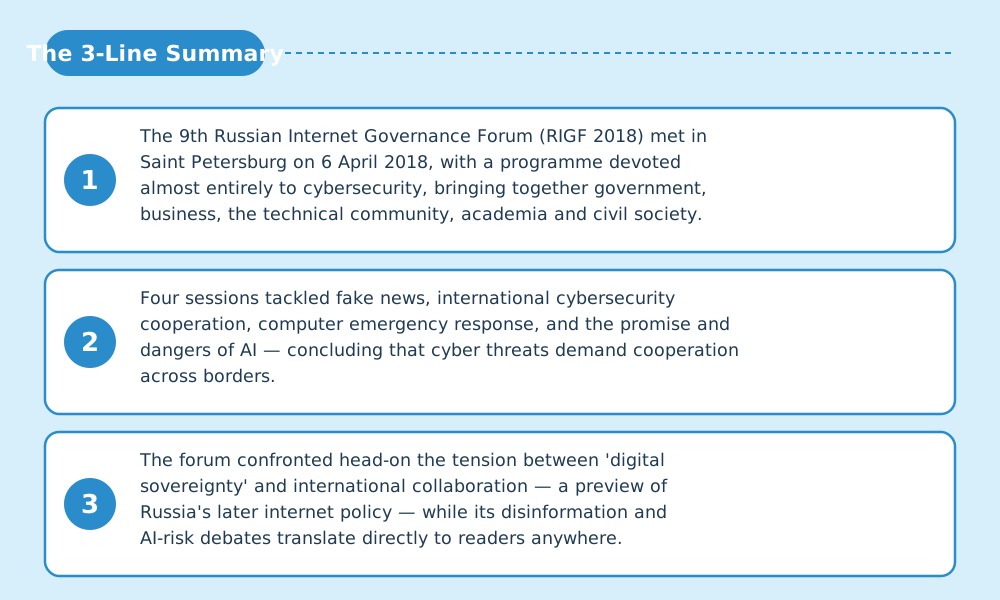
- The 9th Russian Internet Governance Forum (RIGF 2018) met in Saint Petersburg on 6 April 2018, with a programme devoted almost entirely to cybersecurity, bringing together government, business, the technical community, academia and civil society.
- Four sessions tackled fake news, international cybersecurity cooperation, computer emergency response, and the promise and dangers of AI — concluding that cyber threats demand cooperation across borders.
- The forum confronted head-on the tension between 'digital sovereignty' and international collaboration — a preview of Russia's later internet policy — while its disinformation and AI-risk debates translate directly to readers anywhere.
Welcome — this is the Japan IGF Support Organization. This in-depth report on RIGF 2018 — The 9th Russian Internet Governance Forum draws on official outputs, session records and on-site reporting. In a hurry? The three lines above and the diagrams carry the gist.
📍 The second RIGF held outside Moscow, after Innopolis in 2017. On 5 April, the eve of the forum, speakers gave lectures to students at St Petersburg universities
Conference at a Glance (from official records)
| Item | Detail |
|---|---|
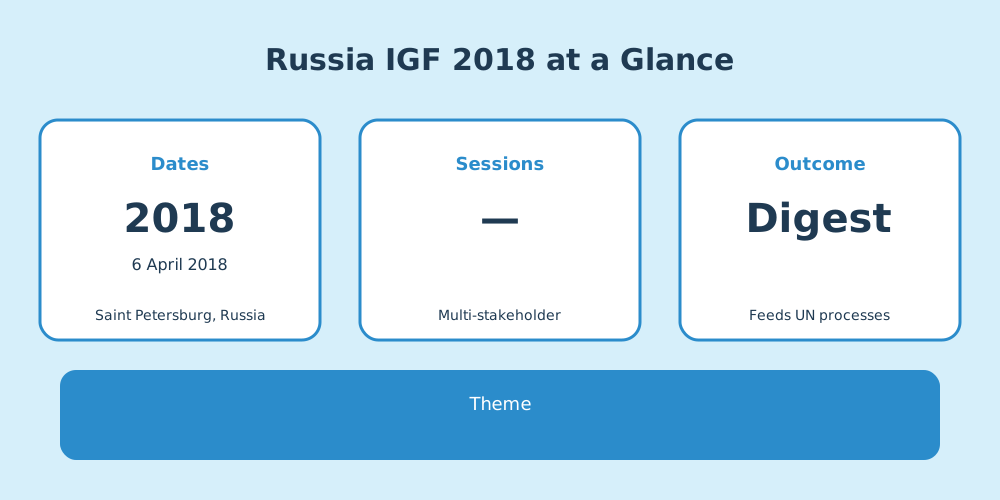
| Official name | RIGF 2018 — The 9th Russian Internet Governance Forum |
| Edition | 9th edition |
| Dates | 6 April 2018 |
| Venue | Saint Petersburg, Russia |
| Theme | Regional governance themes |
| Format | In-person |
| Award | The Virtuti Interneti award went to Alexey Platonov (Technical Center of Internet) |
| Host | Coordination Center for TLD .RU/.РФ |
(See the source list at the end of this article.)
Discussion Digest — from the Session Records
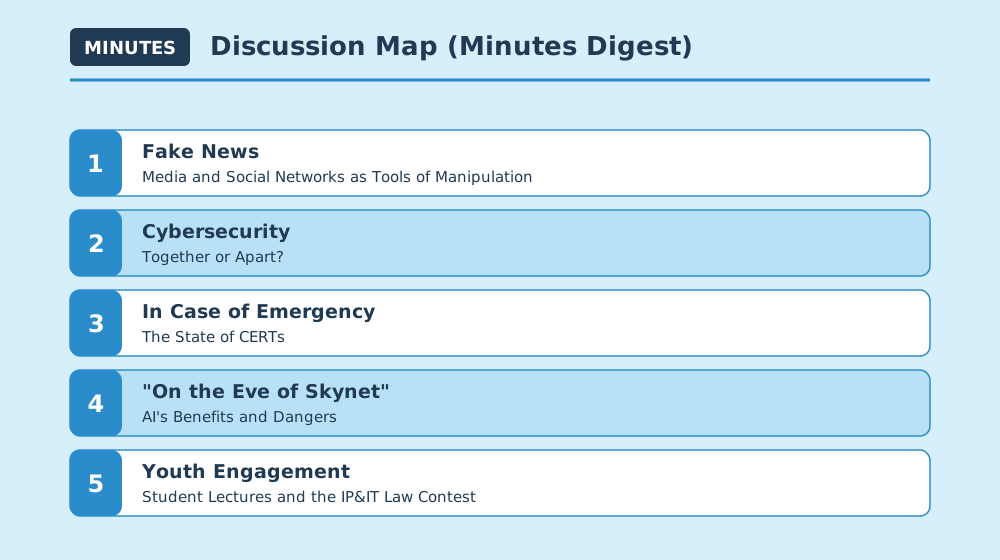
Key exchanges extracted from session records and transcripts.
1. Fake News — Media and Social Networks as Tools of Manipulation
Sessions: Session "Fake News: Fake'n'Hype" (11:15–12:45, moderated by Karen Kazaryan, RAEC)
- The session started from the premise that as mass media and social networks develop, they increasingly become tools for manipulating public opinion [2]
- Speakers including Roberto Gaetano (former ICANN board member), Bruce McConnell (EastWest Institute) and Ivan Zassoursky (Moscow State University) dissected how disinformation spreads [2]
2. Cybersecurity — Together or Apart?
Sessions: Session "Cybersecurity: Together or Apart" (13:45–15:15, moderated by Leonid Todorov, APTLD)
"We have one world and one internet; cybersecurity is a supranational task"
— Wolfgang Kleinwächter (Professor Emeritus, University of Aarhus) — translated from Russian-language coverage [3][4]
- The core question was how to reconcile 'digital sovereignty' with international collaboration against cybercrime, with experts from RIPE NCC, Finland and China weighing in [3][4]
- The shared conclusion, per Russian-language coverage: cyber threats can only be met through horizontal and vertical information-sharing across government, business, civil society and academia [3][4]
3. In Case of Emergency — The State of CERTs
Sessions: Session "In Case of Emergency" (15:30–17:00, moderated by Mikhail Anisimov, Coordination Center)
"Cyber threats become more sophisticated every day, making the work of ensuring user safety ever more demanding"
— Leonid Levin (Chair, State Duma Committee on Information Policy) — translated from Russian-language coverage [2][3]
- CERT operators and security specialists — from Kaspersky, Cisco, Russian financial-sector bodies, Vietnam and the Czech Republic — reported on evolving response arrangements [2][3]
- Participants stressed cross-border incident-information sharing as attacks grow more advanced [2][3]
4. "On the Eve of Skynet" — AI's Benefits and Dangers
Sessions: Session "On the Eve of Skynet" (17:15–18:45, moderated by Alexey Lukatsky, Cisco)
- Named after the film's "Skynet", the session weighed real-world AI applications against future risks [2][4]
- Concerns such as AI-automated attacks — points that would go mainstream years later — were already on the table in 2018 [2][4]
5. Youth Engagement — Student Lectures and the IP&IT Law Contest
Sessions: University lectures on 5 April and award ceremonies during the forum
"Active youth engagement in internet governance is very important and responsible work"
— Andrey Vorobyov (Director, Coordination Center for TLD .RU/.РФ) — translated from Russian-language coverage [3][4]
- Speakers lectured to St Petersburg students the day before, prizes were awarded in the IP&IT Law youth contest, and plans for a youth internet-governance council were floated [3][4]
- The Virtuti Interneti award for contributions to the Runet went to Alexey Platonov of the Technical Center of Internet [3][4]
Three-Minute Short Talk — Your Questions Answered
Q. What was the year's main theme?
A. Cybersecurity, wall to wall. All four sessions — fake news, international cooperation, emergency response and AI risk — revolved around safety and threats.
Q. What was most contentious?
A. The clash between Russia's push for 'digital sovereignty' and experts insisting cybercrime requires international collaboration — captured in the line 'one world, one internet.'
Q. Why should I care?
A. Disinformation, CERT cooperation and AI risk are universal issues — and this was the last RIGF before Russia moved to its 'sovereign internet' law the following year.
What Is Russia IGF? (for first-time readers)
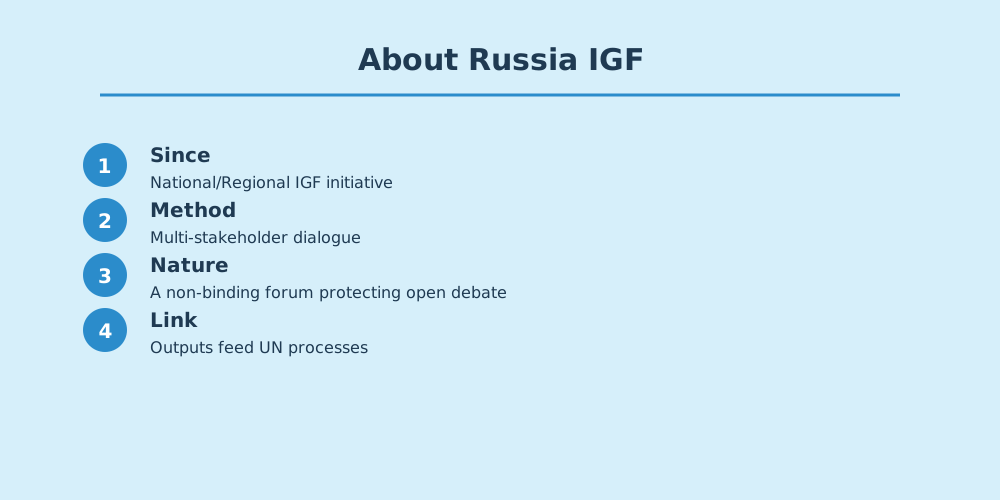
Russia IGF is a National or Regional IGF Initiative (NRI), aligning local internet governance discussion with global IGF principles.
Why It Matters to You
What was discussed here becomes the baseline for national digital policy, platform rules and AI regulation worldwide within a few years. The principles confirmed at the 2018 meeting are the foundation of the "next rules" for the phones, social platforms and AI services you use every day.
Sources & References
- RIGF 2018 公式サイト — Coordination Center for TLD .RU/.РФ (accessed 2026-07-11)
- RIGF 2018 Agenda(プログラム・登壇者一覧) — ccTLD .RU/.РФ調整センター (accessed 2026-07-11)
- На RIGF 2018 обсудили кибербезопасность, искусственный интеллект и вовлечение молодежи(RIGF 2018でサイバーセキュリティ・AI・若者参画を議論・露語) — Rambler News (accessed 2026-07-11)
- RIGF 2018: кибербезопасность, искусственный интеллект и молодежная тематика(RIGF 2018報告・露語) — ICT2GO.ru (accessed 2026-07-11)
Quotes are translated or condensed from the records listed above. Bracketed numbers [n] refer to the source list.
Related links
- IGF official (NRI list): https://www.intgovforum.org/en/content/national-and-regional-igf-initiatives
- Japan IGF: https://japanigf.jp/
- Yuki Nakazawa's blog: https://nkzw.jp/category/igf/
Revision History
Rev. 1 — published 15 June 2018, 10:00 (Article published)
Rev. 2 — updated 17 July 2026, 12:32 (Fully revised into the in-depth edition: added the 3-line summary, minutes digest, short talk, source list and diagrams (all quotes verified against the listed sources))
— 中澤祐樹

