


The 3-Line Summary
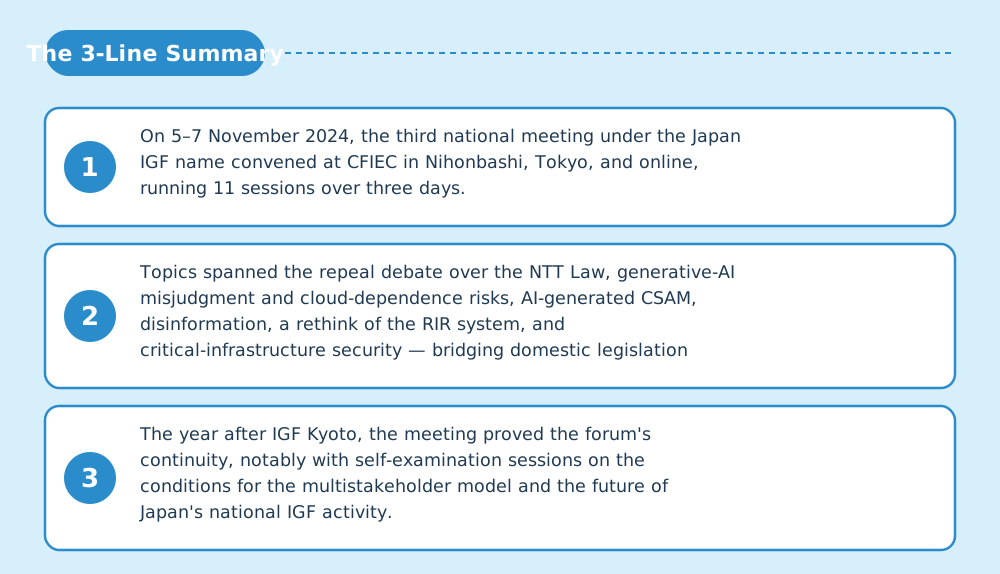
- On 5–7 November 2024, the third national meeting under the Japan IGF name convened at CFIEC in Nihonbashi, Tokyo, and online, running 11 sessions over three days.
- Topics spanned the repeal debate over the NTT Law, generative-AI misjudgment and cloud-dependence risks, AI-generated CSAM, disinformation, a rethink of the RIR system, and critical-infrastructure security — bridging domestic legislation and global governance.
- The year after IGF Kyoto, the meeting proved the forum's continuity, notably with self-examination sessions on the conditions for the multistakeholder model and the future of Japan's national IGF activity.
Welcome — this is the Japan IGF Support Organization. This in-depth report on Japan Internet Governance Forum 2024 (Japan IGF 2024) draws on official outputs, session records and on-site reporting. In a hurry? The three lines above and the diagrams carry the gist.
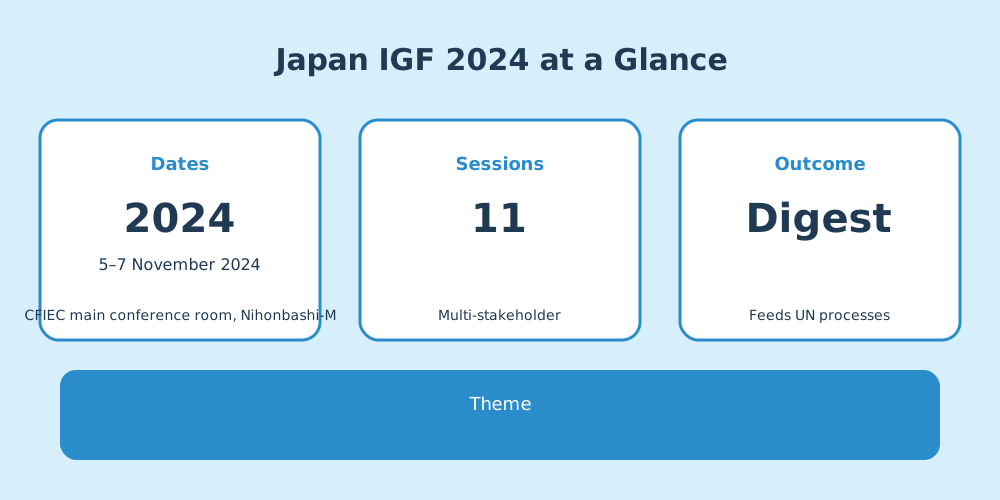
Conference at a Glance (from official records)
| Item | Detail |
|---|---|
| Official name | Japan Internet Governance Forum 2024 (Japan IGF 2024) |
| Dates | 5–7 November 2024 |
| Venue | CFIEC main conference room, Nihonbashi-Muromachi, Tokyo + online (Zoom) |
| Theme | Regional governance themes |
| Sessions | 11 |
| Host | Team for Vitalizing Japan's National IGF Activities toward IGF 2023 |
(See the source list at the end of this article.)
Discussion Digest — from the Session Records
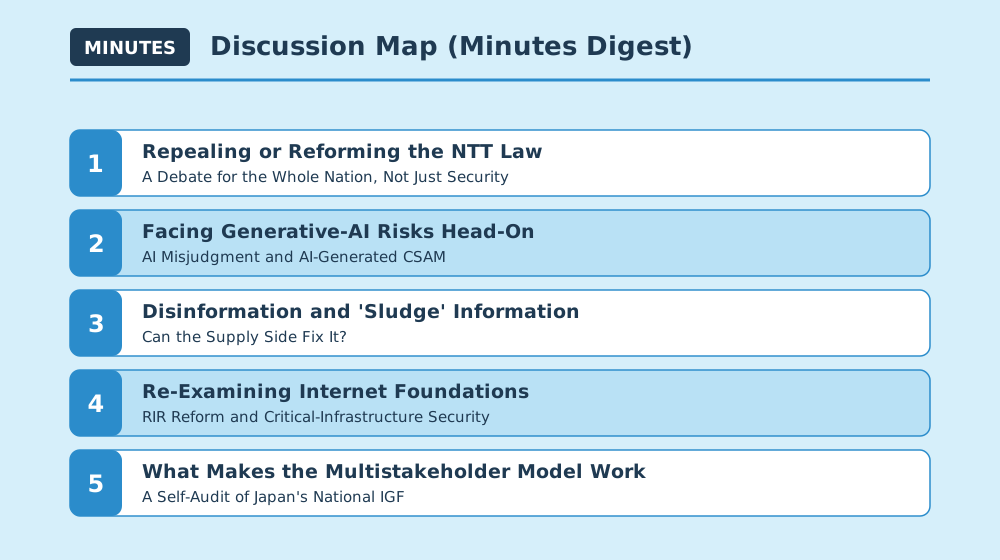
Key exchanges extracted from session records and transcripts.
1. Repealing or Reforming the NTT Law — A Debate for the Whole Nation, Not Just Security
Sessions: Day 1, Session 1: The Impact of Repealing or Amending the NTT Law (5 November)
- Takashi Nagase (attorney), Motoko Fujii (Kyushu Sangyo University) and Toshiaki Tateishi (JAIPA) examined the debate over repealing or amending the NTT Law [2][1]
- As the session subtitle urged — 'a national debate covering the digital divide and fair competition, not just security' — the panel widened a repeal debate sparked by defence-funding politics into universal service and competition policy [2][1]
2. Facing Generative-AI Risks Head-On — AI Misjudgment and AI-Generated CSAM
Sessions: Day 1, Session 2: Generative-AI Misjudgment and Risks to Business and State / Session 3: International Action on CSAM and Japan's Position (5 November)
- Session 2 — subtitled 'AI is censoring data: the risks of Japan's cloud dependence' — was moderated by Yuki Nakazawa (GIG) with Takashi Nagase, Badoru Mochizuki (KCGI) and Toshiaki Tateishi [2]
- In Session 3, Katsuhiko Takeda (ChildFund Japan), Shino Kaminuma (attorney) and Yuma Nakai (Japan Committee for UNICEF) weighed responses to AI-generated child sexual abuse material, asking whether countermeasures can coexist with democratic safeguards [2]
- The two sessions paired the twin risks of the generative-AI era: AI as content censor, and AI as generator of illegal content [2]
3. Disinformation and 'Sludge' Information — Can the Supply Side Fix It?
Sessions: Day 2, Session 4: Responding to Sludge, Dis- and Misinformation (6 November)
- Moderated by Toshiaki Tateishi, with Keiko Tanaka (KCGI), Takashi Nagase and Masaaki Miyagawa (GIG), the session asked whether providers of information can themselves counter sludge, dis- and misinformation [2]
- Its supply-side angle complemented Japan's institutional debate on disinformation, which intensified in 2024, before reaching for platform regulation [2]
- Day 2 opened with a subtitled video greeting from Chengetai Masango, Head of Office of the UN IGF Secretariat [2]
4. Re-Examining Internet Foundations — RIR Reform and Critical-Infrastructure Security
Sessions: Day 2, Session 5: Rethinking the Regional Internet Registry System / Day 3, Session 8: Advancing the Security of Today's Critical Infrastructure (6–7 November)
- Akinori Maemura (JPNIC) moderated Yasuhiko Taniwaki (IIJ) and Shin Shirahata (BBIX Singapore) on revising the accreditation criteria for Regional Internet Registries — questioning the very plumbing of number-resource management [2][3]
- In Day 3's English-language session, moderated by Wataru Ohtani (JPNIC), Nicolas Fiumarelli (MANRS), João Moreno Falcão (IS3C) and Michal Krelina (QuDef) covered critical-infrastructure protection from RPKI routing security to quantum key distribution [2][3]
- Hosting an English session with overseas experts at a national meeting reflected how running the global IGF had changed the organisers [2][3]
5. What Makes the Multistakeholder Model Work — A Self-Audit of Japan's National IGF
Sessions: Day 2, Session 7: The Future of Internet Governance / Day 3, Sessions 10–11: The Future of Japan's National IGF Activity; Conditions for the Multistakeholder Model (6–7 November)
- Yoichi Iida (MIC), Motohiro Kato (CFIEC), Keisuke Kamimura (Daito Bunka University), Yuri Takamatsu (JPRS) and others debated internet governance's future with NETmundial+10 and the post-Summit-of-the-Future WSIS+20 review in view [2][1]
- On Day 3, Hajime Onga (MIC), Yasuhiko Taniwaki and others took up the future of Japan's national IGF activity, while Yoko Nishioka (Komazawa University), Akinori Maemura and Atsushi Yamanaka (KIC) probed the conditions under which the multistakeholder model actually works [2][1]
- After the festival of IGF Kyoto, the organisers frankly audited how to make domestic dialogue permanent [2][1]
Three-Minute Short Talk — Your Questions Answered
Q. What kind of meeting was it?
A. The third national meeting under the Japan IGF name — its largest yet, with 11 sessions over three days, hybrid between a Tokyo venue and Zoom, free to attend.
Q. What was the most current topic?
A. Generative AI: the risks of AI misjudgment, censorship and cloud dependence on one hand, and countermeasures against AI-generated child sexual abuse material on the other, debated the same day.
Q. How did it relate to the global IGF?
A. It sorted out Japan's talking points just before IGF 2024 in Riyadh that December. No domestic readout followed; participants' video reports, published in February 2025, took its place.
What Is Japan IGF? (for first-time readers)
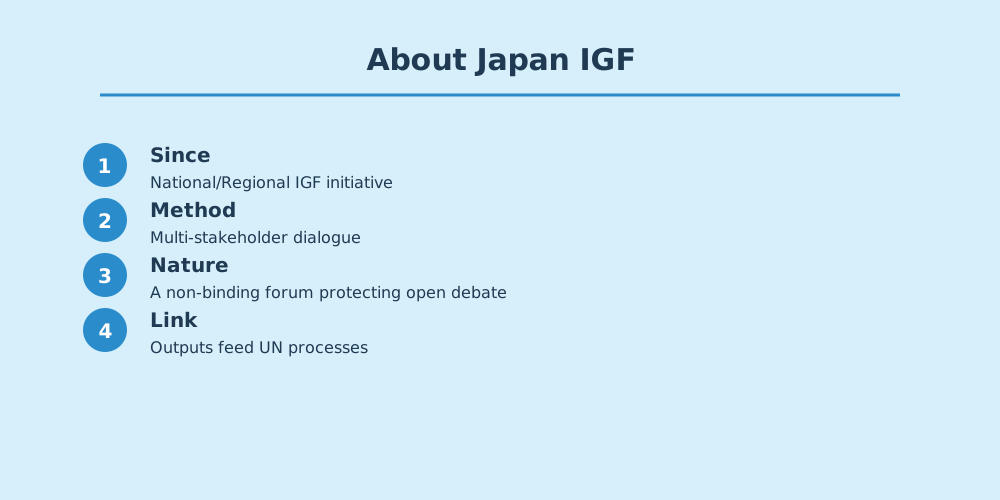
Japan IGF is a National or Regional IGF Initiative (NRI), aligning local internet governance discussion with global IGF principles.
Why It Matters to You
What was discussed here becomes the baseline for national digital policy, platform rules and AI regulation worldwide within a few years. The principles confirmed at the 2024 meeting are the foundation of the "next rules" for the phones, social platforms and AI services you use every day.
Sources & References
- 日本インターネットガバナンスフォーラム2024 / Japan IGF 2024 — Japan IGF(日本IGF公式サイト) (accessed 2026-07-11)
- 日本インターネットガバナンスフォーラム2024(プログラム・資料・録画) — JPNIC (accessed 2026-07-11)
- 日本インターネットガバナンスフォーラム2024プログラム概要のご案内 — JPNIC (accessed 2026-07-11)
- 「Japan IGF 2024」11月5日~7日開催。参加無料、申し込みは11月1日17時まで受け付け — INTERNET Watch(インプレス) (accessed 2026-07-11)
- IGF 2024参加報告の映像を公開 — Japan IGF(日本IGF公式サイト) (accessed 2026-07-11)
Quotes are translated or condensed from the records listed above. Bracketed numbers [n] refer to the source list.
Related links
- IGF official (NRI list): https://www.intgovforum.org/en/content/national-and-regional-igf-initiatives
- Japan IGF: https://japanigf.jp/
- Yuki Nakazawa's blog: https://nkzw.jp/category/igf/
Revision History
Rev. 1 — published 27 May 2024, 14:00 (Article published)
Rev. 2 — updated 16 July 2026, 20:09 (Fully revised into the in-depth edition: added the 3-line summary, minutes digest, short talk, source list and diagrams (all quotes verified against the listed sources))
— 中澤祐樹

