


The 3-Line Summary
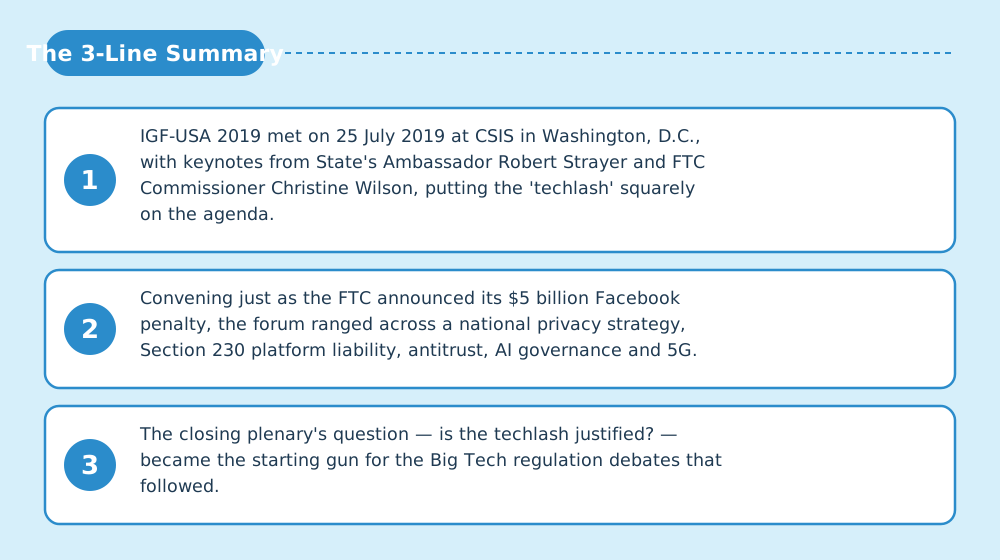
- IGF-USA 2019 met on 25 July 2019 at CSIS in Washington, D.C., with keynotes from State's Ambassador Robert Strayer and FTC Commissioner Christine Wilson, putting the 'techlash' squarely on the agenda.
- Convening just as the FTC announced its $5 billion Facebook penalty, the forum ranged across a national privacy strategy, Section 230 platform liability, antitrust, AI governance and 5G.
- The closing plenary's question — is the techlash justified? — became the starting gun for the Big Tech regulation debates that followed.
Welcome — this is the Japan IGF Support Organization. This in-depth report on IGF-USA 2019 draws on official outputs, session records and on-site reporting. In a hurry? The three lines above and the diagrams carry the gist.
Conference at a Glance (from official records)
| Item | Detail |
|---|---|
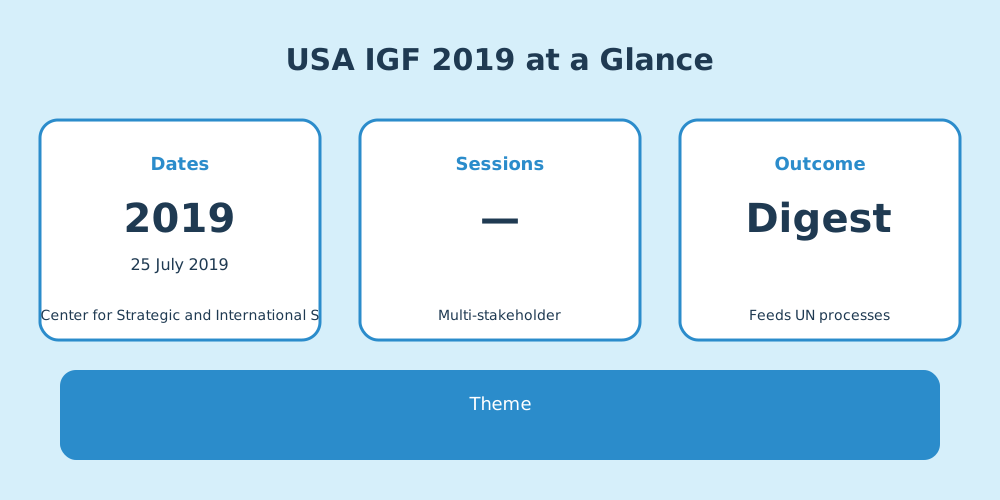
| Official name | IGF-USA 2019 |
| Dates | 25 July 2019 |
| Venue | Center for Strategic and International Studies (CSIS), 1616 Rhode Island Ave NW, Washington, D.C. |
| Theme | Regional governance themes |
| Host | IGF-USA multistakeholder steering group (civil society, industry, academia and government) |
(See the source list at the end of this article.)
Discussion Digest — from the Session Records
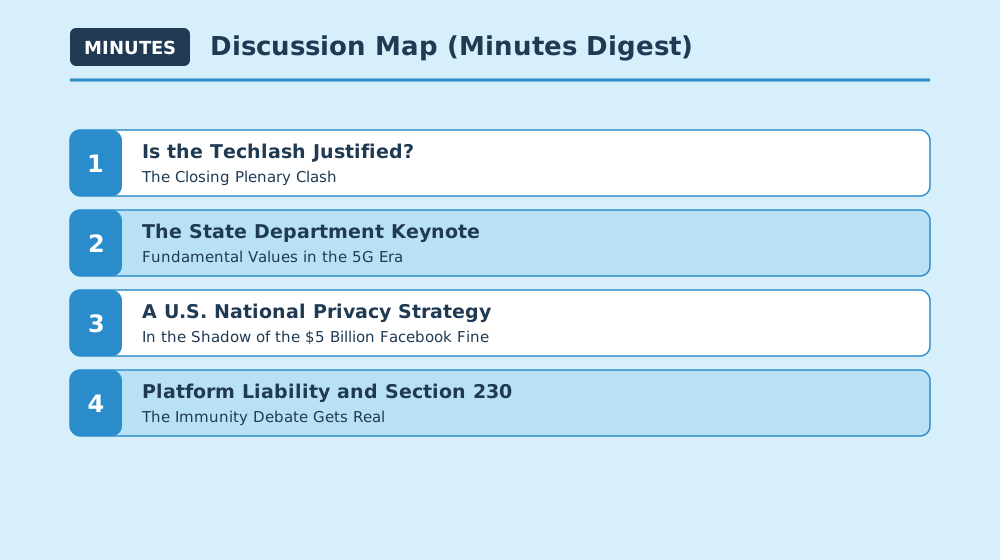
Key exchanges extracted from session records and transcripts.
1. Is the Techlash Justified? — The Closing Plenary Clash
Sessions: Closing plenary "Is the Techlash Justified?" (moderated by Lee Rainie, Pew Research Center)
"What some might call techlash, some might call a need to rebalance the laws we have."
— Julie Cohen (Georgetown University Law Center) [2]
"Promises to a consumer about their data and how you will share it should be adhered to."
— Maureen Ohlhausen (Baker Botts; former FTC Acting Chairman) [2]
- The German Marshall Fund's Karen Kornbluh urged a pivot to practical problem-solving: this is the new normal [2]
- NetChoice's Steve DelBianco argued companies must act proactively on hate speech since government offers no workable definitions [2]
- Panellists converged on one point: effective governance requires tech companies, consumers and government working together [2]
2. The State Department Keynote — Fundamental Values in the 5G Era
Sessions: Keynote by Ambassador Robert L. Strayer, Deputy Assistant Secretary of State for Cyber and International Communications and Information Policy
"We must stand up for our fundamental values and exercise our human rights on the Internet."
— Ambassador Robert L. Strayer (U.S. Department of State) [2][3]
- Strayer warned that technological advances bring rising risks from those who seek to do harm, and called for a clear regulatory environment as the groundwork for a safer Internet [2][3]
- 5G was a headline topic, with the "5G Enabling Tech Innovation" session weighing infrastructure security against innovation [2][3]
3. A U.S. National Privacy Strategy — In the Shadow of the $5 Billion Facebook Fine
Sessions: Plenary "U.S. National Privacy Strategy: Data Governance and Accountability" and FTC fireside chat with Commissioner Christine S. Wilson
- Meeting just after the FTC announced its $5 billion penalty against Facebook for lax privacy practices, the case for a federal privacy law felt suddenly concrete [1][3]
- With the CCPA taking effect the next year, the peculiarly American question — a patchwork of state laws or one federal statute — became the dividing line [1][3]
- NTIA Acting Administrator Diane Rinaldo also took the stage with the administration's view of data governance [1][3]
4. Platform Liability and Section 230 — The Immunity Debate Gets Real
Sessions: Panel "Platform Liability for User Content and Commerce in 2019"
- The panel examined proposals to narrow Section 230 intermediary immunity, for both user content and e-commerce [1][4]
- Parallel sessions on balancing AI governance and innovative digital-inclusion solutions reflected how broad the techlash-era agenda had become [1][4]
Three-Minute Short Talk — Your Questions Answered
Q. So what did the conference actually decide?
A. Nothing binding — but meeting days after the FTC's $5 billion Facebook penalty, it assembled the full agenda of the coming legislative fights: a federal privacy law, Section 230 reform and antitrust.
Q. What was the most contentious topic?
A. Whether the techlash is justified. Legal scholars framed it as a needed rebalancing of existing law; industry favoured self-regulation; everyone struggled with governing hate speech absent clear definitions.
Q. Why should I care?
A. The platform-accountability questions crystallised here — liability, transparency, antitrust — are the same ones now being legislated in capitals worldwide.
What Is USA IGF? (for first-time readers)
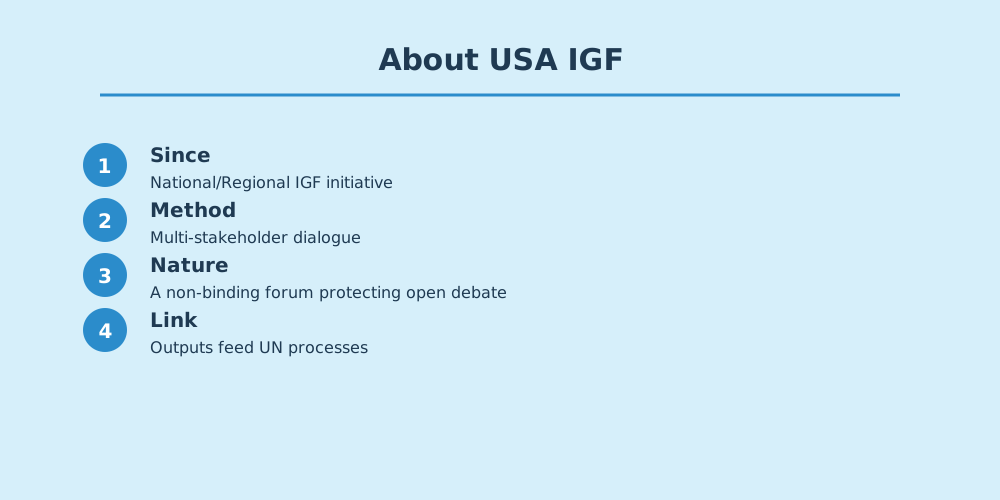
USA IGF is a National or Regional IGF Initiative (NRI), aligning local internet governance discussion with global IGF principles.
Why It Matters to You
What was discussed here becomes the baseline for national digital policy, platform rules and AI regulation worldwide within a few years. The principles confirmed at the 2019 meeting are the foundation of the "next rules" for the phones, social platforms and AI services you use every day.
Sources & References
- The Internet Governance Forum – USA 2019 — IGF-USA(公式サイト) (accessed 2026-07-11)
- Internet Governance Forum USA 2019 – Techlash Evolution — Elon University Imagining the Internet (accessed 2026-07-11)
- School of Communications student journalists provide exclusive coverage of U.S. telecommunications policy event — Today at Elon (accessed 2026-07-11)
- Internet Governance Forum – USA, 2019(大会別カバレッジ) — Elon University Imagining the Internet (accessed 2026-07-11)
Quotes are translated or condensed from the records listed above. Bracketed numbers [n] refer to the source list.
Related links
- IGF official (NRI list): https://www.intgovforum.org/en/content/national-and-regional-igf-initiatives
- Japan IGF: https://japanigf.jp/
- Yuki Nakazawa's blog: https://nkzw.jp/category/igf/
Revision History
Rev. 1 — published 20 July 2019, 13:00 (Article published)
Rev. 2 — updated 16 July 2026, 20:09 (Fully revised into the in-depth edition: added the 3-line summary, minutes digest, short talk, source list and diagrams (all quotes verified against the listed sources))
— 中澤祐樹

