


The 3-Line Summary
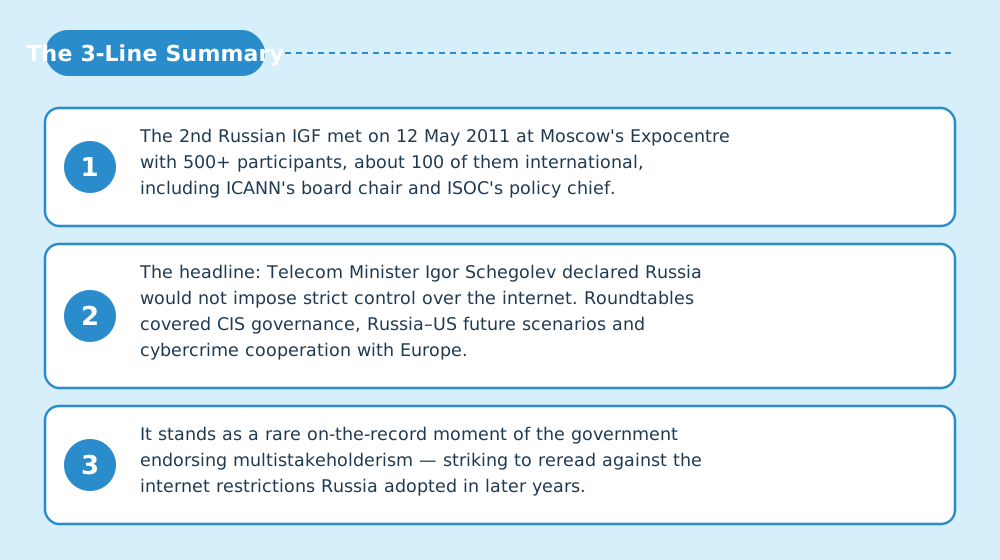
- The 2nd Russian IGF met on 12 May 2011 at Moscow's Expocentre with 500+ participants, about 100 of them international, including ICANN's board chair and ISOC's policy chief.
- The headline: Telecom Minister Igor Schegolev declared Russia would not impose strict control over the internet. Roundtables covered CIS governance, Russia–US future scenarios and cybercrime cooperation with Europe.
- It stands as a rare on-the-record moment of the government endorsing multistakeholderism — striking to reread against the internet restrictions Russia adopted in later years.
Welcome — this is the Japan IGF Support Organization. This in-depth report on 2nd Russian Internet Governance Forum (RIGF 2011) draws on official outputs, session records and on-site reporting. In a hurry? The three lines above and the diagrams carry the gist.
Conference at a Glance (from official records)
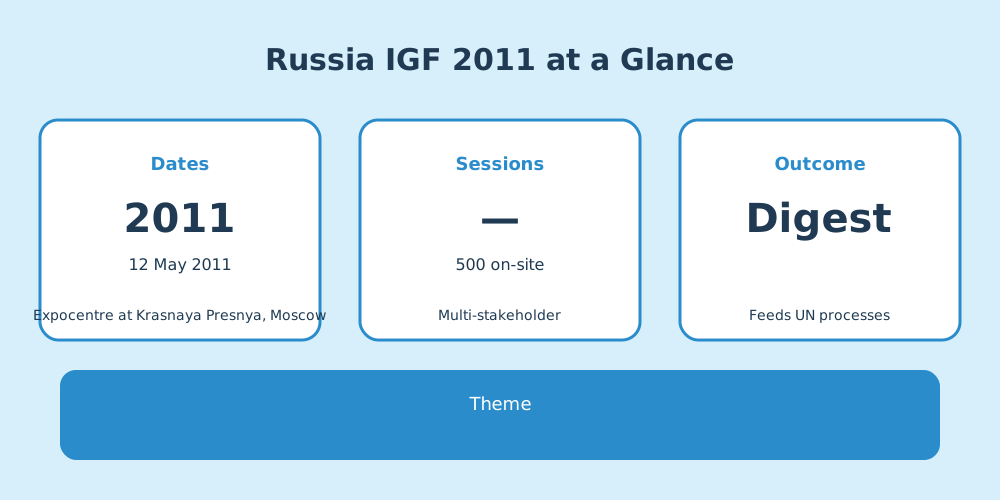
| Item | Detail |
|---|---|
| Official name | 2nd Russian Internet Governance Forum (RIGF 2011) |
| Dates | 12 May 2011 |
| Venue | Expocentre at Krasnaya Presnya, Moscow |
| Theme | Regional governance themes |
| Participants | 500 |
| Host | Coordination Center for TLD RU; co-hosted by the RF Ministry of Telecom and Mass Media |
(See the source list at the end of this article.)
Discussion Digest — from the Session Records
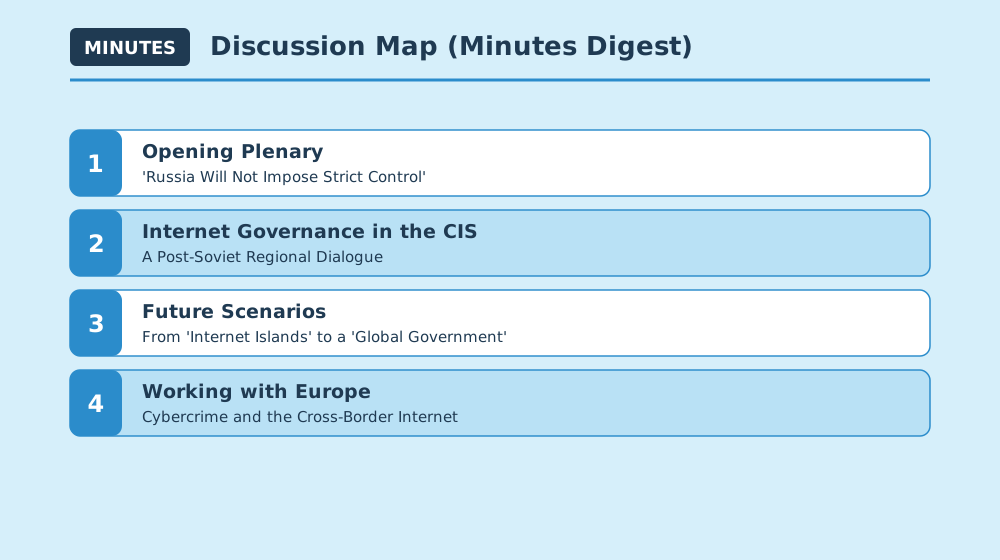
Key exchanges extracted from session records and transcripts.
1. Opening Plenary — 'Russia Will Not Impose Strict Control'
Sessions: Plenary 'Internet as a Set of Innovation Tools' (10:30–13:00)
"Russia is not going to impose strict control over the Internet's functioning"
— Igor Schegolev (RF Minister of Telecom and Mass Media) [3][4][2]
"Co-governance has made the Internet what it is now"
— Markus Kummer (Vice President for Public Policy, ISOC) [3][4][2]
"Today, Internet governance actually is governing our lives"
— Marina Nikerova (Chair of the Council, Coordination Center for TLD RU) [3][4][2]
- ICANN board chair Peter Dengate Thrush, the ITU's Alexander Ntoko, the Skolkovo Foundation and Kaspersky Lab's Natalya Kaspersky headlined an unusually international lineup [3][4][2]
- The first anniversary of the Cyrillic .РФ domain gave the plenary its celebratory note [3][4][2]
2. Internet Governance in the CIS — A Post-Soviet Regional Dialogue
Sessions: Roundtable 2 'Internet Governance in CIS Countries' (14:00–15:30)
- Moldova's deputy IT minister Dona Scola joined experts from Kyrgyzstan, Armenia, Uzbekistan and Ukraine, with ISOC's Markus Kummer co-moderating — a rare all-CIS governance table [2][4]
- Participants compared the double challenge of building access and governance institutions at the same time across Central Asia and Eastern Europe [2][4]
3. Future Scenarios — From 'Internet Islands' to a 'Global Government'
Sessions: 'The Future of Internet Scenarios: Russia and the US's Perspectives' (16:00–17:30) and keynote (17:30–18:30)
- Three scenarios — 'Internet Islands', 'Users Reign' and 'Global Government for the Internet' — were debated in Russian–American pairs featuring VeriSign, Georgetown University and TechAmerica voices [2][4]
- Internet pioneer David J. Farber of Carnegie Mellon closed the day with a keynote [2][4]
- The 'islands' scenario prefigured the splinternet debate — remarkable subject matter for a Moscow forum in 2011 [2][4]
4. Working with Europe — Cybercrime and the Cross-Border Internet
Sessions: Roundtable 1 'Russian & European Internet Governance Prospects' (14:00–15:30)
"The Internet does not require any specific individual control; however, legal oversight is necessary"
— Jovan Kurbalija (Founding Director, DiploFoundation) [2][4]
- Bertrand de La Chapelle, SIDN CEO Roelof Meijer and Mikhail Yakushev (vice-chair of the CoE working group on the cross-border internet) tackled Europe's shared agenda of cybercrime, cyberterrorism and extremism [2][4]
- The balance between state involvement and self-regulation — the theme that would define Russian internet policy for the next decade — was already the main battleground [2][4]
Three-Minute Short Talk — Your Questions Answered
Q. So what did the conference actually decide?
A. Nothing binding — but Russia's telecom minister publicly promised no strict control of the internet, sharing a stage with ICANN and ISOC leaders. As a record of official posture, it is still worth citing.
Q. What was the most contentious topic?
A. The internet's future itself: Russian and American experts sparred over three scenarios — internet islands, user sovereignty, or a global internet government. The 'islands' debate anticipated today's splinternet fears.
Q. Why should I care?
A. The fragmentation scenario debated here later materialised as Russia's sovereign internet law and data-localisation rules worldwide. Whether the net splinters or stays open affects every user.
What Is Russia IGF? (for first-time readers)
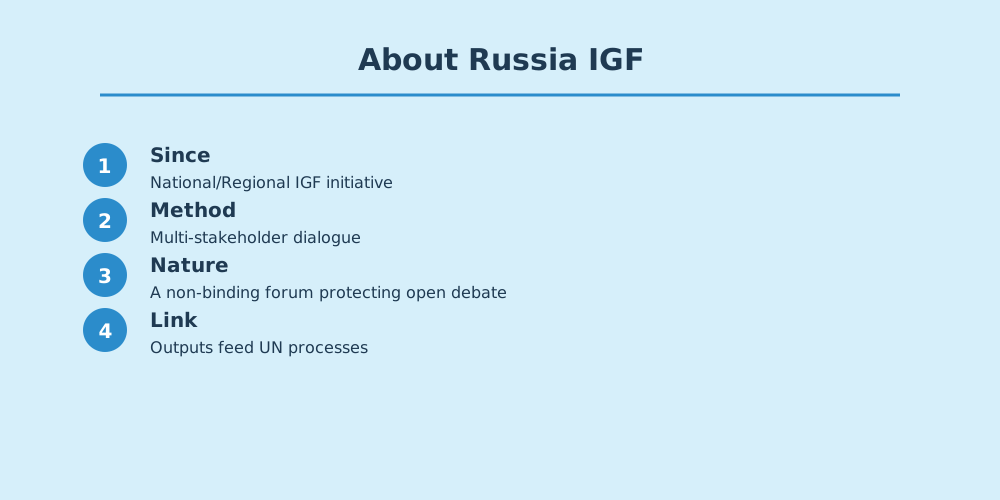
Russia IGF is a National or Regional IGF Initiative (NRI), aligning local internet governance discussion with global IGF principles.
Why It Matters to You
What was discussed here becomes the baseline for national digital policy, platform rules and AI regulation worldwide within a few years. The principles confirmed at the 2011 meeting are the foundation of the "next rules" for the phones, social platforms and AI services you use every day.
Sources & References
- Russian Internet Governance Forum – 2011(公式サイト) — ロシア国別ドメイン調整センター(Coordination Center for TLD RU) (accessed 2026-07-11)
- Program of Russian Internet Governance Forum – 2011(公式プログラム) — ロシア国別ドメイン調整センター(Coordination Center for TLD RU) (accessed 2026-07-11)
- RIGF-2011: Russia can play a pivotal role in the internet governance(公式プレスリリース・開催報告) — ロシア国別ドメイン調整センター(Coordination Center for TLD RU) (accessed 2026-07-11)
- RIGF 2011 Report(公式報告ページ) — ロシア国別ドメイン調整センター(Coordination Center for TLD RU) (accessed 2026-07-11)
Quotes are translated or condensed from the records listed above. Bracketed numbers [n] refer to the source list.
Related links
- IGF official (NRI list): https://www.intgovforum.org/en/content/national-and-regional-igf-initiatives
- Japan IGF: https://japanigf.jp/
- Yuki Nakazawa's blog: https://nkzw.jp/category/igf/
Revision History
Rev. 1 — published 24 June 2011, 09:00 (Article published)
Rev. 2 — updated 17 July 2026, 12:32 (Fully revised into the in-depth edition: added the 3-line summary, minutes digest, short talk, source list and diagrams (all quotes verified against the listed sources))
— 中澤祐樹

